
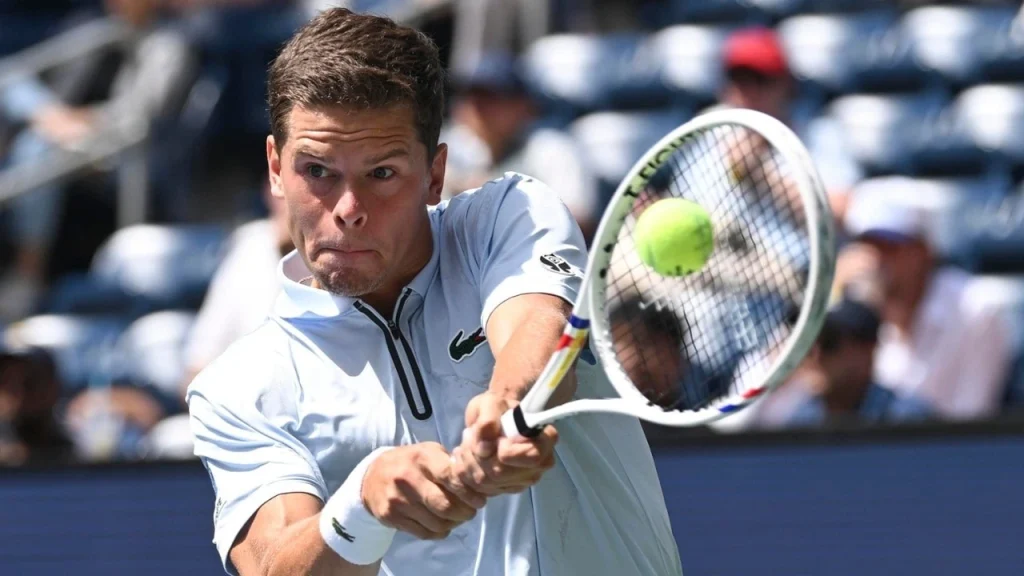
Alexander Blockx defeated Flavio Cobolli 3-6, 6-3, 6-0, 6-3 in the US Open third round. After Cobolli took a 54-minute opening set, Blockx found a break at 4-3 in the second and then won 11 games in a row. The Italian briefly recovered a break in the fourth, but Blockx broke again at 5-3 and served out the biggest victory of his career with four accurate first serves.
Cobolli made the opening set difficult to escape
The first set lasted 54 minutes even though it ended in six games to three. Cobolli won the final three points of the deciding game sequence and used his forehand to keep Blockx from settling behind the baseline. The Belgian had opportunities to compete inside rallies but could not finish enough of them on his terms. The length of the set was still useful evidence: Blockx was close enough to change the contest if he could improve the first shot after serve and return.
One break opened the middle of the match
Blockx moved ahead at 4-3 in the second set. From that moment, his shots carried more depth and Cobolli had less time to create angles. The Belgian did not stop after levelling the match. He continued through a clean third set and the opening game of the fourth, producing 11 consecutive games. Such a run combines serving, returning and concentration; no single spectacular point can explain why the opponent is denied so many chances to reset.
| Stage | US Open third round |
|---|---|
| Winner | Alexander Blockx |
| Opponent | Flavio Cobolli |
| Result | 3-6, 6-3, 6-0, 6-3 |
| Middle run | 11 consecutive games |
| Match totals | Blockx struck 17 aces and 41 winners |
The third set showed control rather than only power
Blockx won 24 of 28 points in the third set. His 17 aces and 41 winners describe aggression across the full match, but the clean set also required a low number of loose decisions. Power becomes most effective when the target remains large enough under pressure. Blockx served to begin the next shot in a favorable position and used direction to prevent Cobolli from defending from the same corner. The result was speed without the disorder that often follows a lost first set.

Cobolli created one final tactical question
The Italian broke back for 2-3 in the fourth set and brought the crowd into the match. Blockx now had to decide whether to protect the ball or keep moving Cobolli. He chose active patterns, sending the Italian across the baseline while remaining ready for the counterattack. The response did not immediately end the contest, but it stopped one recovered service game from becoming a full swing. Blockx accepted that Cobolli would produce strong points and kept the larger plan intact.
The last break came from sustained return pressure
At 4-3, Blockx made Cobolli play another demanding service game. A double fault finally gave the Belgian the break for 5-3, but the pressure before that error mattered. Cobolli knew that a short ball would be attacked and that Blockx was reading the first direction better. The final service game then contained four well-placed first serves. Blockx did not ask the closing moment to produce a new style; he used the same accurate opening shot that had supported the comeback.
A recent defeat helped define the preparation
Blockx had lost to Cobolli in Cincinnati only two weeks earlier and had felt tight during that match. The New York meeting provided a direct test of whether he could respond differently when momentum shifted. Losing the first set could have recreated the same doubt. Instead, he trusted the adjustments and remained composed when Cobolli broke back late. The value of the previous defeat came from identifying a problem, not from guaranteeing revenge.
The fourth round is a new major milestone
Blockx reached the second week of a major for the first time in his debut season across all four Grand Slam main draws. He also became the fourth Belgian man to reach the US Open fourth round in the Open Era. Those achievements place the victory in his career, but the next match begins without the 11-game run. Cerundolo will bring heavier rally tolerance and confidence from a five-set comeback, requiring another plan rather than a copy of the Cobolli match.
The match changed because Blockx kept the response simple
The Belgian improved his first serve, attacked a clearer next ball and moved Cobolli before choosing the finish. That sequence produced the long middle run and survived the Italian’s late recovery. The score is dramatic, but the explanation does not need dramatic language. Blockx stopped allowing Cobolli to dictate the first exchange and maintained that advantage long enough to reach the last 16.
Blockx must prepare for a different kind of pressure
A career-best victory brings attention as well as confidence. In the next round, opponents will study the middle sequence in which Blockx controlled 11 consecutive games and will try to interrupt his first strike earlier. The Belgian can prepare by protecting his service routine and accepting that the next match may not contain such a long uninterrupted spell. His progress will be tested by how calmly he responds when momentum changes more often.


