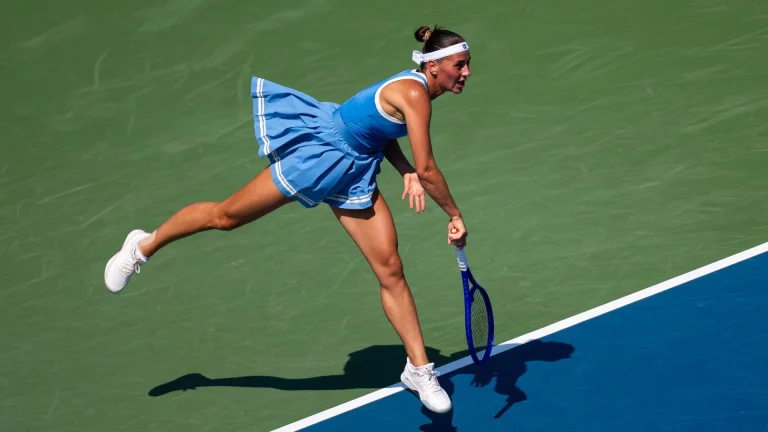
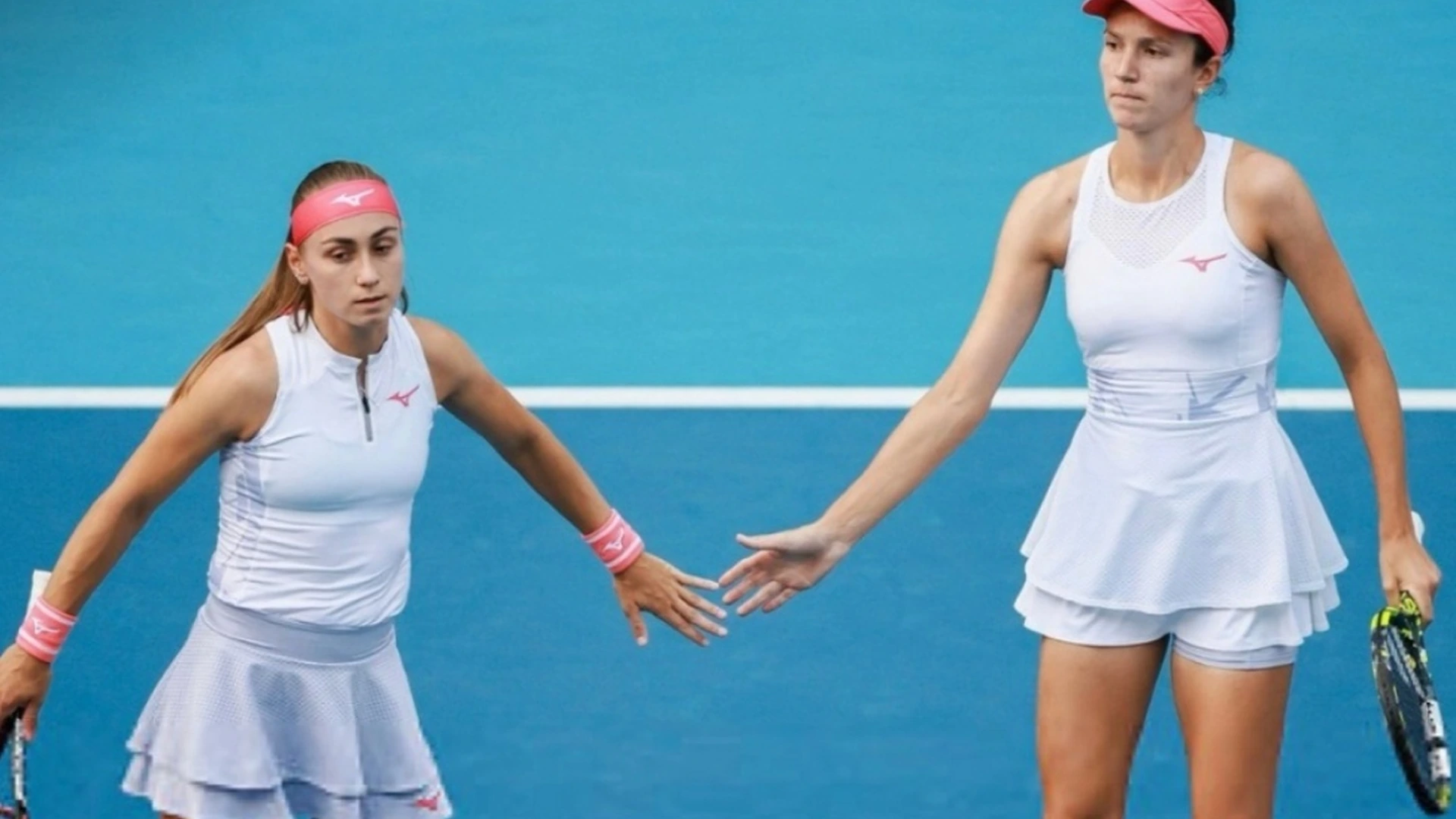
Anna Danilina and Serbia’s Aleksandra Krunic have qualified for the WTA Finals alongside Gabriela Dabrowski and Luisa Stefani. The two teams join Katerina Siniakova and Taylor Townsend in the doubles field at Indian Wells. Qualification rewards performance across the season rather than one isolated week. It also brings together partnerships with different strengths: Danilina and Krunic have repeatedly reached the final stages of the biggest events, while Dabrowski and Stefani have collected titles at several levels of the tour.
Danilina and Krunic built their position against elite fields
Danilina and Krunic started the year strongly by winning the WTA 1000 event in Doha. They then reached major finals at the Australian Open and Roland-Garros, as well as the final at Indian Wells. Those results show why their place cannot be explained by a single fortunate draw. The pair maintained a high standard in different conditions and against teams able to change formation quickly at the net.
For Krunic, the qualification brings a first appearance at the WTA Finals. Danilina has been there before, so the partnership contains both a new personal experience and some knowledge of the event’s demands. That combination can help if it is used calmly. Previous attendance does not remove the pressure, but it can make practical details such as preparation, recovery and the round-robin rhythm feel less unfamiliar.
Dabrowski and Stefani arrived through a broad title run
Dabrowski and Stefani won in Dubai, Strasbourg and Eastbourne, covering the highest regular tour level as well as smaller events with strong fields. They also reached the Wimbledon final. The variety matters because doubles partnerships must adjust to surface speed, low returns and changing opportunities to move forward. Their season shows repeated success rather than one pattern working only under ideal conditions.
Both players bring individual Finals experience. Stefani reached the title match at the previous edition, while Dabrowski won the event earlier in her career. This will still be their first appearance there as a team. Shared experience is useful, but partnership decisions remain specific: who protects the middle, who takes the first aggressive volley and how the pair responds when opponents target one return channel.
Round-robin play changes the response to defeat
The WTA Finals uses a group stage before the knockout rounds. In a normal tournament, one loss ends the week. In this format, a team may have to recover immediately and play again with qualification still possible. That makes communication particularly important. Partners must identify a tactical problem without allowing one difficult match to become a lasting argument about confidence or responsibility.
Doubles margins are often narrow because a short sequence at the net can decide a set. The qualified teams need a plan for protecting service games and for creating return pressure without taking reckless positions. They also need to accept that an opponent may solve the first plan. The best response is a clear adjustment between points, not a flood of instructions that leaves both players uncertain about the next ball.
Krunic adds a Serbian story to the season-ending event
Krunic’s route is especially relevant for Serbian tennis because it highlights a discipline that receives less routine attention than singles. Doubles requires specialised movement and trust. A player may cover less total court alone, yet every step affects the partner’s space. Krunic and Danilina have shown that their combination can survive long events and perform under major-final pressure.
Qualification does not decide the WTA Finals title, and the remaining field will continue to take shape. It does confirm that both newly announced teams have done enough across the year to stand among the season’s leading partnerships. At Indian Wells, the challenge will begin again from zero within a compact format. Their past results earned the invitation; their ability to communicate and adapt will determine what they do with it.
The qualification also gives both teams time to prepare for the format instead of chasing points until the final week. That preparation can focus on patterns rather than predictions: first returns, movement after serve and the signals used before a player crosses at the net.