
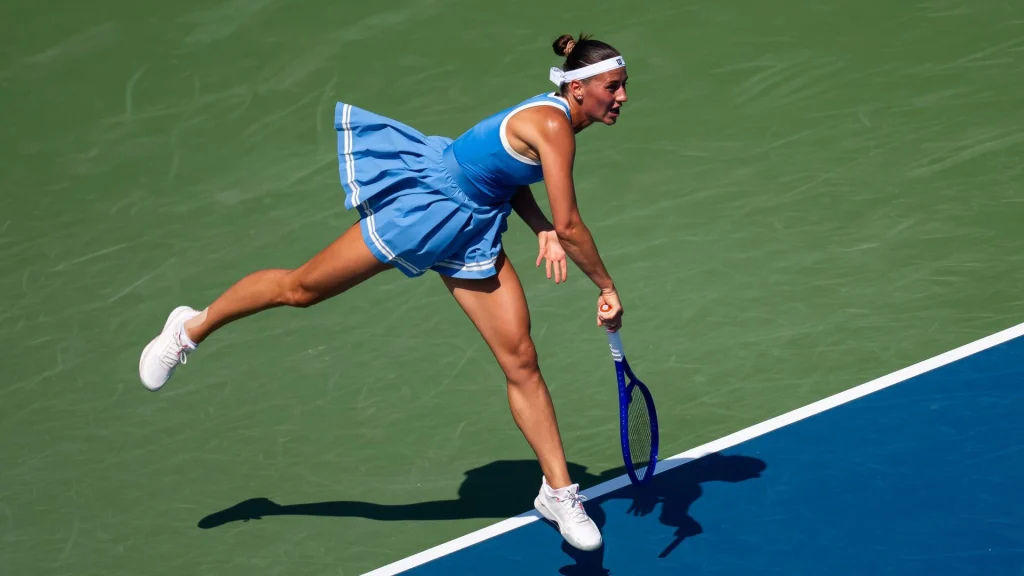
Marta Kostyuk has reached the WTA singles Top 10 for the first time. The new ranking is the result of a season that did not depend on one tournament or one surface. The Ukrainian won in Rouen and Madrid, reached major semifinals on clay and grass, and returned to the later stages of the US Open on hard courts. Moving into tenth place is a clear milestone, but the more revealing story is how her strong months connected instead of disappearing when the tour changed setting.
A ranking earned over several kinds of court
The WTA’s latest rankings report confirms Kostyuk’s move from eleventh to tenth. She is the second Ukrainian woman in the Open Era to reach the singles Top 10, after Elina Svitolina. That is a specific historical point, not a claim that the two players followed the same career route. Kostyuk’s progress has been unusually broad this year: the best stretches came on clay, on grass and then through a solid run in New York. A ranking reflects results collected over time, so the variety of those settings is more useful than treating one victory as the whole explanation.
Her spring included a title in Rouen followed by her first WTA 1000 title in Madrid. The WTA describes a sixteen-match winning streak across that period. A sequence that long puts pressure on a player in a different way from one striking upset. She must recover, prepare for opponents who have watched recent matches and continue to make good decisions after a win becomes expected. The tour’s summary does not reveal a single tactic that solved every contest. It does show that she sustained her level long enough to turn form into valuable results.
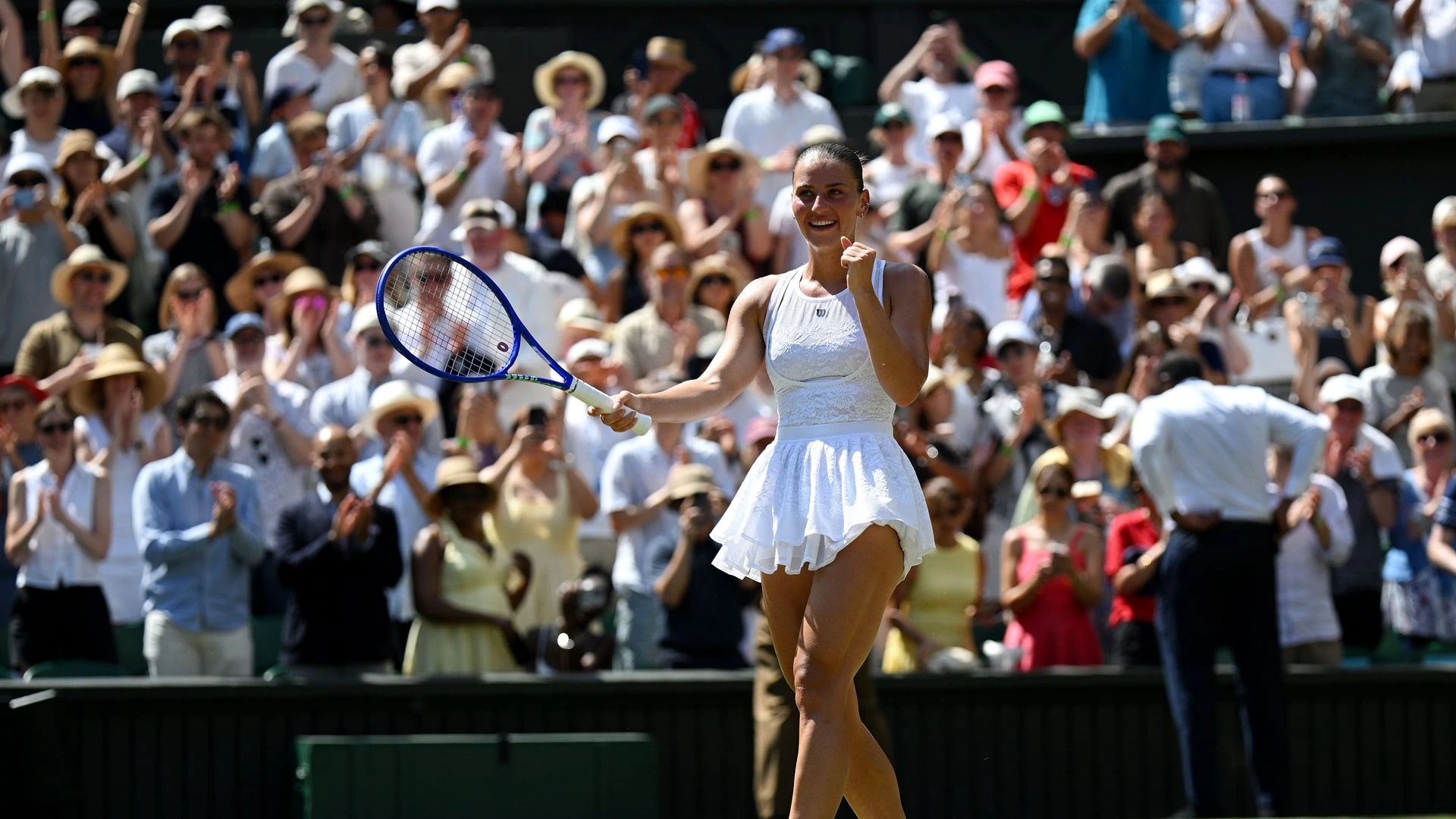
At Roland-Garros she reached her first Grand Slam semifinal, then made the same stage at Wimbledon. Those events reward different movement and ball control. The two runs are therefore not interchangeable lines on a record sheet; together they show that her results survived a quick transition from clay to grass. Kostyuk did not make the final at either major, and the new ranking should not be presented as if she did. Reaching those stages still carried enough weight to change where she stood when the season returned to hard courts.
The hard-court return kept the progress intact
Kostyuk told the WTA in Toronto that the change back to hard courts felt unusually sharp after so many matches on clay and grass. Her account is valuable because it avoids a simple story in which success on one surface automatically travels to the next. A player has to reset patterns of movement, timing and patience. The challenge is physical, but the long season also affects concentration. In that interview she talked about learning to manage difficult moments without spending too much emotional energy on them.
The US Open later gave a practical answer to that adjustment. Kostyuk reached the fourth round, matching her best run at the event, and the accumulated result helped secure the Top 10 debut. The result did not need to be a title to matter. In a ranking system, keeping a strong level across several months can be more important than dramatic fluctuations between early exits and isolated finals. This is an inference from the season the WTA records, rather than a claim that Kostyuk calculated points in a particular way during each match.
Before the US Open ended, Kostyuk was on course for tenth place. The updated list has now placed her there. She moved up one position from eleventh after reaching the fourth round in New York. The ranking is no longer a projection: it is the position shown in the latest WTA report.
| Stage | Surface | Confirmed outcome |
|---|---|---|
| Rouen and Madrid | Clay | Two titles, including a first WTA 1000 crown |
| Roland-Garros | Clay | First major semifinal |
| Wimbledon | Grass | Second consecutive major semifinal |
| US Open | Hard | Fourth-round run before Top 10 debut |
What the Ukrainian milestone does and does not say
Elina Svitolina was the first Ukrainian woman to reach the singles Top 10 in the Open Era. Kostyuk is now the second. Svitolina sits seventh in the same ranking update, while Kostyuk occupies tenth place. They reached those positions through different careers, but having both names in the top group gives Ukrainian tennis a rare moment in the current list.
The ranking can change again as players defend earlier results and collect new ones. For now, Kostyuk has earned a place that eluded her at the start of the year, when she was ranked twenty-sixth. She has not needed a single dominant surface to get there. Her strongest results came in several parts of the calendar, and her fourth round in New York ensured that the return to hard courts did not interrupt the climb.
For tennis readers, the route is more interesting than the badge alone. Brisbane’s final provided an early sign of form, Rouen and Madrid showed she could win titles, the majors tested her over longer draws, and New York showed she could return to hard courts without losing the whole year’s momentum. Those are different chapters of one season, not separate versions of the same match being retold. Together they explain why a player who began the year outside the top group has now entered it.
A concise record of the confirmed steps
Kostyuk reached the Brisbane final early in the year, won twice on clay and then made semifinals at the French Open and Wimbledon. Her US Open fourth round completed the sequence before the rankings changed. The events did not offer identical tests: Rouen and Madrid came on clay, Wimbledon on grass, and New York on hard courts. The confirmed milestones are set out below without adding unrelated scores.
In Toronto, Kostyuk said the move back to hard courts felt drastic after a long stretch on clay and grass. She also spoke about the mental energy needed to handle difficult moments late in a season. The US Open result gave her more evidence that she could make that transition. Tenth place is a record of what she has achieved so far, while the work of adjusting from one tournament to the next continues.


