
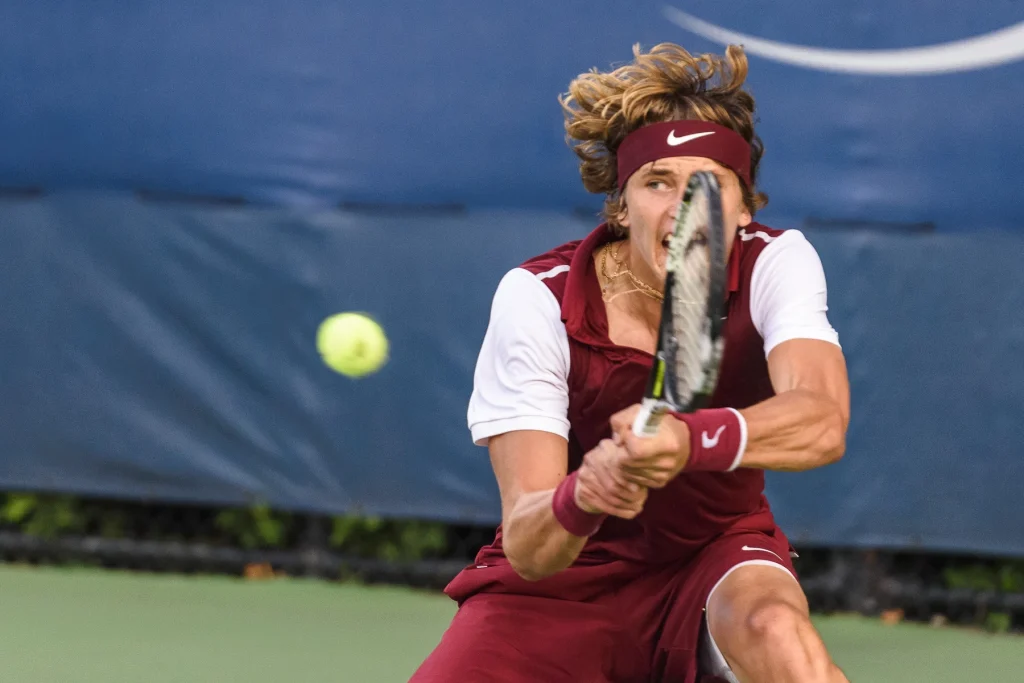
Alexander Zverev survived a demanding US Open first round against Lorenzo Sonego. The German won 6-4, 3-6, 6-7(7), 7-5, 6-4 after four hours and 53 minutes. He was two points from defeat late in the fourth set before breaking serve and extending the match.
Zverev won the first set before Sonego responded
Zverev opened with a 6-4 set, but his forehand did not remain fully reliable and Sonego increased his willingness to move forward. The Italian answered 6-3 in the second. These sets established a balanced match rather than a straight route for the top seed. Zverev could not rely only on his first serve because Sonego was willing to return aggressively and finish at the net. The German needed to improve the quality of the first groundstroke after serve so that a neutral rally did not immediately become an attacking chance for the opponent.
Sonego won the third-set tiebreak to take the lead
The third set reached a tiebreak and Sonego won it 9-7. That result gave the Italian a two-sets-to-one lead. His forward movement changed the geometry of points by asking Zverev to pass accurately while under pressure. A long match can tempt a baseline player to aim closer to the lines, but unnecessary risk would have produced shorter points for the wrong reason. Zverev had to continue creating returns and trust that repeated pressure would eventually produce a break chance.
| Part of the tennis match | Winner | Final score of the set |
|---|---|---|
| Opening set of the tennis match | Alexander Zverev | 6-4 |
| Second set of the tennis match | Lorenzo Sonego | 6-3 |
| Third set of the tennis match | Lorenzo Sonego | 7-6(7) |
| Fourth set of the tennis match | Alexander Zverev | 7-5 |
| Fifth set of the tennis match | Alexander Zverev | 6-4 |
Zverev recovered when he was two points from defeat
At 4-5, Zverev came within two points of losing the match. He held his position, survived the game and then broke before closing the set 7-5. The sequence matters more than a vague claim that he raised his level. He protected the immediate point, placed more returns in play and made Sonego execute difficult volleys late in the set. The Italian did not disappear; the top seed had to take the opportunity. Winning the set moved the contest into a fifth after the match had almost ended in four.
Zverev moved better and returned more serves
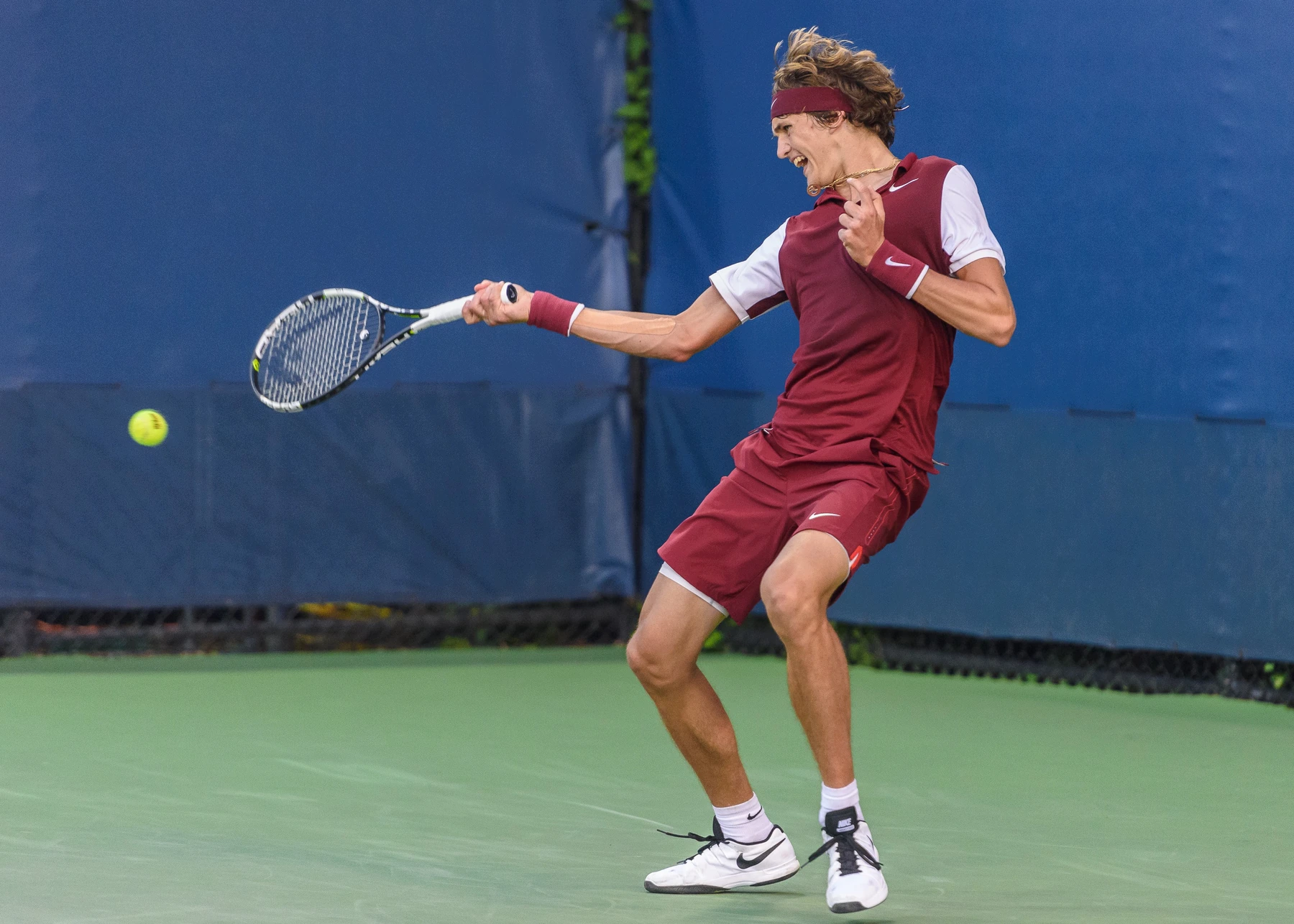
As the night continued, Zverev moved more freely and created 22 break points across the match, converting five. The conversion rate shows that Sonego resisted many pressure games, which helps explain the length of the contest. Zverev’s improvement was not one unstoppable surge. It was a gradual increase in the number of returns that reached a useful depth. Each extra ball made the net approach more difficult and allowed the German to pass or force a lower first volley. That repeated work finally produced the fifth-set advantage.
Zverev won one game on Sonego’s serve in the final set
Zverev won the fifth 6-4. After nearly five hours, the challenge was to maintain serve mechanics and avoid a rushed decision on return. One break can decide a final set when the leading player continues to hold. The German did enough to keep that margin and ended the match at 1:55 in the morning. Sonego’s resistance remained significant to the final games, so the score should not be shortened to a comfortable win by the top seed. Zverev advanced because he solved a match that was close to being lost.
Zverev must recover after a match lasting almost five hours
Four hours and 53 minutes on court affect recovery before the next round. Zverev must replace fluids, cool down and monitor any area that tightened during the night. Sleep timing is also unusual after a finish near two in the morning. The win provides confidence, but the team should not treat extra practice as the answer to every technical issue seen in the match. Video can identify the most important forehand and return patterns while the body recovers. The next round will test whether that balance was managed well.
Quentin Halys will be Zverev’s next opponent
Zverev will face Quentin Halys in the second round. Halys brings a different serve and a more direct style than Sonego. Zverev must first recover after spending almost five hours on court. The first-round victory gives him a place in the next match, but it provides no advantage on the scoreboard when play begins.


