
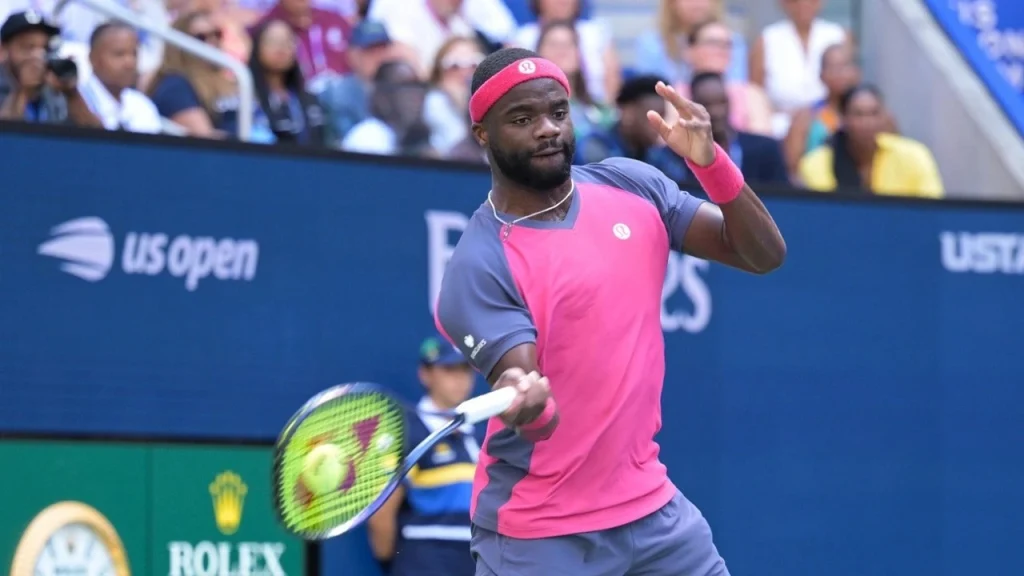
Frances Tiafoe defeated Daniil Medvedev 7-6(1), 6-4, 7-6(6) in the fourth round of the US Open. The American reached the quarterfinals in New York for the fourth time in five years and extended his perfect record in Louis Armstrong Stadium to ten matches. Medvedev stayed close in the first and third sets, but Tiafoe made fewer mistakes when each set reached its decisive stage and protected his advantage in the middle of the match.
The first set remained level until the tiebreak
Both players protected their service games and refused to give the other a lasting advantage. Tiafoe did not try to force a winner from every neutral exchange. He accepted longer rallies, moved Medvedev away from the center and waited for a shorter ball. In the tiebreak, that patience became direct pressure. He established an early lead, kept his returns inside the court and finished the set without allowing the score to become uncertain.
Tiafoe made the only successful break in the second set
The second set was decided by one service break, so every later game carried extra weight. Tiafoe protected the lead by varying placement and beginning the next shot from a balanced position. The important point was not simply the speed of his serve. He gave Medvedev fewer predictable returns and was ready for the first ball that came back. That structure prevented the Russian from building repeated pressure on one side of the court.
| Measure | Tiafoe | Medvedev |
|---|---|---|
| Sets won | 3 | 0 |
| First tiebreak | 7 points | 1 point |
| Third-set tiebreak | 8 points | 6 points |
| Venue record | 10 wins, no defeats | Not applicable |
| Next round | Quarterfinal | Tournament ended |
Medvedev kept the third set close
The third set again reached a tiebreak because neither player could create enough separation during the normal games. Medvedev used depth to make Tiafoe play from behind the baseline and stayed within two points of extending the match. Tiafoe responded by choosing clear targets instead of changing direction too early. The final margin was small, but the American’s decisions remained stable when one loose point could have changed the set.
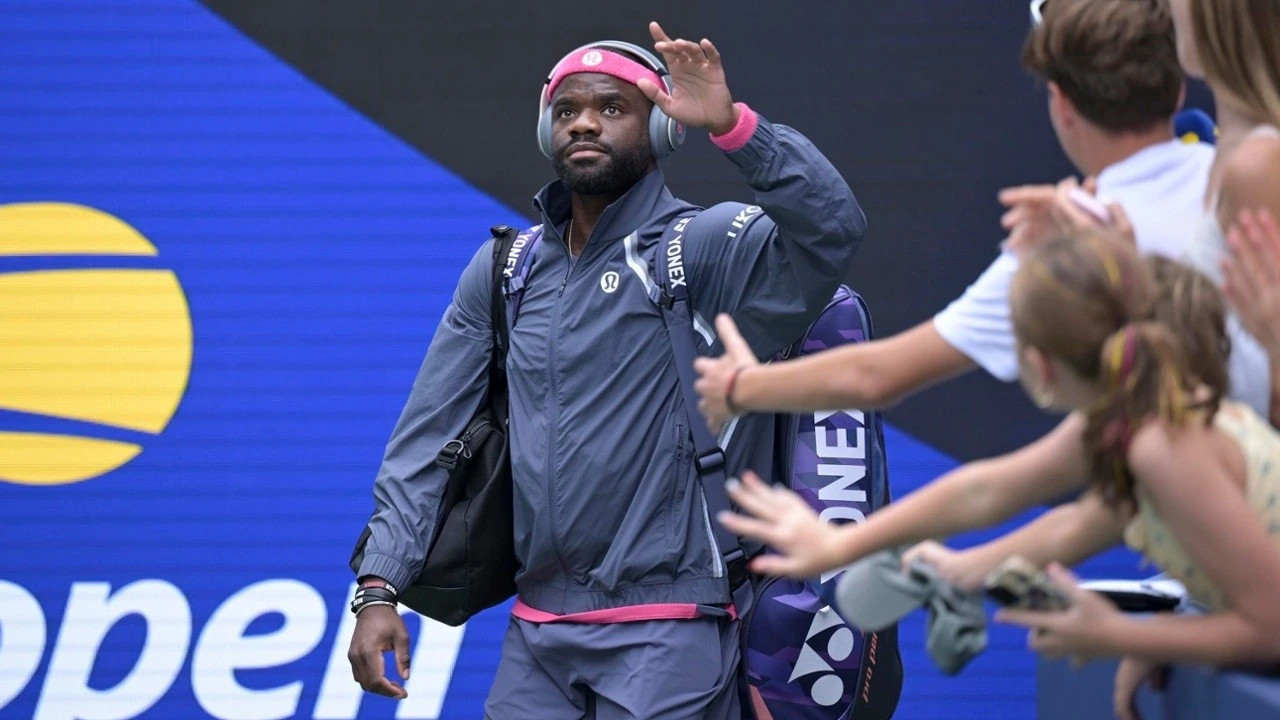
Louis Armstrong Stadium continues to suit Tiafoe
Tiafoe has now won all ten of his matches in this arena. The crowd responds to his energy, and he uses that support without rushing between points. A loud stadium can help a home player, but it can also encourage unnecessary risk. Tiafoe repeatedly slowed down before serving and returned to his plan after a long rally. His record at the venue reflects emotional control as much as the atmosphere around him.
A difficult season changed after a new start
The American ended his previous season early, changed his coaching team and began working with Mark Kovacs. The results improved across several surfaces, including a title in Halle and a final in Cincinnati. Those achievements gave him evidence that the changes were working before New York. Against Medvedev, the progress appeared in his willingness to use different parts of his game rather than waiting for one spectacular forehand to solve every difficult moment.
Medvedev could not convert pressure into a set
The score shows two tiebreaks, so the contest was far closer than a straight-set result may suggest. Medvedev reached many neutral positions and made Tiafoe complete difficult points. His problem came at the end of those sequences. A return that landed short or a change of direction made too early gave Tiafoe the first attacking chance. Improving those few moments matters more than judging the performance only by the final number of sets.
The next match moves Tiafoe to Arthur Ashe Stadium
Tiafoe’s first four matches were played in Louis Armstrong Stadium, but the quarterfinal against Alex Michelsen is scheduled for the larger Arthur Ashe Stadium. The conditions and space around the court will feel different. Tiafoe needs to keep the same preparation between points and avoid treating the venue change as a reason to alter successful patterns. Michelsen has not lost a set in the tournament, so a slow opening would be costly.
Tiafoe completed all three sets with discipline
Tiafoe won the first tiebreak clearly, protected one break through the second set and stayed calm in a tight final tiebreak. Each task required a different response. That variety is the strongest part of the result. He did not need to dominate every game because he understood which points demanded greater precision. The quarterfinal place came from repeated control at the end of sets, not from one short burst that Medvedev had no chance to answer.


