
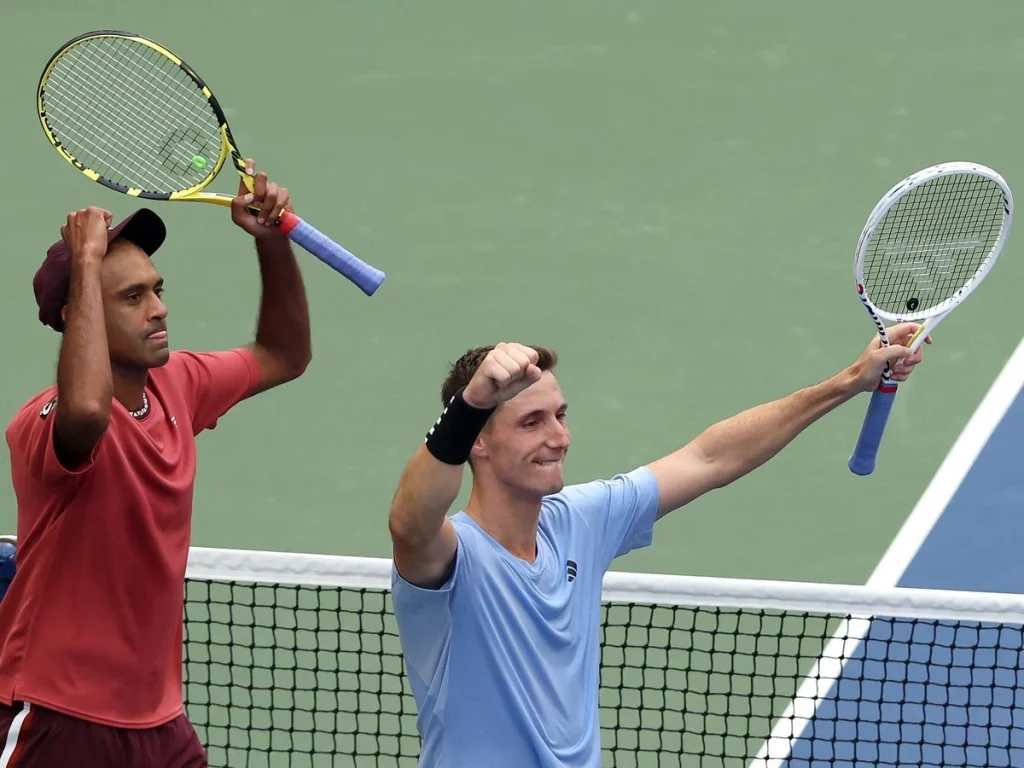
Rajeev Ram and Joe Salisbury defeated Theo Arribage and Albano Olivetti 6-7(2), 7-6(9), 6-4 at the US Open. Arribage and Olivetti came within one point of victory twice during the second tie-break, but the former champions stopped both chances. Ram and Salisbury then communicated clearly at the net, took an early lead in the final set and protected that advantage until the match ended.
Arribage and Olivetti were better in the first tie-break
The opening set reached a tie-break because neither pair earned a decisive advantage earlier. Arribage and Olivetti then won the short sequence clearly. In doubles, one weak return or uncertain movement at the net can decide several quick points. Ram and Salisbury needed to treat it as one poor sequence and continue using the parts of their game that had worked before it.
Neither team led during the second set
Ram and Salisbury first had to protect their own service games. They used familiar positions and chose a simple first volley whenever possible. Olivetti’s reach and Arribage’s quick movement made narrow angles dangerous. Reliable opening shots kept the score equal and created another tie-break, where only a few decisions would separate the teams.
| Match detail | Confirmed record |
|---|---|
| Winners | Rajeev Ram and Joe Salisbury |
| Opponents | Theo Arribage and Albano Olivetti |
| Score | 6-7(2), 7-6(9), 6-4 |
| Opponent came within one point of victory | Twice |
| Format | Men’s doubles |
Ram and Salisbury answered each threat separately
The two points that could have given Arribage and Olivetti victory did not begin in the same way, so Ram and Salisbury could not repeat one automatic answer. They focused on the current serve, return and court position. A deep return or a firm first volley could make the rally equal again. This approach kept their attention on the next ball rather than on the possible final result.
Both partners knew which area to cover near the net
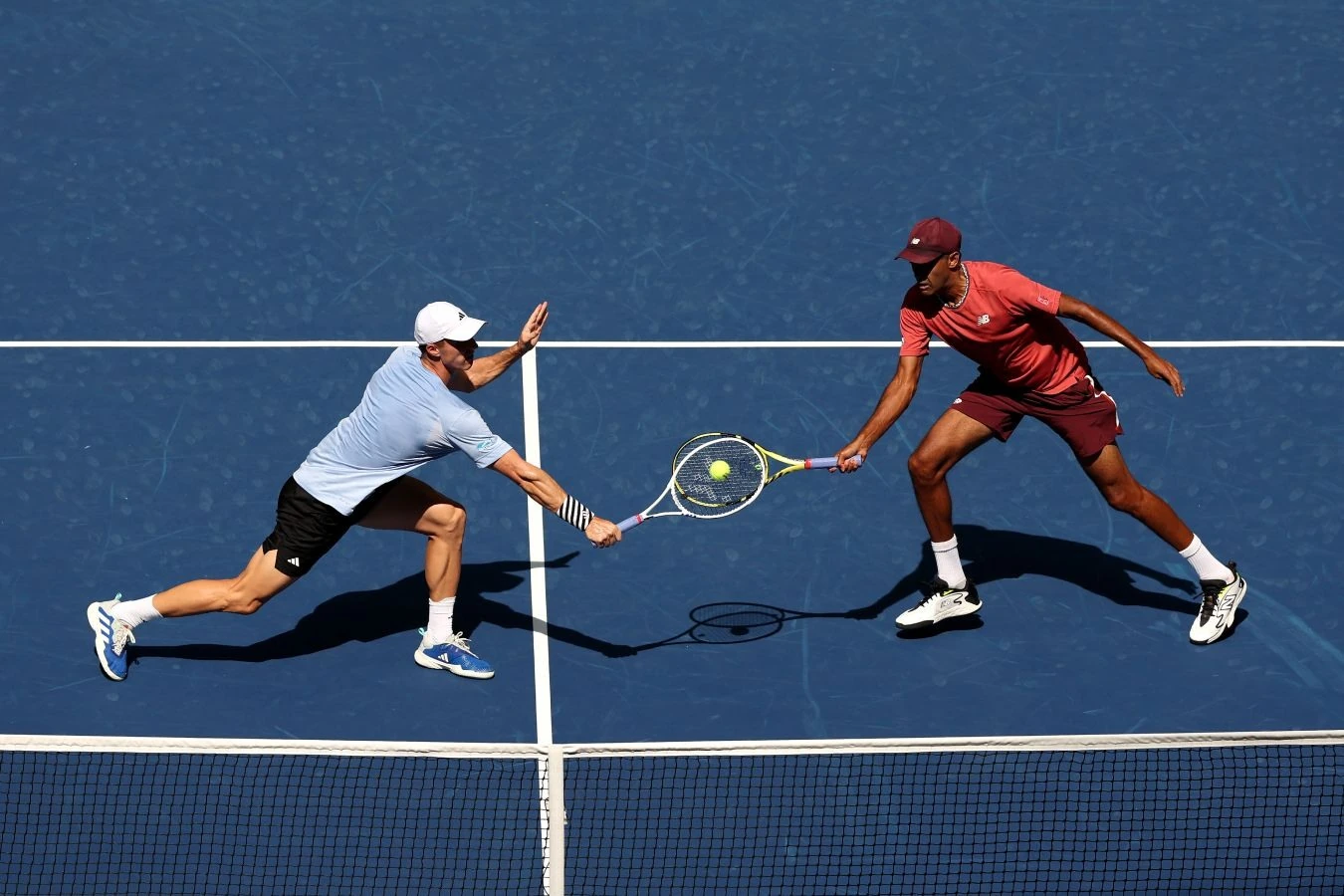
The second tie-break reached 11-9 because neither team could establish the required two-point lead earlier. Ram and Salisbury had to decide who covered the middle and who protected the line. If both players moved toward one ball, the other side of the court became open. Clear communication helped them survive the closest part of the match and force a final set.
They returned to play calmly in the final set
Arribage and Olivetti had just missed two chances to win, while Ram and Salisbury had just escaped defeat. Neither fact decided the next game. The former champions prepared for the new set, earned an early advantage and did not search for a spectacular finish. Their first decisions after the break were controlled and practical.
One successful return game decided the final set
After taking the lead, Ram and Salisbury focused on accurate first serves, the first movement of the net player and a safe target after the return. They remained active instead of becoming defensive. Their positioning prevented Arribage and Olivetti from using the same return direction repeatedly, and the advantage remained secure through the 6-4 finish.
Experience supported direct communication
Previous success helped Ram and Salisbury recognize a familiar pressure situation, but it did not decide the points for them. They still had to save two match points and win a long tie-break. Short calls and trusted positions reduced uncertainty. The value of experience was a clear routine before the next shot, not a guarantee based on earlier titles.
The next match requires a stronger start in tie-breaks
Ram and Salisbury can keep the serving structure and direct net coverage that worked in the final set. The first tie-break showed where improvement is needed. They should review which returns gave Olivetti an easy next shot and where Arribage found open space. The comeback was important, but the clearest lesson is how to avoid another early deficit.
Both partners shared responsibility under pressure
A partner can offer a formation and a clear call, yet the player striking the next ball must complete one individual action. Ram and Salisbury balanced those responsibilities when their opponents had two chances to win. They trusted the agreed position without waiting for the partner to solve every contact. Teams preparing for similar moments can rehearse one serve pattern and one return pattern, then allow the rally to develop instead of adding a new instruction after every shot.


