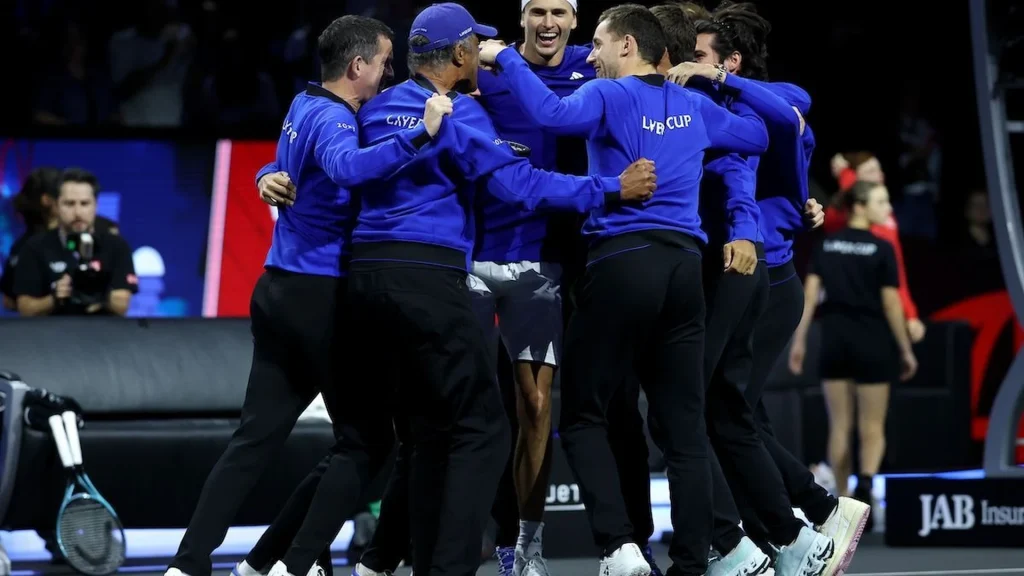
Alexander Zverev defeated Learner Tien 7-6(3), 6-3 to give Team Europe a 13-5 victory and its sixth Laver Cup title. The German clinched the competition for the fourth time and moved to 26 points in the event’s all-time standings. Tien kept the opening set level through twelve games, but Zverev controlled the tie-break and then used the scoreboard advantage to apply greater pressure on the American’s service games.
Tien made the first set a test of discipline
The younger player did not allow the occasion to become an immediate serving exhibition for Zverev. Tien absorbed pace, redirected the ball and made the German construct points beyond the first strike. Holding through twelve games also meant dealing with the team environment, where every changeover carried visible reaction from both benches.
For Zverev, the challenge was to keep serving with margin while looking for the correct return opportunity. Overpressing against a player who uses pace well can turn a neutral ball into a counterattack. He accepted the close score and avoided treating each Tien hold as a crisis. That patience preserved energy for the tie-break, the part of the set where one loose point would have immediate consequence.
The tie-break rewarded first-shot clarity
At 3-3 or later in a normal set, an error can be repaired over several games. In a tie-break, the next two points may decide everything. Zverev improved the quality of his first serve and made the return pattern simple: put enough balls in play to prevent Tien from collecting easy points. The 7-3 margin came from controlling those first exchanges.
Winning the tie-break also changed the team score from possibility to immediate pressure. Tien now needed to reverse a match against an opponent whose serve had survived the most demanding phase. Zverev could begin the second set knowing that the competition would end if he maintained the same standards, while the American had no room for a slow service game.
Zverev used the second set to increase return pressure
With the first set secured, Zverev could be more assertive on selected second serves. He did not need to attack every return. Standing in a position that threatened a deeper strike was enough to make Tien consider placement and pace. A weaker delivery then gave the German the chance to take court position and direct the following ball.
The eventual break mattered because Zverev protected it with his own service rhythm. A single advantage is fragile if the next game begins with rushed decisions. He continued to choose high-percentage locations, used height to create a difficult contact point and avoided giving Tien a sequence of free looks at a second serve. The 6-3 set remained controlled without becoming passive.
| Laver Cup detail | Outcome |
|---|---|
| Match | Alexander Zverev def. Learner Tien |
| Score | 7-6(3), 6-3 |
| Team result | Europe won 13-5 |
| Zverev record | Fourth clincher and 26 all-time event points |
The team score increased the pressure on every service game
The Laver Cup does not feel like an ordinary tour match because one result closes or extends a team competition. Zverev had already clinched the trophy three times, so his experience included the practical routine of playing while teammates react to every point. That history did not guarantee the result, but it helped make the atmosphere familiar.
Tien faced the opposite situation. He was responsible for keeping Team World alive against an opponent with a long serving reach and a winning record in decisive matches. His competitive first set showed that the pressure did not overwhelm him. The loss came from a small number of high-value points, not from an inability to participate at the level of the event.
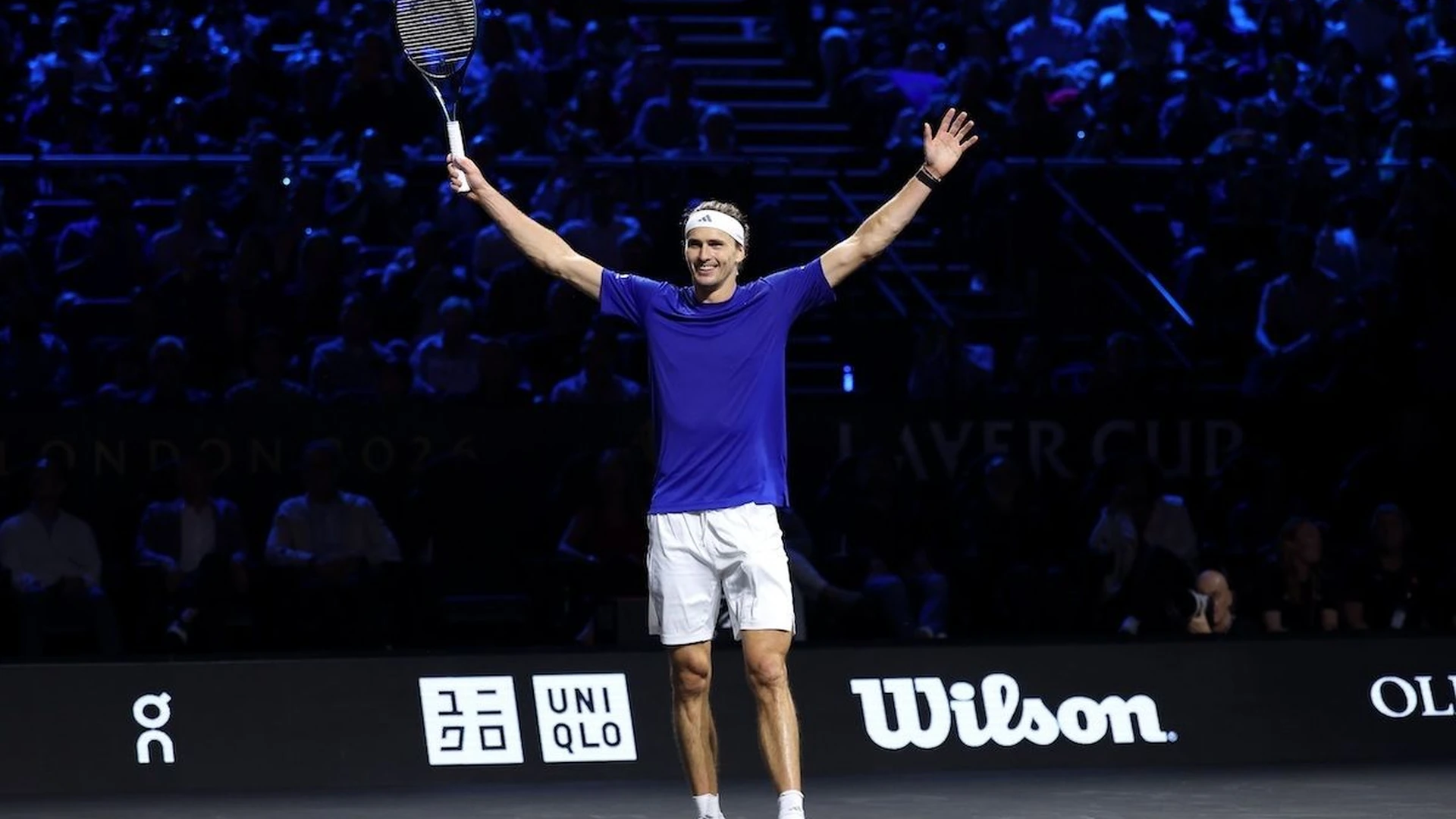
Twenty-six all-time points reflect long-term consistency
Zverev’s 26 points in the competition are the result of returning across editions and contributing in different score situations. Event records can be influenced by the changing value assigned to matches on each day, so the number should not be treated like a standard tour ranking. Its meaning is continuity: captains have repeatedly trusted him with matches that affect the team total.
Four title-clinching wins add a different measure. A clincher requires the team to have created the opportunity, then one player to finish it. Zverev’s teammates supplied the points that made 13 possible. His job was to prevent the contest from moving to another match, and the straight-set win completed that collective work.
Europe’s earlier wins created the chance to secure a sixth title
The 13-5 score shows that Team Europe had already accumulated a strong advantage. Doubles combinations, earlier singles wins and daily planning all shaped the position Zverev inherited. His victory deserves recognition as the finish, while the structure of the event makes it impossible to separate that finish from the preceding results.
Tien leaves with evidence that he can hold his level against an experienced opponent in a loud team setting. Zverev leaves with another clincher, a sixth European title and a match in which patience was as important as power. The opening tie-break was the true hinge; once it moved to Europe, the German used serve and return pressure to close the event cleanly.