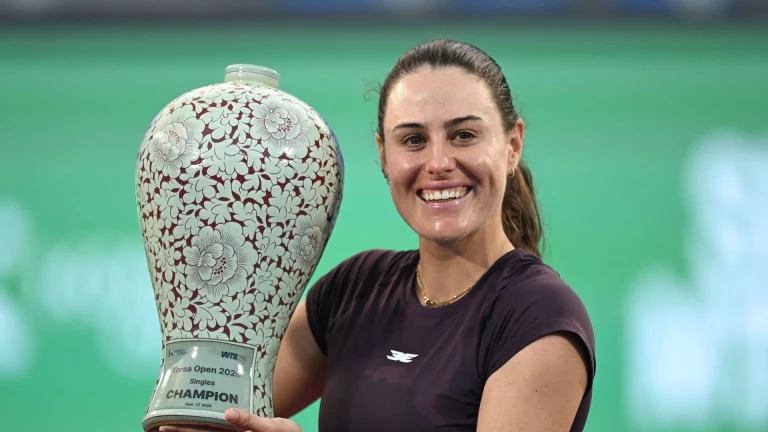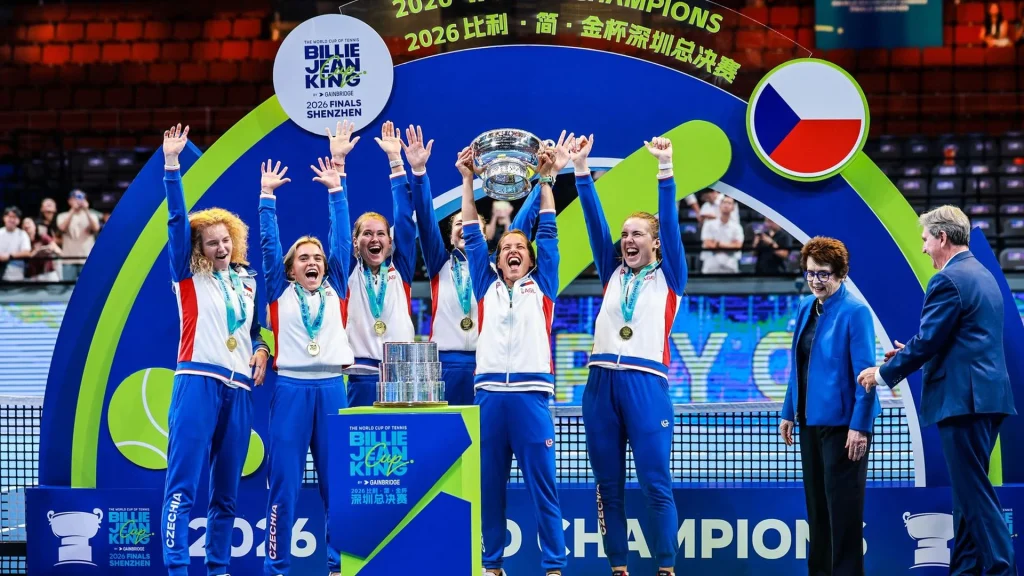
Czechia won the Billie Jean King Cup for the twelfth time by beating Ukraine 2-0 in the final. Karolina Muchova defeated Anhelina Kalinina 6-2, 6-3 before Linda Noskova beat Elina Svitolina 6-3, 7-6(5). The two singles victories removed the need for a deciding doubles match and delivered Czechia’s first title in the competition since 2018.
Muchova gave Czechia the first point of the final
Muchova opened the final with a straight-sets win over Kalinina. Her variety prevented the match from settling into one pace. A lower slice changed the contact point, a deeper drive moved Kalinina behind the baseline and a timely move forward shortened the rally when the opening appeared.
The 6-2, 6-3 score also reduced the energy spent by the team before the second singles match. In a national-team final, the first player is not only trying to win her point. A calm finish lets the next player prepare without wondering whether she will need to begin during a long, emotional deciding set.
Noskova won a close tiebreak to secure the trophy
Noskova won the first set 6-3, but Svitolina kept the second close enough to force a tiebreak. The Czech player had to change from building a lead to winning points with almost no scoreboard margin. A tiebreak rewards a clear first pattern because there is little time to recover from two uncertain service points.
At 7-5 in the tiebreak, the match and the cup ended together. Noskova did not need a third set or help from the doubles pair. Closing against an experienced opponent such as Svitolina required more than power. She had to keep the return in play and avoid giving away a short run of points through impatience.
Two straight-set victories removed the need for doubles
Captain Barbora Strycova could prepare several possible line-ups, but the final was decided by the first two selections. That does not make the unused doubles pair unimportant. Their readiness allows the singles players to focus on their own match without feeling that the whole competition depends on finishing the tie immediately.
The 2-0 score reflects depth as well as individual quality. Muchova established the lead with tactical variation, while Noskova handled a different problem against Svitolina. Czechia did not rely on the same style twice, which made it harder for Ukraine to carry one successful adjustment from the first match into the second.
| Match | Result |
|---|---|
| Muchova – Kalinina | 6-2, 6-3 |
| Noskova – Svitolina | 6-3, 7-6(5) |
| Final tie | Czechia 2-0 Ukraine |
| Czech titles | 12 |
Svitolina’s second-set resistance gave Ukraine its best chance
A final decided in two matches can still contain a genuine turning point. Svitolina’s push into a second-set tiebreak was Ukraine’s opportunity to extend the day. Winning that passage would have forced Noskova into a third set and increased the chance that doubles became necessary.
Ukraine therefore should not review the tie only through the final 0-2 line. Kalinina needed a stronger answer to Muchova’s changes of pace, while Svitolina reached the phase where a few points could alter the structure of the final. The next improvement lies in converting that resistance before the opponent reaches match point.
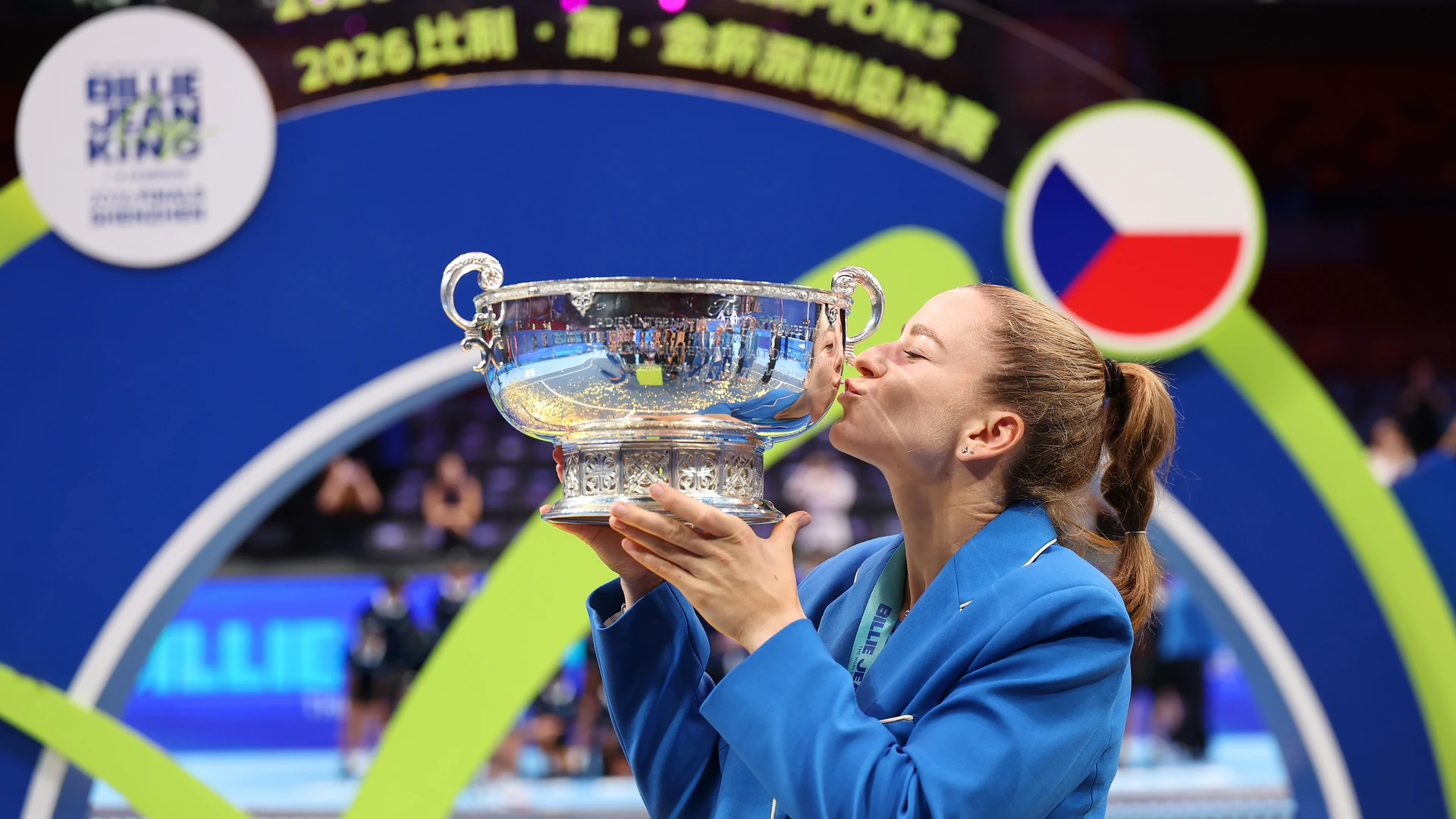
Muchova and Noskova delivered Czechia’s first title since 2018
Czechia has a long history in the competition, but the gap since the previous trophy meant this team needed its own result. The twelfth title connects to that tradition without being produced by the same line-up. Muchova, Noskova and the wider squad created a modern version of the depth that has defined Czech success.
Future ties will bring different surfaces and availability, so the final should be used as a model rather than a fixed order. The model is clear: select complementary singles players, keep doubles prepared and reduce emotional waste between matches. In the final, Czechia executed all three parts and never allowed the deciding point to leave its control.
Czechia kept a doubles option ready even though it was not needed
Czechia removed the need for a deciding doubles match by winning both singles rubbers. That does not make doubles preparation unnecessary. It shows the value of placing each singles player in a role that matched her current strengths, while keeping a complete alternative ready. Team tennis rewards clarity because uncertainty over one selection can affect several players at once.
Ukraine’s defeat should be separated from a lack of resistance. Reaching the final required handling different surfaces, opponents and emotional conditions across the event. The useful review is where the Czech players first gained control of rallies and whether the return position allowed enough pressure. Those are details that can be trained; the final score alone cannot explain them.