Kimberly Birrell won her first WTA singles title by beating Maya Joint 6-4, 6-2 in Seoul. The final lasted one hour and 23 minutes, and Birrell converted six of ten break points. The result is expected to take her into the Top 50 and completed the first all-Australian tour final since 2017.
Birrell created ten break points with an effective return
Converting six break points meant the champion repeatedly turned a good return into a completed game. The first return did not always need to be a winner. Depth through the middle removed Joint’s preferred first strike and allowed Birrell to begin the rally without giving away the court. That pressure accumulated each time the server faced another difficult opening ball.
Ten opportunities also show that Birrell reached advantage positions beyond the six games she won. This is important because a final can tighten after one missed chance. She continued to build the same pattern rather than searching for a different, riskier return. The score grew from repeatable pressure, not one short collapse.
Birrell stayed patient to win the first set 6-4
A close opening set often determines whether a first-time finalist can play freely. Birrell protected the lead without allowing the significance of the occasion to speed up her decisions. When the rally was neutral, she accepted another exchange; when Joint left a shorter ball, she moved forward and finished from a stronger position.
Joint still made the set competitive and forced Birrell to serve under pressure. The difference was the number of points that began on Birrell’s terms after the return. Winning 6-4 gave her a scoreboard advantage and confirmed that the tactical plan could survive the tension of a title match.
Birrell kept the same plan and won the second set 6-2
Birrell moved through the second set 6-2. A wider score can tempt a player to attack too early because the finish feels close. She instead kept returning to the patterns that had already damaged Joint’s service games. The rallies were made simple: neutralise the first ball, move the opponent and choose the open court only when it was genuinely available.
Joint needed to shorten points or improve the first strike, but the required risk also created more openings for Birrell. The champion’s calm court position allowed her to absorb that change. She did not retreat so far that every rally became defensive, and she did not stand inside the baseline without time to react.
| Final detail | Value |
|---|---|
| Champion | Kimberly Birrell |
| Runner-up | Maya Joint |
| Score | 6-4, 6-2 |
| Break points converted | 6 of 10 |
| Match time | 1h 23m |
The all-Australian final brought additional attention
Both players knew the opponent well enough for the match to contain fewer tactical surprises. National familiarity can make a final more uncomfortable because each side recognises the other’s preferred patterns. Birrell still had to treat the match as a contest rather than a shared milestone for Australian tennis.
The previous all-Australian WTA final had been in 2017, so the occasion also brought attention beyond the normal tournament round. Birrell handled that context by keeping the points narrow. A player cannot control the historical meaning during the rally; she can control the height, depth and target of the next ball.
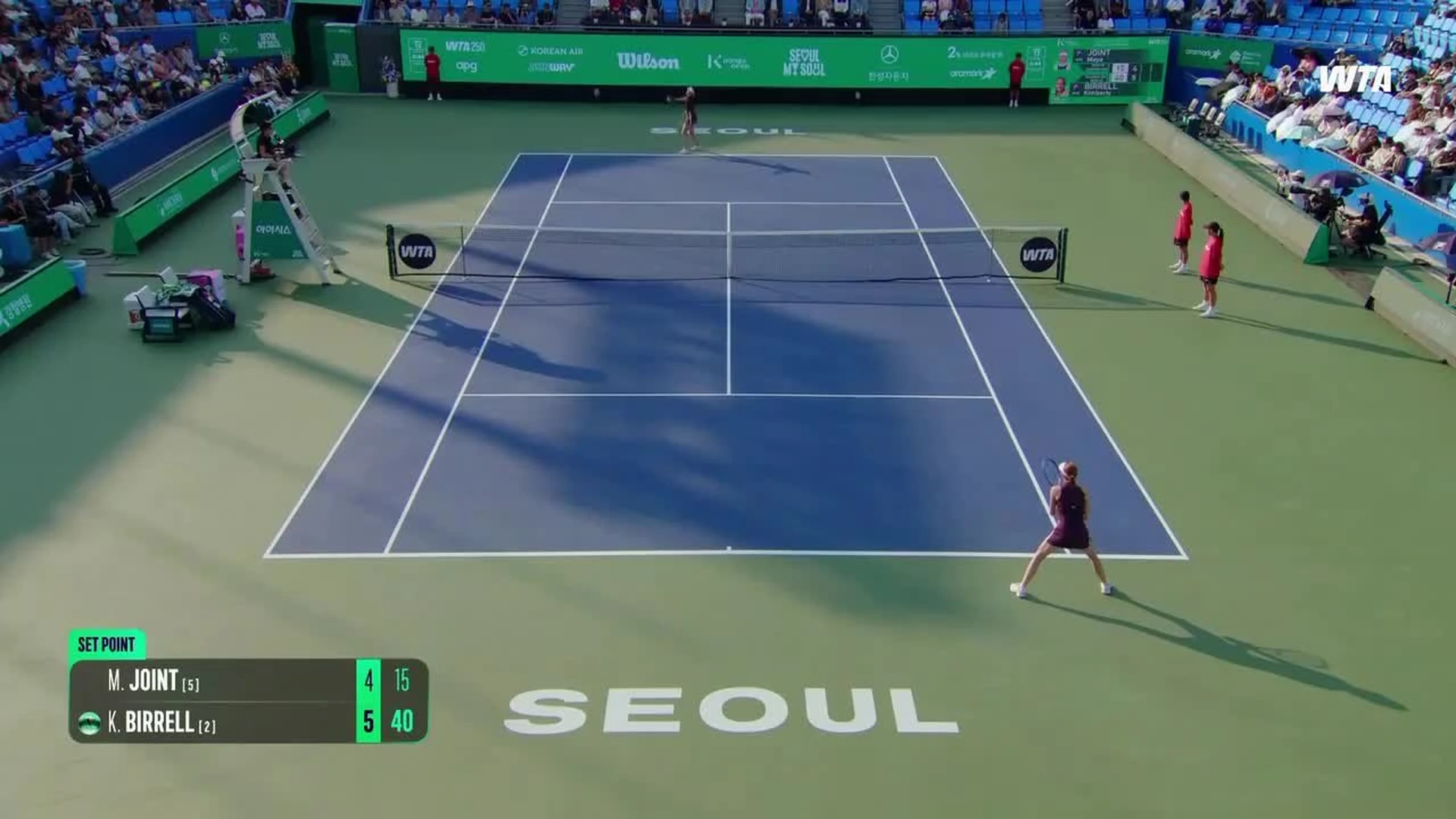
A Top 50 ranking will improve Birrell’s tournament access
The projected ranking lift should make entry into future events easier and reduce the number of weeks built around qualifying. That can improve preparation because the player knows the schedule earlier. It also brings stronger fields and opponents who will study the Seoul final for patterns that can be denied.
Birrell’s first title provides a useful foundation: she returned with purpose, converted chances and closed the match in straight sets. The next step is not to reproduce the same score every week. It is to carry the clarity of those decisions onto a different surface and through matches in which the break-point conversion is less generous.
Birrell can now plan more tournaments without qualifying rounds
Kimberly Birrell does not need to change the tennis that carried her through Seoul. The immediate challenge is managing the opportunities created by a higher ranking and greater attention. More direct entries can reduce qualifying rounds, but stronger main-draw opponents arrive sooner. A selective schedule can protect recovery while preserving the match rhythm that supported her title run.
The all-Australian final also gives the national programme a useful reference. It shows that players can arrive through different paths and still meet in the last match of a tour event. Coaches should study the repeated patterns rather than copy one champion’s style: return position, first-strike quality and physical recovery between rounds. Those details can inform development without turning one week into a universal formula.