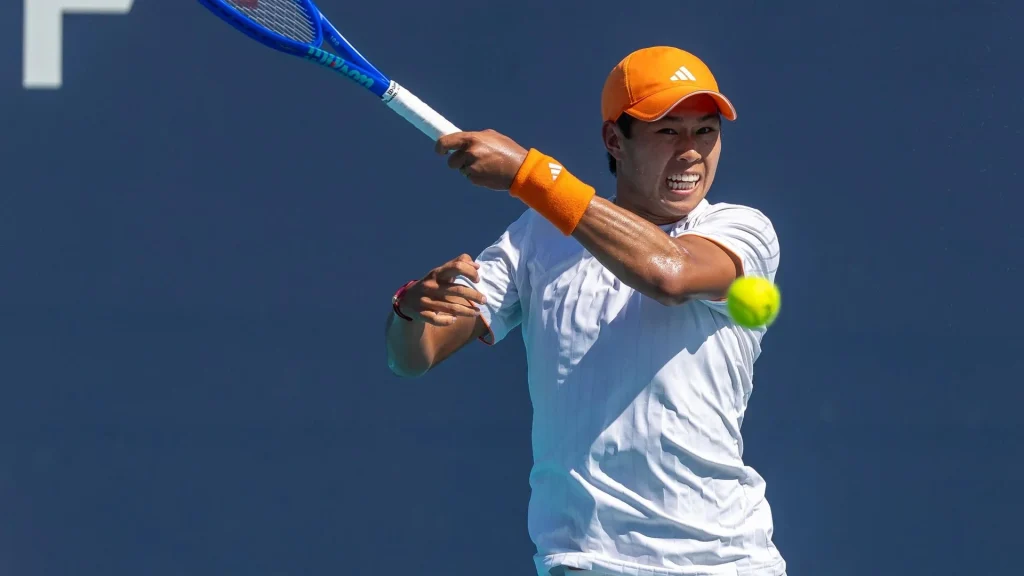
The twenty-year-old American Tien defeated Flavio Cobolli 6-3, 2-6, 10-7 on the second day of the Laver Cup. He recovered after losing the second set and gave Team World the points needed to level the event at 3-3. The match lasted one hour and thirty-five minutes and was his first appearance in the competition.
Tien controlled the first set with deep baseline strokes
The American kept enough depth on his baseline strokes to prevent Cobolli from attacking every neutral ball. A deep serve return is especially valuable in a team event, where the atmosphere can encourage players to search for a spectacular start. Tien instead built pressure through repeatable strokes and waited for the shorter reply.
Winning the first set 6-3 gave him control of the scoreboard but did not settle the match. Cobolli still had the physical pace and forehand aggression to change the rallies. Tien needed to keep the ball away from the Italian’s preferred strike zone and avoid letting one poor service game alter his court position.
Cobolli’s second-set response was decisive
Cobolli won the next set 6-2 by increasing his pressure and taking time away from Tien. The shift showed why a match cannot be read from the first set alone. Once the Italian began controlling the centre of the court, Tien‘s defensive replies became shorter and the next attack arrived too quickly.
The American did not have a full deciding set in which to rebuild slowly. The Laver Cup format moved directly to a match tiebreak. That made the short concentration reset between sets a technical task as well as a mental one. Tien had to choose one or two reliable patterns and trust them immediately.
| Match stage | L. Tien | F. Cobolli |
|---|---|---|
| Score in the first set | 6 | 3 |
| Score in the second set | 2 | 6 |
| Match tiebreak | 10 | 7 |
| Team score after match | Team World 3 | Team Europe 3 |
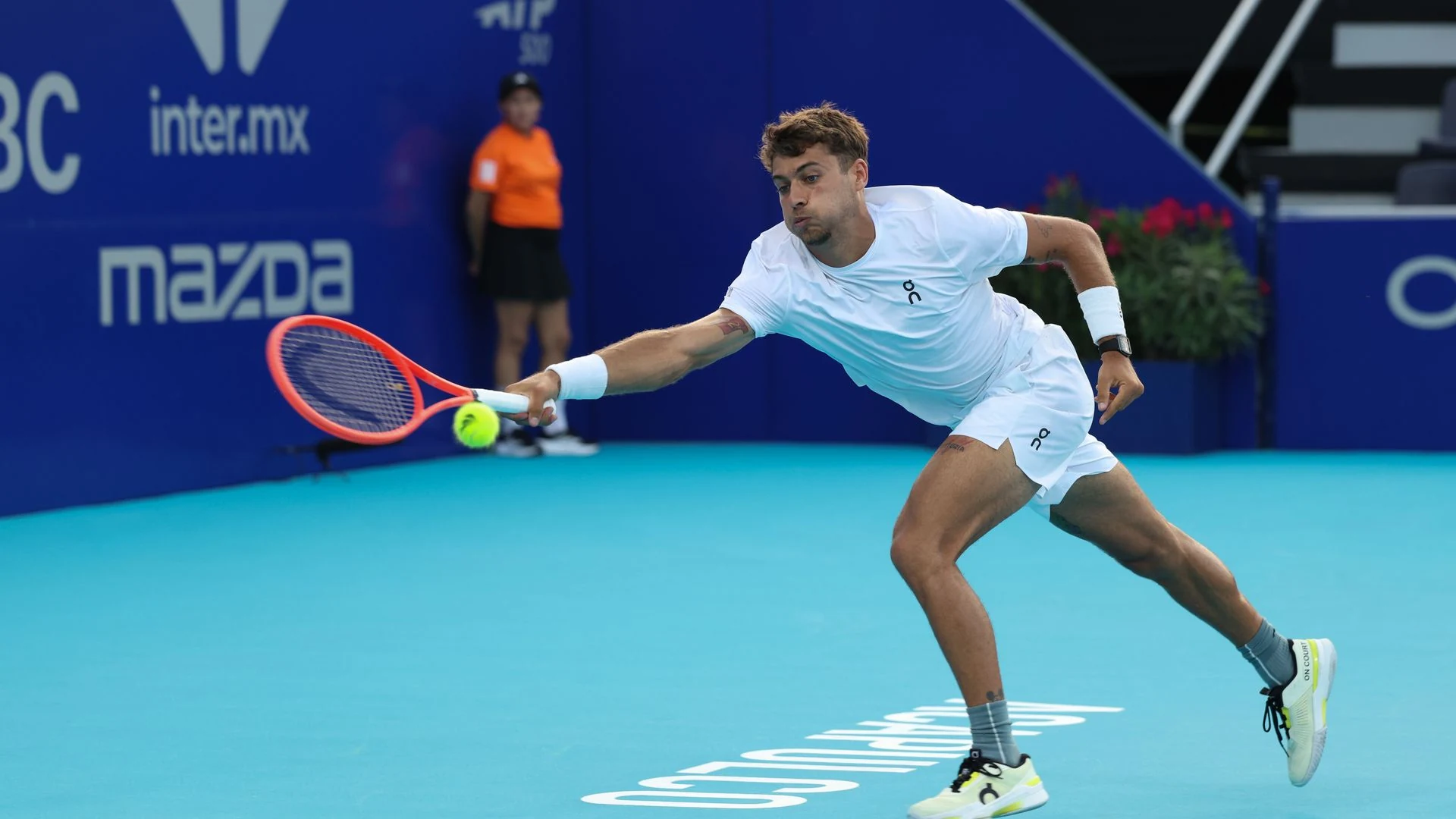
Tien made clearer decisions in the match tiebreak
Tien took the decider 10-7. A match tiebreak magnifies every point won against serve because there is little time to recover. Serve targets, receiving position and the safe margin over the net need to be decided before the point begins. Changing direction without balance can give away two points in less than a minute.
The American stayed composed enough to create a lead and protect it. That does not mean he played without risk. It means the risk was connected to the score and the ball available. Cobolli continued to threaten, but Tien avoided the sequence of rushed errors that often follows a lost second set.
Team scoring increased the value of the win
The result levelled the Laver Cup at 3-3. A singles victory in this setting changes more than one player’s record; it shapes the choices and pressure for the matches that follow. Tien entered as a debutant, yet the team needed an immediate contribution rather than a long adaptation period.
The bench can add energy and information, but the player still has to filter it. Too many tactical messages between points can make the next rally feel crowded. Tien‘s performance suggested that he used the support while retaining control of his tactics.
The debut shows why Tien has climbed to 13th in the rankings
At twenty years old and ranked thirteenth, Tien arrived with evidence of a rapid rise. The Laver Cup offered a different test: short preparation, a loud team environment and a deciding tiebreak instead of a full third set. His response after losing the second set 2-6 was more revealing than an easy straight-sets win would have been.
Cobolli’s strong middle phase remains useful evidence for his own team. He found a way to move the match and forced the American to solve a new problem. Tien supplied the final answer, but the quality of the contest came from both players changing the balance rather than repeating the same rallies for ninety-five minutes. Team competition added another layer to Tien‘s task. He was not only solving Cobolli’s forehand patterns; he also had to manage the scoreboard, the bench and every brief sequence of points. The American’s best periods came when his serve return landed deep and he kept the first neutral ball in play before looking for an angle. Cobolli became more dangerous whenever that first exchange stayed short. For Tien, the victory is useful because the method can transfer to later matches: disciplined receiving position and patient direction remain valuable even when the next opponent brings a different serve. The match tiebreak compressed every choice, so Tien could not rely on a long set to recover from an early mistake. He used the serve to begin neutral or ahead, kept his serve-return targets large and resisted changing direction from a poor position. Cobolli still created pressure with his forehand, but Tien made him hit one more ball before taking the line. In a team competition, that restraint has a second value: it gives the bench a stable pattern to reinforce between points. His debut was therefore useful beyond the score. The performance showed that the ranking rise has been accompanied by decisions that can survive a shortened, high-pressure finish.