
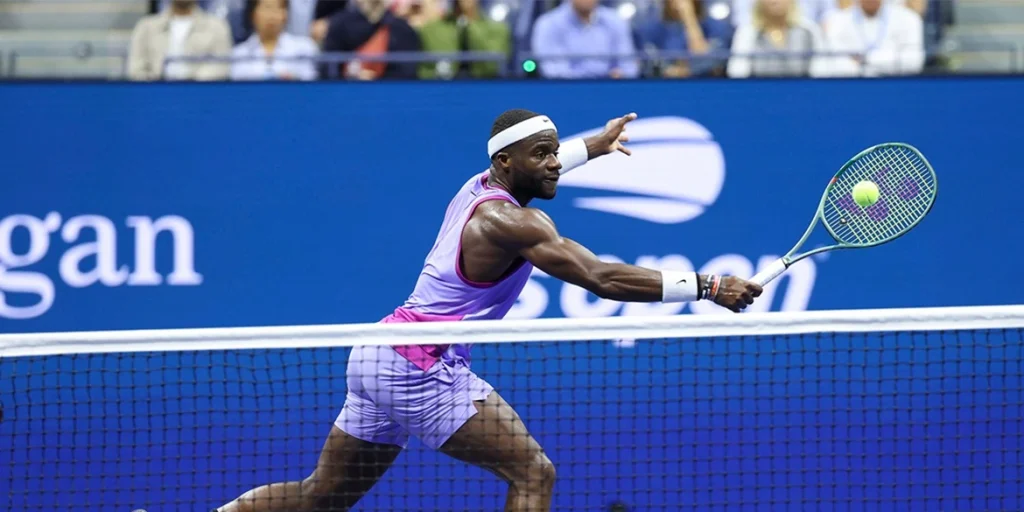
Frances Tiafoe reached the US Open semifinals by defeating Alex Michelsen 5-7, 3-6, 7-5, 6-3, 7-6(6). Michelsen won the first two sets and came close to closing the match in the third, but Tiafoe held his position, returned with more depth and gradually reduced the number of short points available to his opponent. The match lasted four hours and 38 minutes. All three of Tiafoe’s Grand Slam semifinal appearances have now come in New York.
Michelsen controlled the early exchanges
Michelsen used his serve and first attacking shot to keep many rallies short in the opening two sets. Tiafoe often received the ball from an uncomfortable position and could not consistently turn defense into a neutral exchange. The score reflected that control, but the match was not decided by one repeating pattern. Tiafoe began to place more returns through the center and made Michelsen play an additional shot. That small adjustment reduced the angles available on the next ball and gave the receiver more time to recover.
The third set required calm under immediate pressure
Tiafoe did not need a spectacular change; he needed to stop the match from ending. He protected his service games with clearer targets and did not rush to attack every forehand. On return he accepted that one controlled reply could be enough to start the point. The longer exchanges asked Michelsen to create power several times instead of once. Tiafoe’s late break came from sustained pressure rather than a single reckless attack, and it carried the physical contest into the fourth set.
| Set | Tiafoe | Michelsen |
|---|---|---|
| 1 | 5 | 7 |
| 2 | 3 | 6 |
| 3 | 7 | 5 |
| 4 | 6 | 3 |
| 5 | 7 | 6 (6) |
Depth changed the position of both players
A return can change a service game without winning the point immediately. Tiafoe’s deeper replies kept Michelsen closer to the baseline and made the next strike less comfortable. From there, Tiafoe could use his speed without defending from far behind the baseline. He also sent enough balls through the middle to limit immediate changes of direction. The pattern worked because it changed court position and reduced the number of easy angles available to Michelsen.
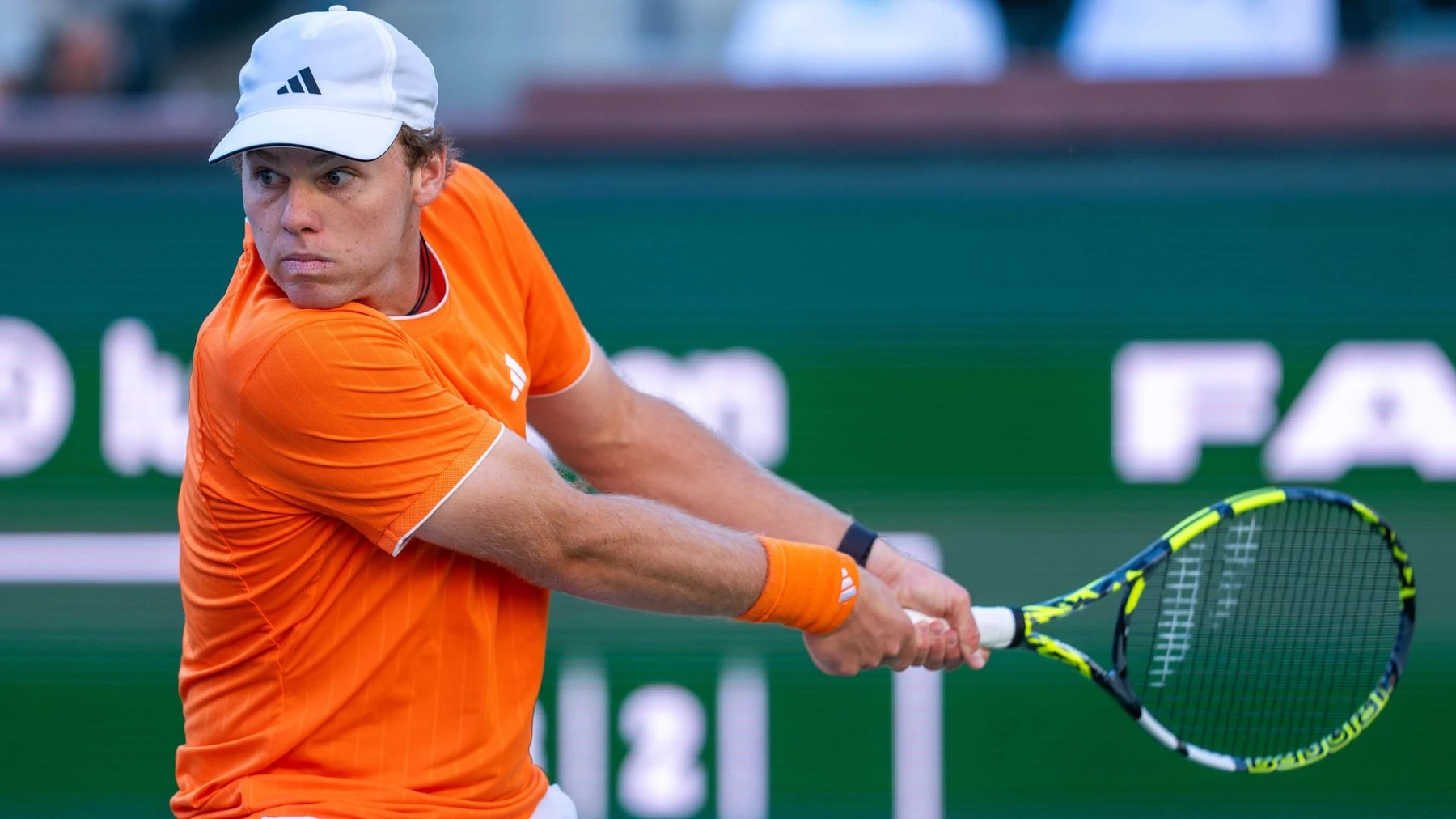
Tiafoe used a simpler attacking plan in the fourth set
With the match level, Tiafoe chose more direct combinations. He used the serve to open one side, moved inside the court and finished when the ball was short enough. He did not try to end the point from every neutral forehand. That choice protected him from quick errors after the difficult work of returning to the match. Michelsen still had chances, but he now needed to defend more often and spend more energy before reaching his own attacking position.
The deciding tiebreak preserved the tension
Neither player created a safe distance in the final set, so the match reached a deciding tiebreak. Tiafoe had to manage the score and his energy after more than four hours. A short lead could disappear in two points, and a missed first serve did not automatically mean the rally was lost. He stayed committed to depth, used the open court when it appeared and closed the match 8-6 in the breaker. The final margin was narrow because both players continued to produce answers under pressure.
Energy management helped Tiafoe complete the comeback
A five-set comeback requires more than endurance. Tiafoe had to keep his footwork organized while reducing unnecessary movement between points. Serving with a repeatable routine gave him a stable start, and selecting the correct moments to attack prevented long rallies from becoming wasted effort. Michelsen also faced a demanding physical test as the advantage changed. Tiafoe conserved energy through clearer decisions instead of trying to shorten every point.
New York remains Tiafoe’s strongest major stage
Tiafoe’s three major semifinals have all come at the US Open. Familiar courts and home support may improve comfort, but the repeated result also reflects his ability to use pace and crowd energy without losing the shape of a point. The next round will require another reset. A comeback can create belief and fatigue at the same time. Recovery work, return practice and a short review of the successful third-set patterns are more valuable than reliving every dramatic moment.


