
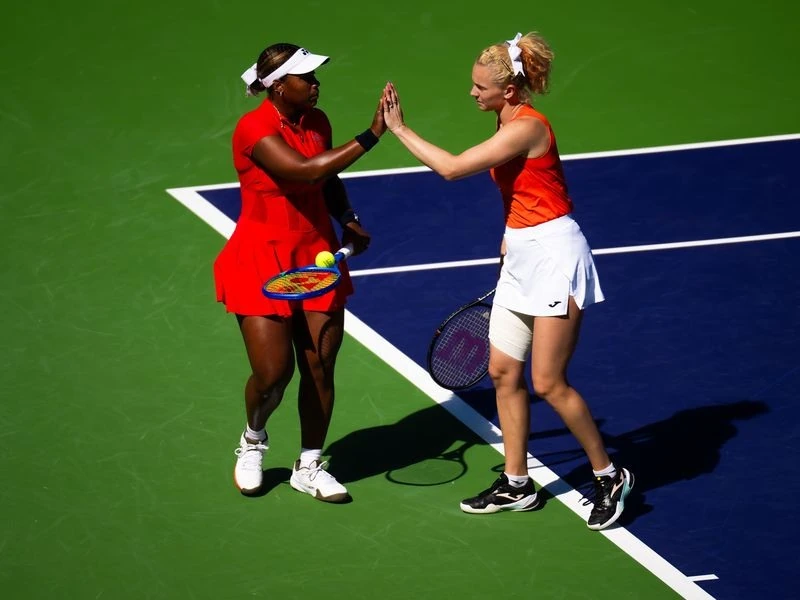
Katerina Siniakova and Taylor Townsend defeated Xinyu Wang and Yifan Xu 6-3, 6-4 in the second round of the US Open women’s doubles event. The top seeds completed the match in two sets, although several later service games required extended exchanges and repeated decisions at the net. Their ability to protect the centre, choose the right player to attack and reset after a blocked first volley kept the contest from moving into a deciding set.
Doubles begins with control of the middle
Two players can cover more court than one, so a ball through the centre creates hesitation and reduces the available angles. Siniakova and Townsend used their net positioning to make Wang and Xu hit around them. The tactic requires trust because the player at the net may move before the ball is struck, leaving space behind. A clear signal before the serve helps the server understand which return direction the partner intends to cover.
Townsend’s left-handed serve changes the first pattern
A left-handed serve bends toward different receiving positions and can open a first volley on the opposite side. The advantage matters only when the pair is ready for the likely return. Townsend can use the serve to pull a receiver wide, while Siniakova reads whether to close the middle or protect the line. If the returner begins early, the server can change placement instead of simply adding speed. Variation keeps the first exchange from becoming predictable.
| Stage | US Open women’s doubles second round |
|---|---|
| Winners | Katerina Siniakova and Taylor Townsend |
| Opponents | Xinyu Wang and Yifan Xu |
| Result | 6-3, 6-4 |
| Main challenge | Long service games late in the match |
| Status | Top seeds advanced |
Siniakova supplies fast decisions close to the net
Siniakova’s doubles experience is most visible in the small movements made before a volley. She does not need to cover the whole court. A step toward the centre can remove the opponent’s safest target and force a more difficult pass. The partner behind her must stay balanced because the first volley may be blocked rather than finished. Together, those positions make the court feel smaller and turn a neutral return into an attacking opportunity.
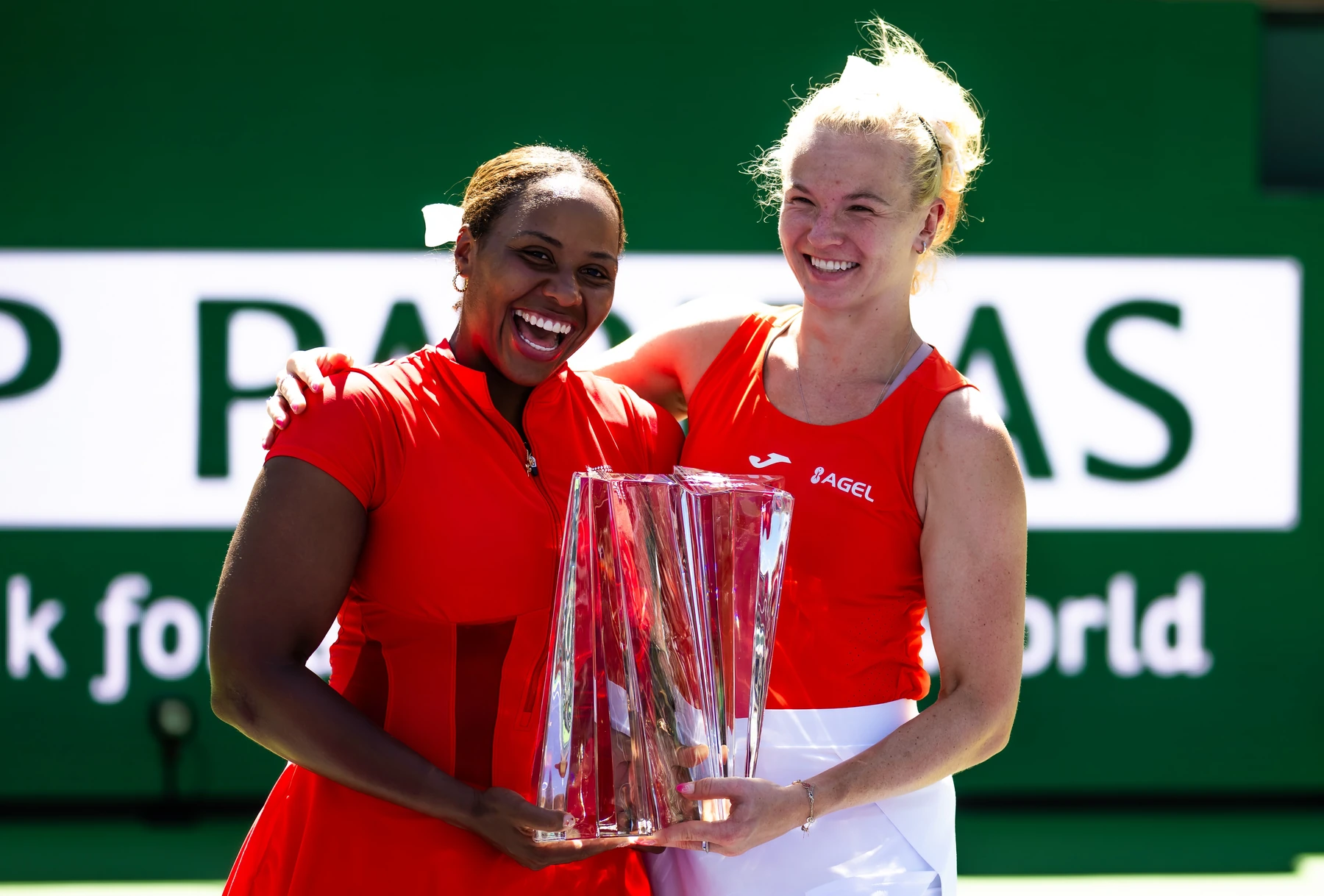
Wang and Xu extended the later service games
The second set was not as comfortable as the final two-set result may suggest. Wang and Xu kept several service games alive, made the top seeds hit an additional volley and searched for the line when the middle closed. Long games can change confidence because each missed chance feels larger near the end of a match. Siniakova and Townsend avoided treating one lost point as a reason to abandon their formation. They reset the first two shots and returned to the same clear coverage.
Communication matters between points as well as during them
Partners have only a short time to decide whether the previous problem came from serve placement, return quality or net position. A useful conversation names one adjustment. Too much information can make both players hesitate. During a difficult service game, the team can agree on the intended serve and the net player’s first movement. Once the point begins, short calls prevent both players from chasing the same lob or leaving a ball between them.
A straight-set win still contains recovery moments
The top seeds did not need a deciding set, but they had to solve pressure within the second. That is an important difference. Recovery is not limited to a player who loses a set or falls far behind. It can happen after a missed volley, a long game or an opponent reading the first pattern. Siniakova and Townsend kept those moments local. They corrected the next exchange without allowing one difficult game to rewrite the full match.
Their seeding creates expectations, not automatic points
Siniakova and Townsend entered as the leading pair in the draw and reigning French Open champions. Opponents therefore prepare specifically for their serve patterns and net movement. The top seeds still have to earn each service hold and identify what a new pair is trying to change. Their reputation can create pressure if every close game feels like a surprise. Treating the seeding as background allows them to focus on the court rather than defend a label.
The result shows why established pairs value shared habits
A doubles team improves when both players recognize the same danger without a long explanation. Siniakova and Townsend protected the centre, supported the player at the net and stayed organized when the second set tightened. Those habits made the two-set finish possible. Future rounds will bring different serve speeds and return positions, but the same communication framework gives the pair a stable place from which to adjust.
The partnership was clearest during the closing games
Siniakova and Townsend did not need both players to attack the same ball. One controlled the first contact while the other protected the middle and watched for a shorter reply. That division made the pair harder to pass when Wang and Xu increased pressure. The next match may require different serving targets, but the communication pattern remains useful. Each player knew whether to hold position, cross or leave the ball to her partner.


