
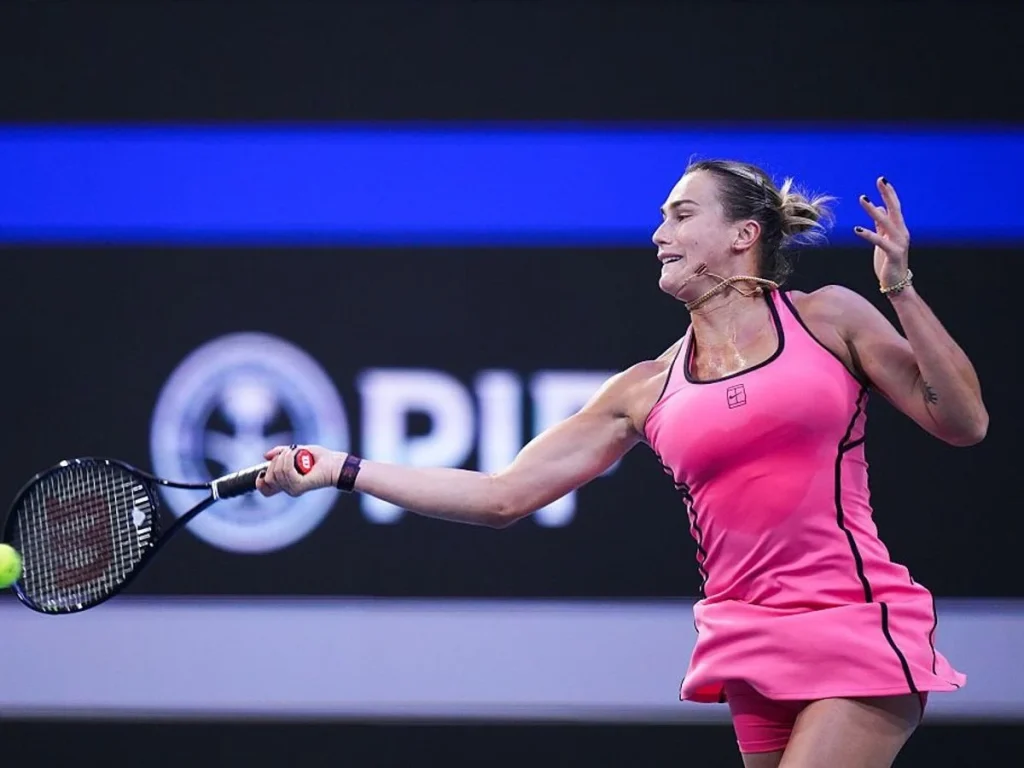
Aryna Sabalenka defeated Linda Noskova 7-6(1), 3-6, 7-6(7) in the US Open quarterfinals. Noskova led 4-2 in the deciding set, but Sabalenka levelled the score and forced a final tiebreak. The defending champion then closed a match in which both players protected the baseline and looked for the first ball that could be attacked safely. Sabalenka extended her tournament winning streak to 18 matches and reached the New York semifinals for a sixth consecutive year.
The first tiebreak belonged to Sabalenka
The opening set contained powerful first strikes from both players, but Sabalenka created a large gap in the tiebreak. She returned enough serves to begin neutral rallies and took the ball early when Noskova left the center open. A 7-1 breaker does not mean the entire set was comfortable. It shows that Sabalenka organized seven important points with greater clarity. She carried a stable target from the return into the first groundstroke instead of changing direction before she had control.
Noskova answered through cleaner positioning
In the second set Noskova moved closer to the baseline and prevented Sabalenka from controlling every exchange with the first heavy shot. She defended without simply lifting the ball back and used the next neutral opportunity to change direction. The 6-3 set placed Sabalenka under pressure and showed that Noskova could sustain her level after losing a one-sided tiebreak. That response made the final set a tactical contest rather than a test of whether the lower-ranked player would recover emotionally.
| Set | Sabalenka | Noskova |
|---|---|---|
| 1 | 7 (7) | 6 (1) |
| 2 | 3 | 6 |
| 3 | 7 (9) | 6 (7) |
| Streak | 18 US Open wins | – |
Falling behind early did not force Sabalenka to rush
Noskova moved ahead 4-2 in the deciding set. Sabalenka responded with a secure service game and returns placed deep enough to prevent an immediate winner. She did not try to win back the entire deficit with one swing. By narrowing the score, she made Noskova play under a different kind of pressure. Sabalenka levelled the set because she stayed in each exchange and asked her opponent to repeat a demanding pattern. Her patient response explains the change more clearly than a general reference to momentum.
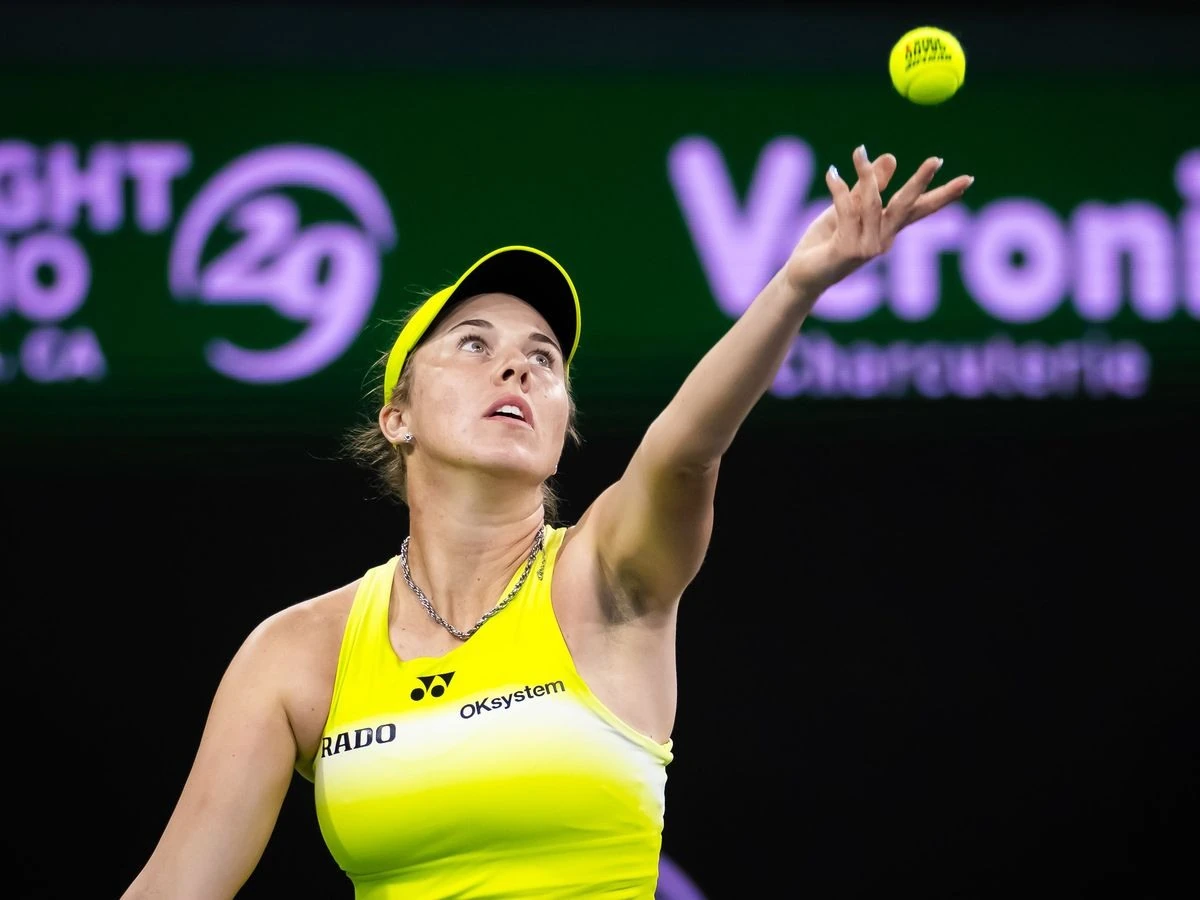
Both players protected the middle before changing direction
The strongest rallies often began through the center, where depth could push the opponent back without opening a large angle. Once a shorter ball appeared, Sabalenka or Noskova moved it toward the corner. This sequence is easier to control than aiming at the line from a defensive position. The order was simple: first create balance, then use the available space. The match stayed close because both players followed that pattern for long periods.
The final tiebreak demanded a fresh response after every point
The deciding breaker reached 9-7, so neither player could rely on an early advantage. Sabalenka had to accept losing one point and prepare the next serve or return with the same routine. She found enough depth to prevent Noskova from taking the ball at the highest point and used her own first attack with restraint. At that stage, one forced error had the same value as a clean winner. Closing the match required repeated concentration, not one continuous burst of confidence.
Noskova’s performance remains significant
The defeat should not reduce Noskova’s quarterfinal to the two late service games she could not close. She pushed the defending champion through three sets, won the middle set and earned a break advantage in the decider. Her serve and early groundstrokes held up against one of the heaviest hitters on tour. The next improvement is to protect the lead with the same active positioning used to create it. Waiting for Sabalenka to miss would have removed the active play that put Noskova ahead.
Sabalenka must restore her energy before the semifinal
An 18-match US Open winning streak and six consecutive semifinals show exceptional consistency in New York. The quarterfinal also consumed physical and emotional energy. Before the next match, Sabalenka needs to rest, review the receiving positions that worked and leave the score behind. A champion’s streak does not grant points in the semifinal. Its practical value is evidence that she has solved different match problems on these courts and can trust a clear process again.


