
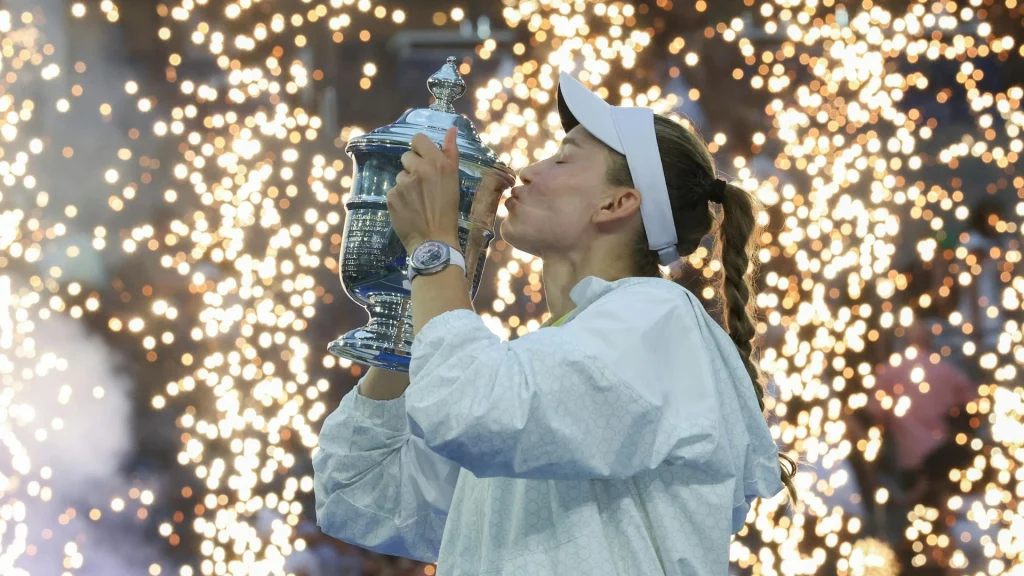
Elena Rybakina defeated Aryna Sabalenka 6-4, 5-7, 6-2 in the US Open women’s final. The victory gave Rybakina her first title in New York, her third major singles trophy and the world number one ranking.
A final between the leading seeds
Rybakina and Sabalenka entered Arthur Ashe Stadium as the top two seeds in the women’s draw. Their places in the final reflected two complete runs through the tournament, but the championship match still required a fresh contest over three possible sets. Rybakina began with the cleaner result, taking the opening set 6-4.
The first set gave Rybakina an advantage without settling the title. A 6-4 set can turn on a small number of service and return points, so both players still had a clear route into the match. Sabalenka remained close enough to apply pressure, while Rybakina had to protect her lead rather than assume the early margin would continue.
Sabalenka forces a third set
Sabalenka answered in the second set and won it 7-5. That response changed the final from a possible straight-set result into a full test of recovery. Rybakina had been two games from the title during a tight set, but the defending champion extended the match and removed any value from simply holding the earlier lead.
The second-set score also shows why the final should not be described as one-way. Sabalenka found enough resistance to reverse the immediate direction of the match. For Rybakina, the useful task between sets was direct: accept that the level score was now one set each, keep the successful parts of her game and avoid carrying the lost finish into the decider.
Rybakina takes control of the decider
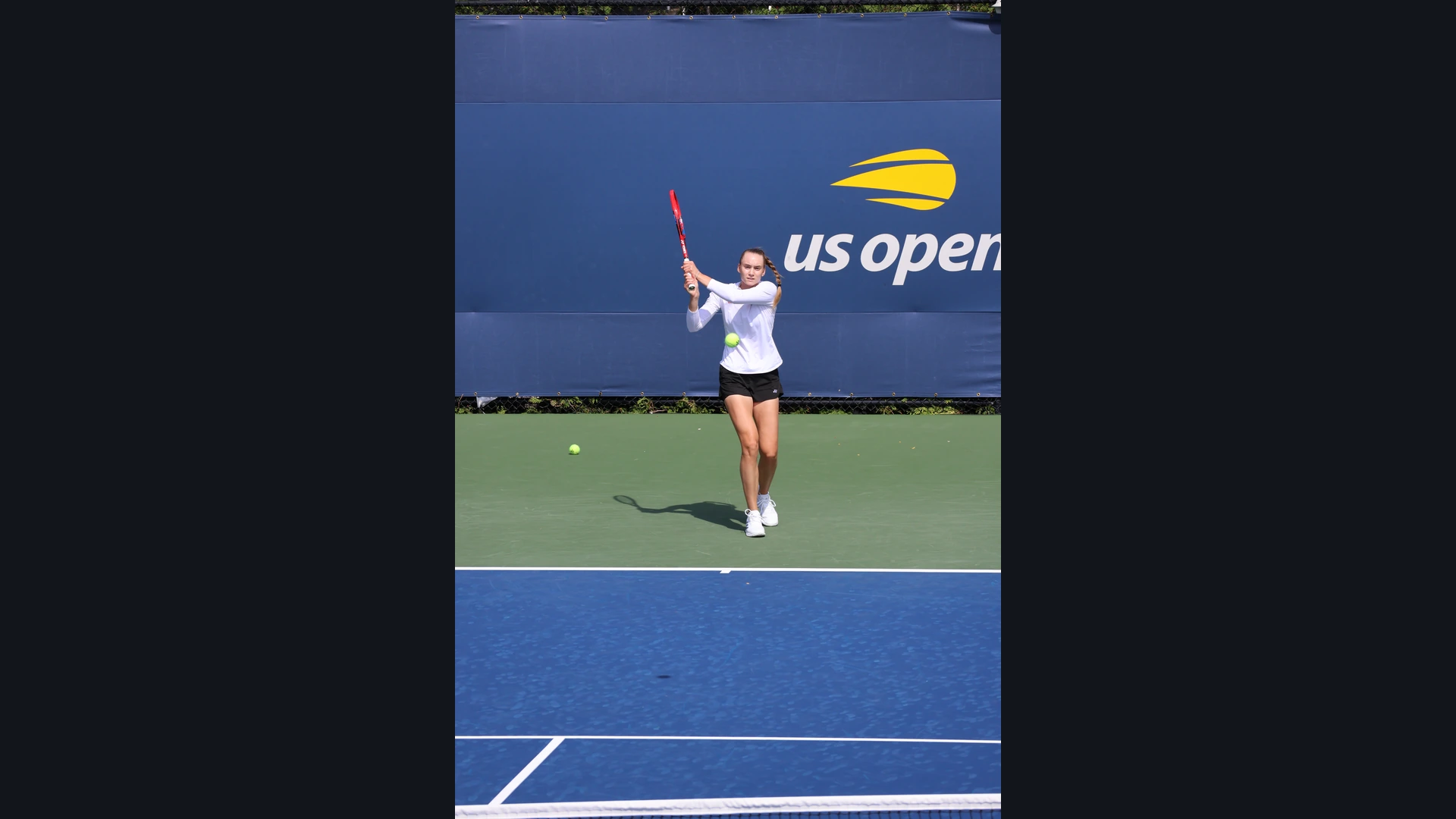
The third set produced the clearest margin of the final. Rybakina won it 6-2, stopping Sabalenka’s comeback before it could become control of the match. The wider score suggests that Rybakina gave herself more room late in the contest, when every held service game and every effective return increased the pressure on the player behind.
Closing a major final after losing the previous set demands precise choices. Rybakina did not need to recover the second set or make every exchange spectacular. She needed to win the next points in the conditions in front of her. The decisive score shows that she reset successfully and completed the final without allowing another long reversal.
Power required control as well as pace
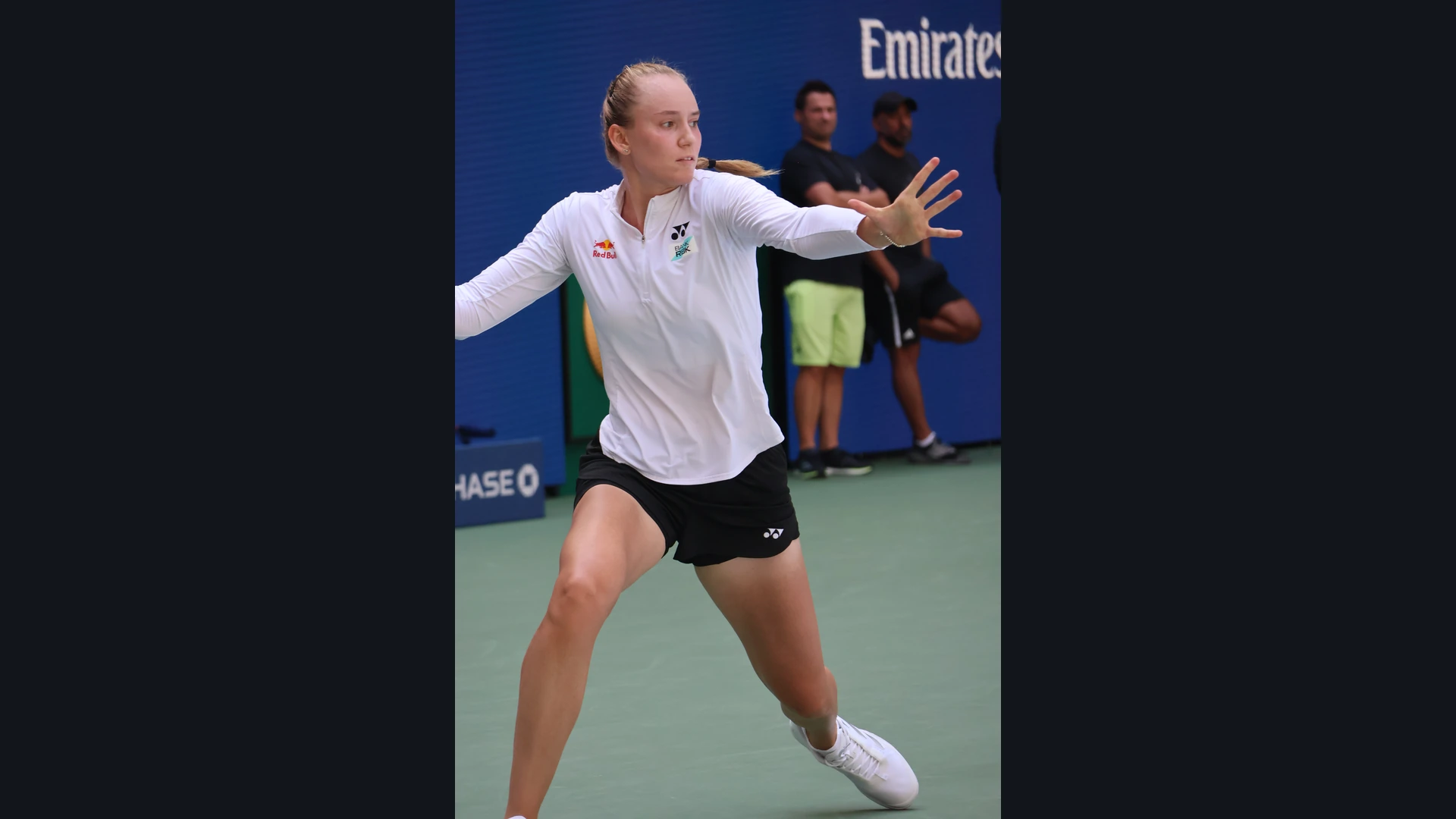
Both finalists can shorten points with force, yet pace alone does not explain a three-set result. Serve placement must create a useful next ball, returns must land deeply enough to limit the first attack, and movement after each shot must leave the court covered. Those basic demands become harder when the opponent can redirect a loose ball immediately.
Rybakina’s route through the changing score depended on repeating those actions after momentum moved away from her. In the deciding set, control was especially valuable because an impatient attempt could have offered Sabalenka a quick opening. The final margin came from enough good decisions in sequence, not from a single point standing apart from the match.
A first New York championship
The trophy is Rybakina’s first US Open singles title. New York therefore joins her major record as a distinct achievement rather than another stage in the same event. She finished a two-week hard-court draw, beat the other leading seed in the final and responded when that opponent forced the contest into a third set.
It is also the third major singles title of Rybakina’s career. That total gives the result a wider place in her record, while the exact New York achievement remains simple: she is the women’s champion. Future tournaments will present different surfaces and draws, so they do not need to be predicted in order to explain the weight of this win.
The ranking change follows the result
The points from the championship secure Rybakina’s move to world number one. The ranking is a consequence of results gathered over time, and the US Open supplied the result that confirmed the next change at the top. It is separate from the trophy, but the two achievements arrived through the same final victory.
Reaching number one does not alter the sequence of the match. Rybakina still had to take the first set, respond to the loss of the second and finish the third. The ranking adds context after that work was complete. It recognizes the strength of her broader results while the championship records what she achieved in this particular draw.
New York closes with a confirmed champion
The women’s singles competition is now complete. Rybakina leaves with the title, while Sabalenka’s defence ended after a final in which she recovered from one set down and made the match last three sets. That distinction respects the losing finalist’s response without weakening the clarity of the outcome.
Attention will soon move to new events, but the final record is fixed: Rybakina won in three sets. Her first US Open title, third major singles championship and rise to number one all follow from a completed match. No later schedule or draw changes what was decided inside Arthur Ashe Stadium.


