
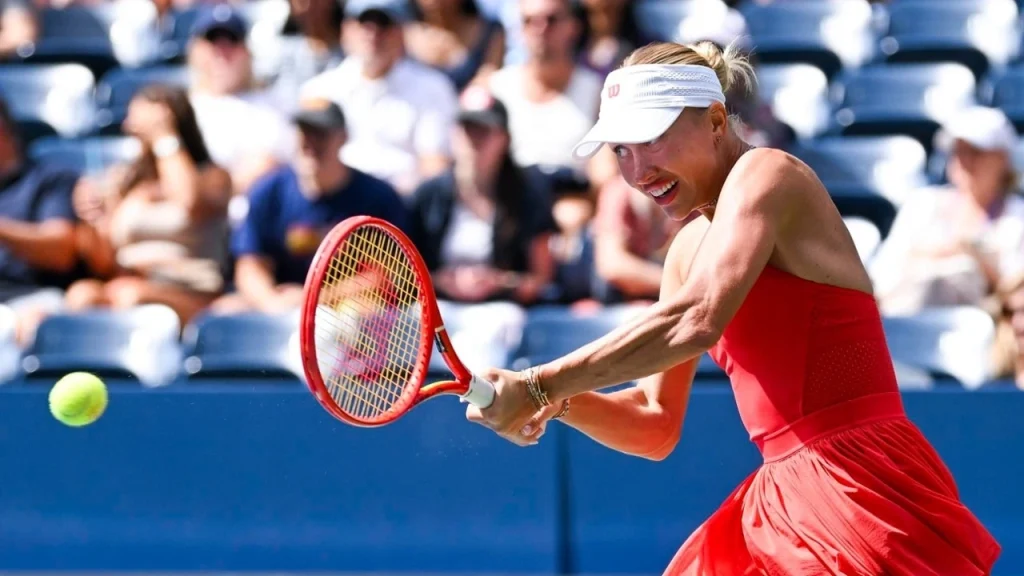
Anastasia Potapova defeated Amanda Anisimova 6-2, 7-5 by choosing a patient plan against one of the strongest first-strike players in the draw. Wind made clean attacking tennis difficult in Louis Armstrong Stadium, so Potapova accepted longer exchanges and asked Anisimova to hit repeatedly near the lines. After losing serve while trying to close the match, Potapova broke back immediately and recovered from 0-30 in the final game.
Wind changed the value of the first attack
Both players normally like to take the ball early, but unstable conditions made a small target less reliable. Anisimova continued to press and produced 11 unforced errors across the opening four games. Potapova recognized that she did not need to match every hard shot. By returning one more ball with useful depth, she made the American repeat the difficult action. The plan reduced Potapova’s own need for a perfect winner and increased the cost of Anisimova’s narrow margins.
The first set was built on defensive purpose
Potapova saved pressure in her early service games and then began to extend exchanges. She broke twice and took the set while Anisimova struggled to control direction. Defence here did not mean sending a soft ball into the middle. Potapova used height, depth and movement to prevent the next attack from arriving in the same place. Once Anisimova had to strike from outside her preferred position, the Austrian could step forward on a shorter reply.
| Stage | US Open third round |
|---|---|
| Winner | Anastasia Potapova |
| Opponent | Amanda Anisimova |
| Result | 6-2, 7-5 |
| Tactical choice | Longer exchanges instead of a direct power contest |
| Career result | Potapova’s first US Open fourth round |
Anisimova found a stronger period after the break
The American improved her consistency in the second set and began to connect the power that had been missing earlier. She earned a break through one of the longer exchanges and finally held serve after several difficult games. Potapova was now asked to keep the patient plan even when the immediate result looked worse. Changing to a pure hitting contest would have moved the match toward Anisimova’s greatest strength. The Austrian continued to defend with a purpose and waited for another opening.
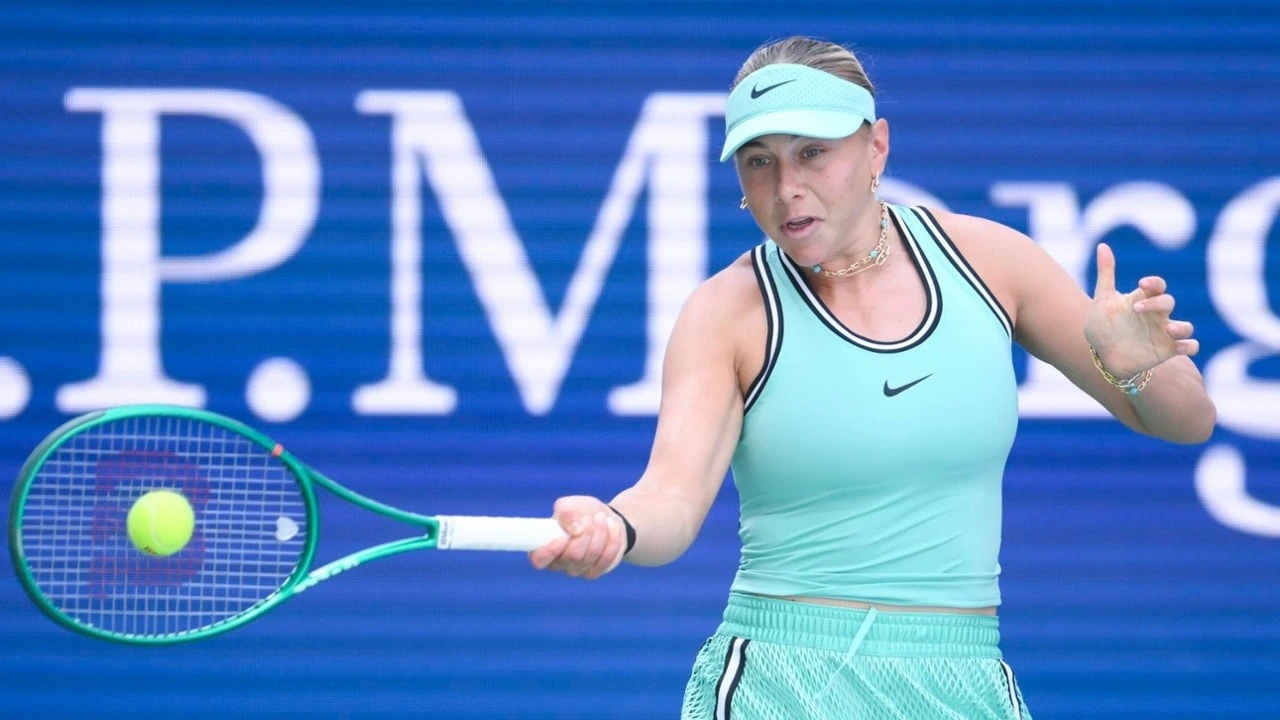
Four errors created the first closing chance
In the ninth game of the second set, Anisimova missed four points in succession and lost serve without winning a point. Potapova had the chance to serve for the match. The break did not appear from one new tactical trick; it was the result of continued pressure on the American’s margin. Anisimova knew that the ball would return and tried to finish too close to the line. Potapova’s discipline made those misses meaningful because she had protected enough service games beforehand.
A failed first finish did not change the plan
Anisimova produced several clean winners to break when Potapova first served for victory. That response could have made the Austrian feel that patience was no longer enough. Instead, Potapova returned to the same contest on the next game and broke again. She then fell behind 0-30 while serving for the match a second time. Four controlled points completed the win. The ending showed that losing one closing chance is not the same as losing the tactical advantage.
The winner count explains why imitation was a poor choice
Potapova finished with eight winners, while Anisimova struck 22. The American also made 46 unforced errors compared with 17 from Potapova. Those figures do not say that winners are bad; they show that the two players accepted different levels of risk in these conditions. Potapova knew she was unlikely to overpower Anisimova and designed the match around movement, repetition and a larger target. The lower winner total was part of the strategy, not a weakness hidden by the result.
The victory continues a season of tactical growth
Potapova returned to the Top 25 after falling close to 100 earlier in the year and has beaten several leading opponents with varied plans. Reaching the last 16 in New York for the first time adds another surface and setting to that progress. Her next opponent, Mirra Andreeva, offers different speed and variation. Potapova cannot simply wait for the same error count. She will need to decide when patience creates an attacking ball and when Andreeva is using the extra time to change direction.
The clearest story is a deliberate refusal to overhit
Potapova won because she accepted the match that the weather and opponent required. She made Anisimova play through extra shots, survived the American’s better second-set spell and responded immediately after losing her first chance to close. The straight-set score appears simple, but the decisions inside it were flexible. That distinction makes the result easier to understand than a description based only on the number of errors.
Patience did not mean passive tennis
Potapova gave Anisimova fewer easy targets, yet she still stepped forward when a shorter ball appeared. That distinction explains the result better than saying she simply waited for errors. A defensive position without a counterattack would have allowed Anisimova to repeat her strongest pattern. Potapova’s success came from extending the right exchanges and then changing direction when the court opened, a sequence she can carry into the next round.


