
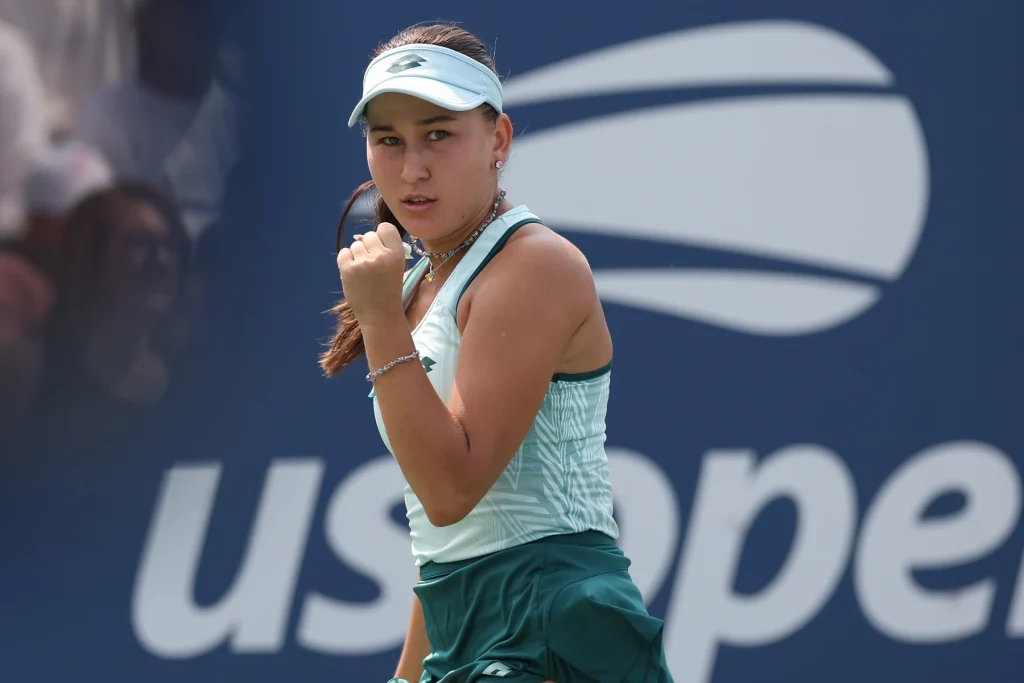
Rakhimova won in straight sets, but a long closing game forced her to prove that she could stay patient under pressure.
The first set created the upset opportunity
Rakhimova stayed level through an opening set that reached a tiebreak. She accepted long exchanges without becoming passive and used the first open ball to change direction. Winning that breaker placed the pressure on Krejcikova, who could no longer rely on experience alone to settle the match.
A tiebreak rewards a clear first pattern. Rakhimova used the first strike to avoid long periods in neutral rallies and protected enough service points to stay in front. The set was completed normally, with both players physically able to continue, so the lead came from execution rather than an interruption.
Rakhimova carried momentum into the second set
The next set moved more clearly in Rakhimova’s direction. She created separation on return and earned the chance to serve for the match with a solid advantage. Krejcikova still had the variety to change the final phase, so the closing game required much more than a routine hold.
A comfortable-looking lead can hide tension. One lost service game would have given Krejcikova another chance to build scoreboard pressure and ask new questions on return. Rakhimova therefore needed to finish before the match returned to a sequence of close games.
The last game became a separate contest
The final service game lasted through repeated deuces and match points. Rakhimova had to restart her routine after each missed chance. Krejcikova kept extending the game, using returns and defence to make the finish physically and mentally expensive.
Closing eventually confirmed the straight-sets victory. The long game does not change the overall shape of the match, but it explains why the ending mattered. Rakhimova proved that she could hold her plan after several opportunities disappeared and the finish stopped feeling automatic.
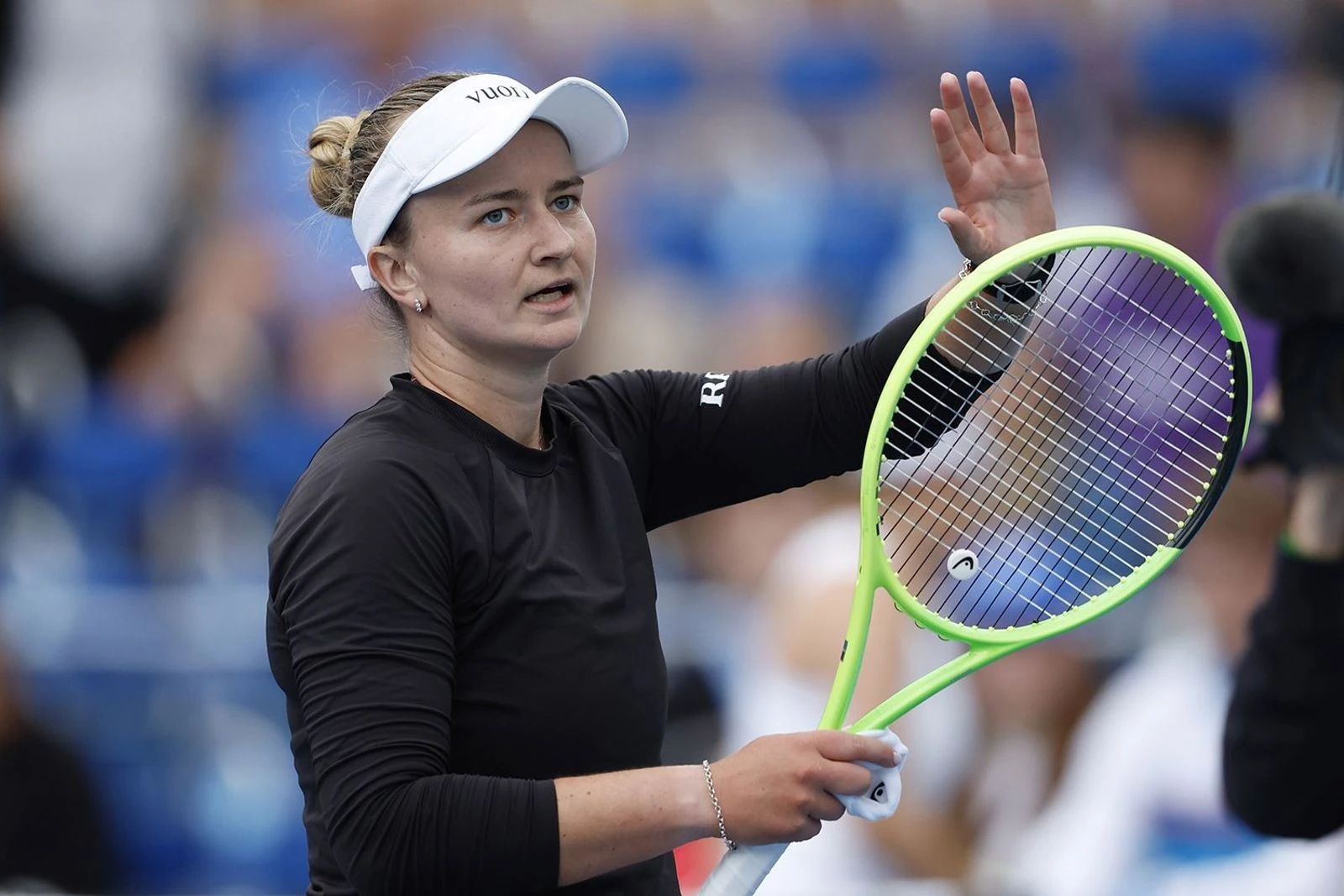
Serve placement protected the advantage
In a difficult closing game, raw speed is not the only answer. A serve into the body can limit the return angle, while a wide serve can open the next shot. Changing location prevents the receiver from leaning toward one expected pattern.
Rakhimova also needed the first ball after the serve. A safe delivery followed by a passive shot would have allowed Krejcikova to take control. The upset was completed by combining placement with a clear next action and by accepting that not every match point needed a spectacular winner.
Krejcikova forced the winner to finish properly
Krejcikova’s resistance in the final game prevented the result from becoming a simple account of two comfortable sets. Even while trailing, she tested Rakhimova’s ability to close. That pressure gives the winner useful evidence for later rounds.
Rakhimova did not need to win the last game quickly. She needed to win it before losing control of the set. Accepting another deuce and returning to the same routine was more valuable than searching for a spectacular final shot. Her patience kept one difficult game from changing the whole match.
The score and story point in the same direction
The final result was 7-6(4), 6-2, and this is the only full score line needed in the article. The opening set was decided by a tiebreak, while the second ended after a prolonged service game. No deciding set was required, despite the pressure at the finish.
Rakhimova earned the upset through control in the opening breaker, stronger pressure in the following set and patience at the final obstacle. The last game was long, but it completed a straight-sets victory and showed that she could keep making clear choices after several missed chances.
The result belongs to one completed match and does not need a prediction about the next round to give it meaning. Rakhimova’s control under repeated closing pressure is the central event of the article.


