
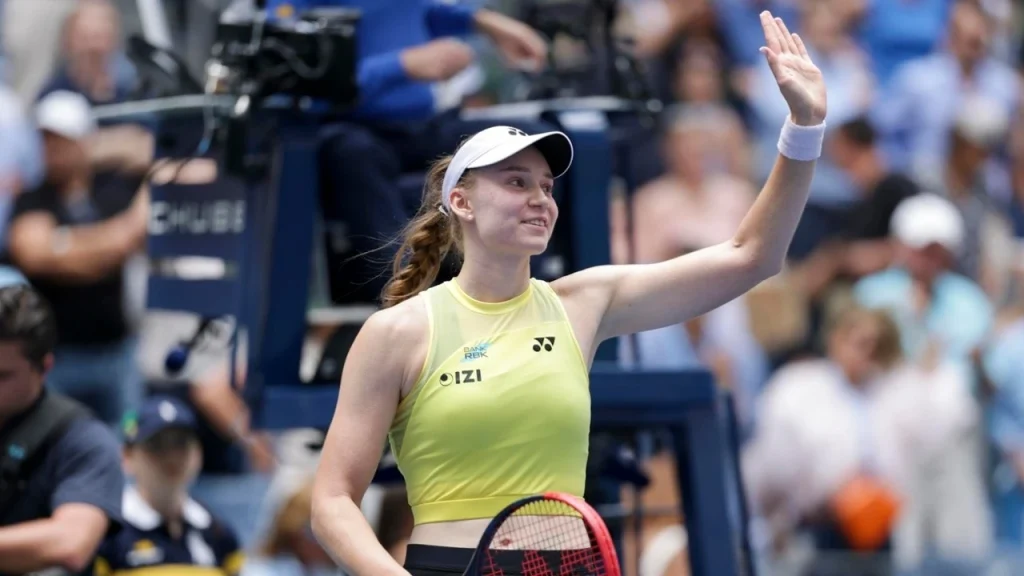
Elena Rybakina defeated Zheng Qinwen 3-6, 6-1, 6-4 in the US Open quarterfinals. The victory moved her into the last four in New York and guaranteed that she will become the 30th woman to hold the WTA world No. 1 ranking. Zheng controlled the first set, but Rybakina changed the match by serving more accurately and hitting early when Zheng’s reply was short. The deciding set remained close until Rybakina protected her advantage with simple, low-risk choices.
Zheng gained the early advantage by receiving serve well
In the first set, she read the serve well enough to begin points with balance. That prevented Rybakina from using the next forehand as freely as she wanted. Zheng also protected her own court position by sending the ball deep through the middle before changing direction. This approach reduced Rybakina’s time and allowed Zheng to win the set 6-3 without reckless hitting. The result showed that a player with a powerful serve can still face pressure when the opponent controls the first two shots.
Rybakina simplified the second set
The response was immediate because Rybakina did not add unnecessary variety. She improved the placement of her first serve, committed to the next hit and avoided extending exchanges that already offered a chance to attack. A 6-1 set can look effortless after the match, but it was built from repeated preparation. She reached the ball earlier, made contact farther in front of her body and forced Zheng to defend before she could establish the same depth that had shaped the first set.
| Tournament stage | Women’s singles quarterfinal |
|---|---|
| Winner | Elena Rybakina |
| Opponent | Zheng Qinwen |
| Match result | 3-6, 6-1, 6-4 |
| Ranking effect | Rybakina will become world No. 1 |
The final set required patience as well as power
Both players understood the main patterns by the third set. Easy surprises were gone. Rybakina had to win games on her serve even when Zheng returned the first serve, while Zheng searched for another chance to step inside the baseline. The difference came from the quality of routine exchanges. Rybakina accepted a neutral exchange when Zheng’s reply traveled deep and waited for a better ball. That restraint protected a narrow lead from a rushed error.
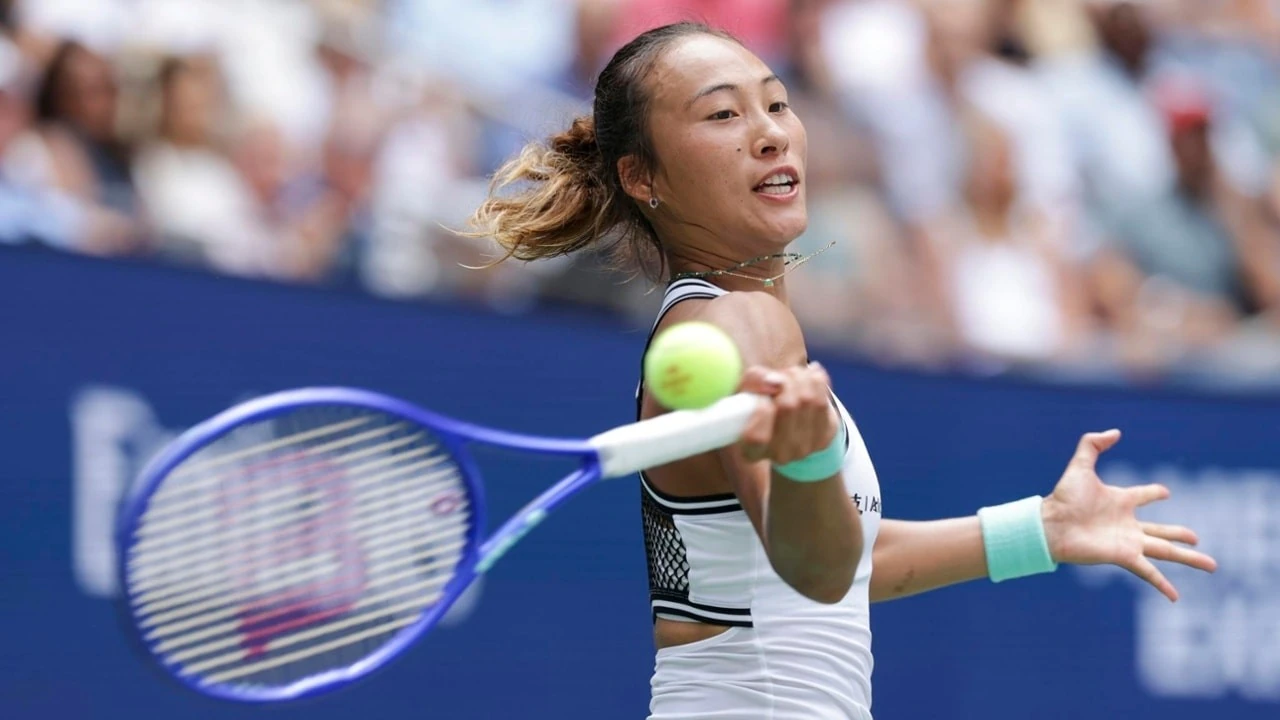
Successful first serves tell only part of the story
A useful analysis of the serve should separate placement, score and the next hit. Rybakina did not need an ace on every important point. A serve aimed at Zheng could limit the receiving swing and create a shorter reply, while a serve toward the side line opened the opposite side. The next hit after the bounce completed the attack. This is why a player can dominate games on her serve without producing a record number of aces. The serve begins control, but the second action often secures it.
The final games remained dangerous for Rybakina
After the one-sided second set, Zheng recovered her stability and made the deciding set competitive. She did not abandon the baseline or attempt a winning hit every time she received the serve. Her ability to stay close to Rybakina meant that only one lost service game separated them. The remaining gap was small: a few short receiving shots and defensive replies gave Rybakina the first clear attack. Zheng’s performance in the quarterfinal still demonstrated that she can compete through several tactical versions of the same match.
The ranking reflects results across the full season
World No. 1 was confirmed by one victory, but it was earned across the ranking period. Rybakina arrived in New York with points collected from many tournaments and then protected her position through the quarterfinal. The milestone should not change the immediate preparation. A semifinal opponent will not make the next match easier because of a new ranking. Recovery, serving rhythm and a clear match plan remain the priorities for the next day.
Recovery matters after three very different parts of the match
The match required a reset after a difficult first set and full concentration through a close finish. Rybakina’s team will review physical load as well as tactics. Hydration, food, sleep and a short movement session can restore readiness without adding another hard practice. Video work should focus on a small number of tactical situations likely to return in the semifinal. At this stage, confidence comes from understanding the plan, not from proving fitness again between matches.
Rybakina combined a milestone with tournament progress
The ranking announcement gives the result historical weight, yet the on-court achievement remains specific: she found a way through a quarterfinal after losing the first set. More effective decisions on serve gave her control, early contact shortened the second set, and disciplined choices protected the final lead. That sequence explains more than the ranking alone. It shows why her game can remain effective when the first plan does not immediately work.


