
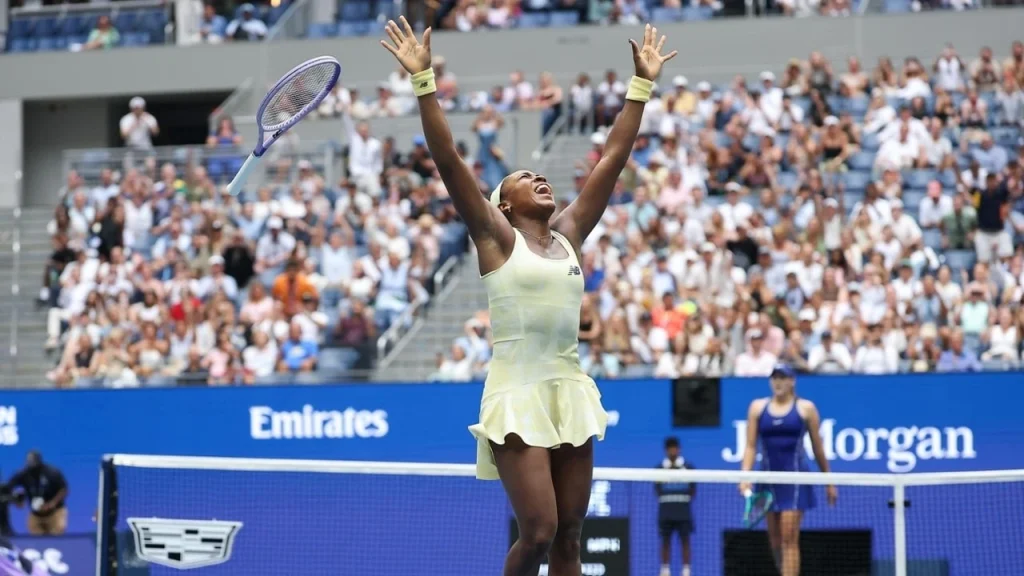
Coco Gauff reached the US Open semifinals by defeating Mirra Andreeva 2-6, 7-6(7), 6-2. She lost the first set and later faced two match points in the second-set tiebreak. She saved both, converted her own opportunity and then controlled the deciding set. The result was not produced by one sudden change of form. Gauff gradually improved her position when receiving the serve, gave herself more margin during neutral exchanges and made Andreeva play one additional shot when the pressure was highest.
Andreeva controlled the opening set
Andreeva began with clean changes of direction and did not give Gauff time to settle behind the baseline. Gauff often had to defend the next ball instead of choosing where the exchange would go. A 6-2 set can tempt a player to change every technical detail, but that would have added more uncertainty. She needed a smaller adjustment: improve the height and depth of a neutral hit, then wait for a shorter reply before increasing the speed.
The comeback began before the tiebreak
Gauff’s confidence at 6-6 did not appear suddenly. She had already extended more exchanges and made her opponent begin points from less comfortable positions. That increased the physical and mental cost of every service game for Andreeva. Gauff’s first shots after Andreeva’s serve did not always produce an immediate chance, but they gave her a playable position after the bounce. Gauff needed to begin enough exchanges without surrendering the court, not attack every second serve.
| Tournament stage | Women’s singles quarterfinal |
|---|---|
| Winner | Coco Gauff |
| Opponent | Mirra Andreeva |
| Match result | 2-6, 7-6(7), 6-2 |
| Key moment | Two match points saved by Coco Gauff in the second-set tiebreak |
Two match points required two separate decisions
At match point, a player can think about the entire tournament and lose contact with the next ball. She reduced the problem to one decision at a time. She protected enough court to avoid a quick error and remained ready when the exchange began. Saving the first match point did not erase the second. The reset between them mattered. A deep breath, a clear target and normal preparation allowed her to play the point rather than think about the possible consequence.
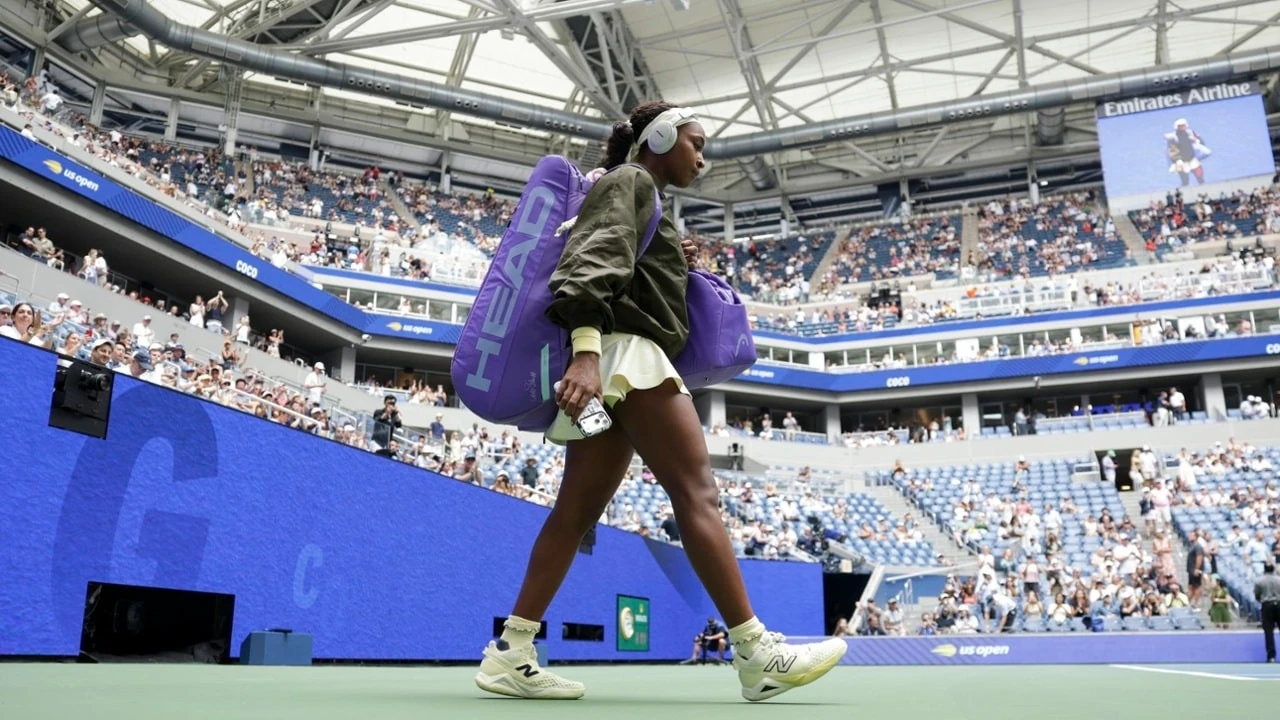
The tiebreak rewarded controlled aggression
A tiebreak is short, but passive tennis can still be dangerous. Gauff needed deep shots that prevented Andreeva from stepping forward while preserving enough margin over the net. When an attack was available, she kept the chosen direction instead of changing the plan during the movement of the racket. This balance is different from simply hitting harder. Controlled aggression means choosing a suitable ball, moving into position and accepting that a good opponent may still return it.
The deciding set had a clearer pattern
After surviving the second set, she held a better court position in the third. She did not need another dramatic recovery on every point. The score moved in her favor because her regular groundstrokes became harder to overcome. Andreeva still had variety and could change direction, but she had to create more attacks from defensive positions. Gauff’s movement also allowed her to recover after a ball sent far to one side and protect the newly opened part of the court.
Serve placement was more important than speed alone
A first serve is most useful when it begins a favorable pattern. She aimed some serves directly at Andreeva and others toward the side line, so her opponent could not prepare for only one receiving position. Even when the serve did not produce an ace, it sometimes limited the direction of the reply. That allowed Gauff to hit the next ball from a stable base. Trying for maximum speed on every important point would have increased the chance of facing pressure on a second serve.
Andreeva’s level still showed why the match was close
The defeat should not hide the quality of Andreeva’s first set or the pressure she created later. She reached match point by making good decisions, not because her opponent handed her a simple opportunity. A useful review is specific: identify which neutral exchanges became shorter in the final set and where receiving the serve stopped producing the same court position. That gives a player a clear training direction without turning two lost points into a broad judgment about the entire tournament.
Problem solving carried Gauff into the semifinal
She earned the semifinal place by staying in a match that looked close to finished. Gauff adjusted the height of her normal shots, improved her starting position when receiving the serve and separated each moment of danger from the next. Those changes were simple enough to survive pressure. The final score records three very different sets. The central lesson is that a comeback becomes possible through attention to each following exchange rather than an attempt to recover every previous loss at once.


