
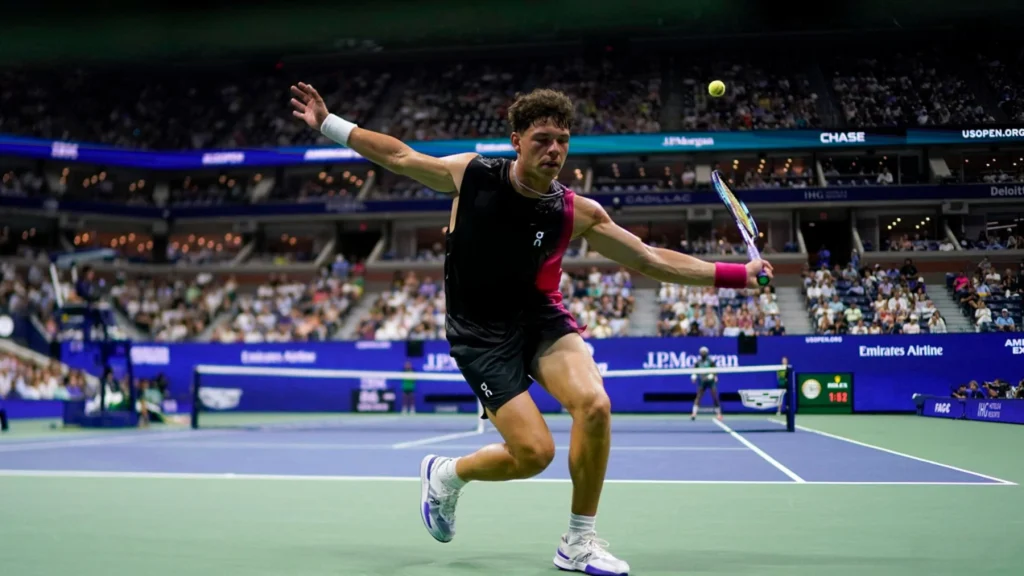
Ben Shelton defeated Stefanos Tsitsipas 6-2, 6-3, 6-4 to reach the US Open quarterfinals. Tsitsipas could not return 11 of Shelton’s serves, and Shelton’s first serve was successful 83 percent of the time. He did not allow a break point. The American served accurately, stayed balanced for the next shot and gave Tsitsipas very few chances to attack. He also remained patient during longer rallies instead of trying to finish every point immediately.
Shelton successfully completed 83 percent of his first serves
That high percentage meant Shelton rarely had to rely on a second serve at an important moment. He changed direction and speed well enough to stop Tsitsipas from predicting the next ball. Shelton also stayed balanced after serving. This allowed him to control the following shot instead of depending only on power.
He took control early in the opening set
Shelton won one of Tsitsipas’s service games early and then protected the advantage with accurate serving. He did not attempt a winner from every return. A deep, safe shot often moved him into a better position for the next forehand. This choice reduced errors and forced Tsitsipas to take greater risks when changing the direction of a rally.
| Match detail | Confirmed figure |
|---|---|
| Winner | Ben Shelton |
| Score | 6-2, 6-3, 6-4 |
| Serves that Tsitsipas did not return | 11 |
| Successful first serves | 83 percent |
| Service games lost | None |
| Next opponent | Carlos Alcaraz |
Tsitsipas did not win any of Shelton’s service games
Shelton did not give Tsitsipas a single opportunity to take one of his service games. His accurate first serve was important, but the next shot also made a difference. He regularly directed that ball away from Tsitsipas and kept control of the court. Tsitsipas made some good returns, yet he rarely followed them with another deep shot that could push Shelton back.
Shelton also put pressure on Tsitsipas’s serve
The American did not need to win every service game started by Tsitsipas. He made Tsitsipas play extra shots and attacked weaker second serves when a clear opportunity appeared. As a result, the Greek player had to work for each service game. Shelton could then serve without feeling that every point needed a risky finish.
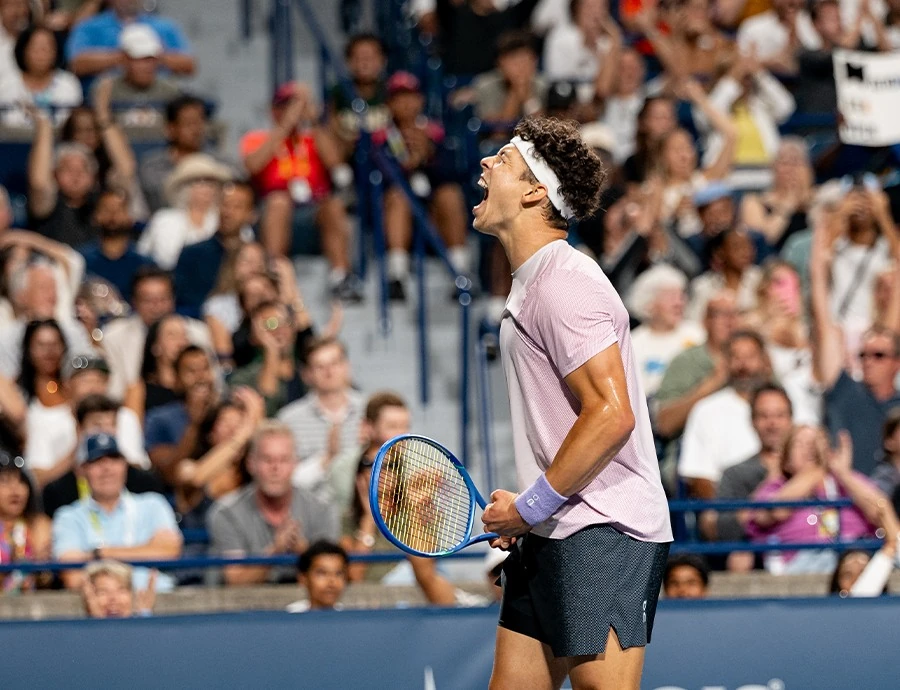
Patience was important in the third set
Tsitsipas took more chances after losing the first two sets, so Shelton could not expect the final set to follow the same pattern. Shelton kept his normal routine and accepted longer rallies. The 6-4 score was closer than the first set, but he did not change a successful plan simply because the end of the match was near.
The three-set win reduced Shelton’s time on court
A major quarterfinal requires physical recovery and careful preparation. Finishing the match in three sets gave Shelton more time to rest before facing Carlos Alcaraz. This does not guarantee an advantage because previous matches and individual recovery are also important. It does, however, leave a simpler schedule than a long five-set match would have created.
Alcaraz will return more balls and cover more space
Alcaraz can defend from wide positions and continue a rally after a powerful opening shot. Shelton must keep serving accurately while expecting the ball to come back more often. He should not rush the next shot when the serve fails to end the point. A clear target for the serve and a safe direction for the following shot will be important.
The quarterfinal plan begins with the same simple habits
Shelton can keep three parts of this performance: a high first-serve percentage, balanced movement after the serve and active return games. He should also study the few rallies in which Tsitsipas changed speed or ball height successfully. The win gives him a strong reference, while the next opponent will require further adjustment.
The score should not hide the quality of the opponent
Tsitsipas entered with the experience and variety to change a match, which makes Shelton’s control more meaningful. The result does not erase the Greek player’s ability or reduce his day to three set numbers. His team can examine return depth, protection of the second serve and the points where he moved Shelton away from the preferred forehand. Accurate review respects both the winner’s execution and the opponent’s route toward improvement. Shelton will also need this balanced review before facing Alcaraz, because the next match will present different speeds, court positions and defensive responses.


