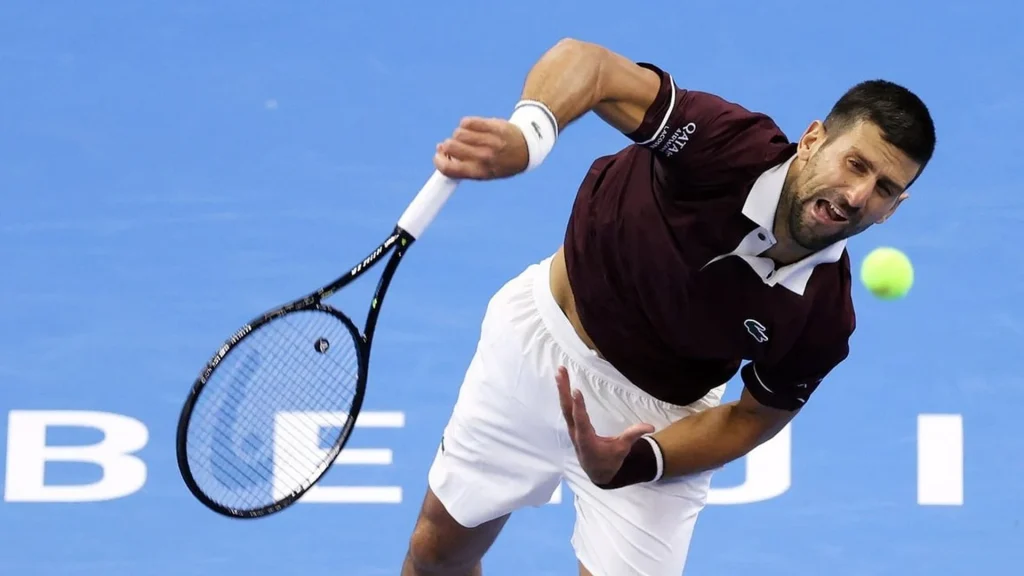
The 2026 China Open has opened in Beijing with Novak Djokovic back in the field for the first time since 2015. The six-time champion owns a 29-0 match record at the event, an extraordinary history that gives him immediate authority without guaranteeing a modern result. Alexander Zverev and a deep ATP 500 field ensure that Djokovic’s return will be tested by current form, while the hard courts and compact 32-player draw leave little room for a slow first round.
A perfect record returns after an eleven-year absence
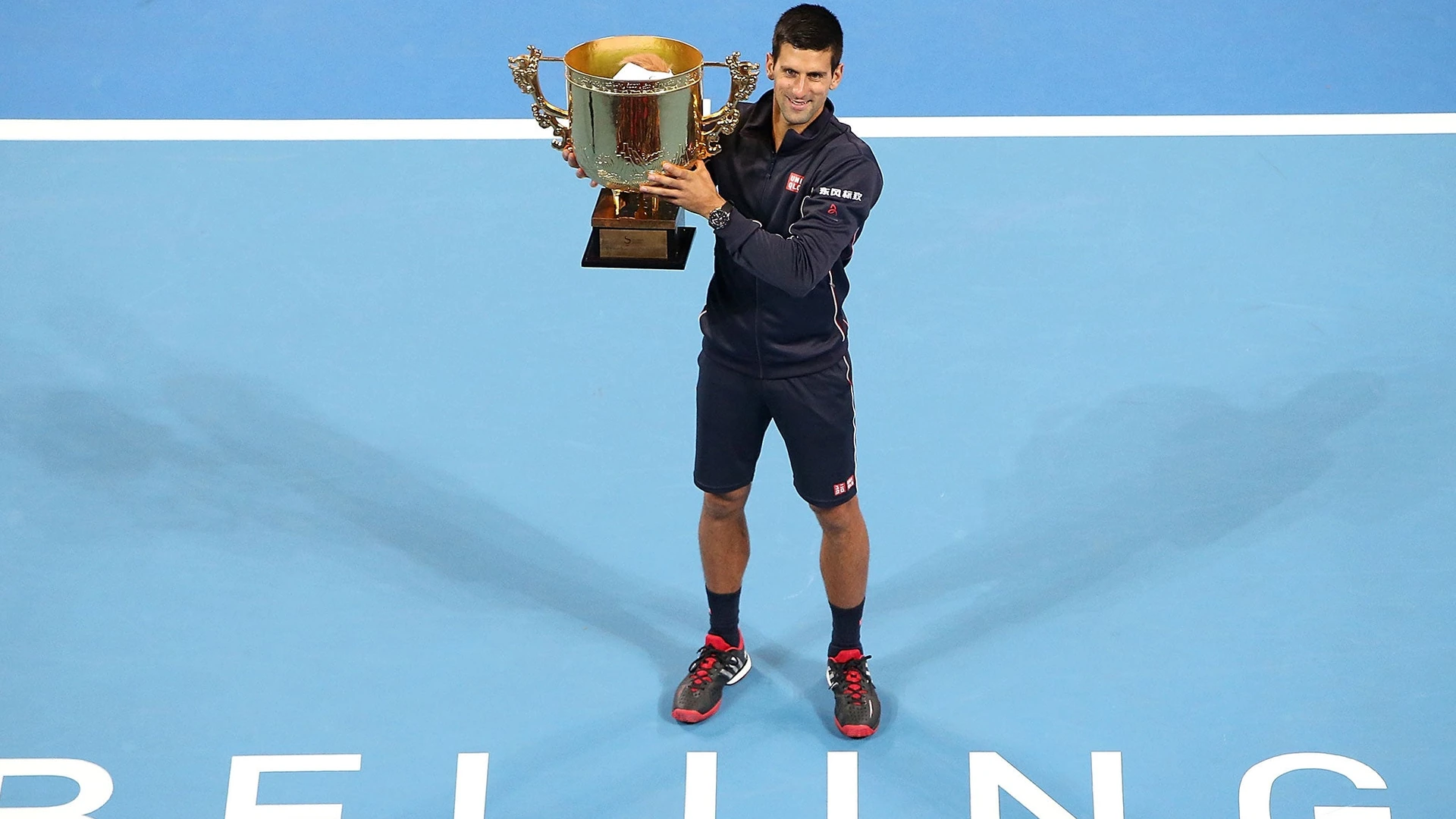
Djokovic won Beijing six times and has never lost a completed singles match at the tournament. His 29 victories create a statistical story unlike the usual return of a former champion. The number reflects repeated control of the conditions, but most of those opponents, tactical patterns and physical reference points belong to an earlier stage of his career. The record is useful evidence, not a protective advantage once the first ball is struck.
The long gap makes adaptation the central task. Djokovic knows the dimensions of the centre court and the way a large stadium can affect perception, yet he must establish how the 2026 surface responds to his movement and ball shape. A careful opening set can provide that information without becoming passive. Depth through the middle of the court should create time to test direction before he commits to lower-margin changes down the line.
The ATP 500 format compresses the difficulty
Beijing uses a 32-player singles draw on outdoor hard courts. There is no extended opening phase in which the leading names can gradually find their timing across several lower-pressure matches. One difficult opponent can arrive immediately, and a poor service game can place the entire week under threat. The champion must win repeatedly against players accustomed to taking the ball early.
That structure rewards efficient holds. Djokovic’s return game can apply pressure over time, but only if his own service games remain short enough to preserve physical and mental energy. Zverev’s first serve creates a different challenge: opponents may receive few neutral rallies and must be prepared to make one break point count. The tournament’s quality comes from those contrasting routes to control.
| China Open detail | 2026 tournament context |
|---|---|
| Dates | September 30 to October 6 |
| Category | ATP 500 |
| Surface and draw | Outdoor hard court, 32-player singles field |
| Djokovic in Beijing | Six titles and a 29-0 match record |
| Previous appearance | 2015 |
| Venue | Olympic Green Tennis Center and 15,000-seat Diamond Court |
Zverev provides a current benchmark rather than a historical one
Zverev has reached the Beijing semi-finals three times. He does not carry Djokovic’s perfect record, but his height, reach and serving power fit a hard-court event where the first two shots can define a game. When his first serve lands at a high percentage, returners are forced to block the ball and begin from a defensive position. His own challenge is to keep the second serve from becoming an obvious point of attack.
A deep run would require more than service statistics. Zverev needs to move forward after earning a short reply instead of allowing a rally to reset. The Beijing field contains players comfortable redirecting pace from behind the baseline. Leaving an attack unfinished gives them time to turn his weight of shot against him. Court position, not only speed, will determine whether the serve creates complete points.
Djokovic’s return game remains the clearest pressure tool
A server facing Djokovic rarely receives many free patterns. His compact preparation allows him to redirect first serves, while his balance makes the second ball feel less secure than it would against most opponents. The aim is not always an immediate winner. A deep central return can remove the server’s first attack and force a neutral exchange, which is already a structural victory for the returner.
The opposition can respond by varying body serves, using the wide angle selectively and following a strong delivery forward. Repetition is dangerous because Djokovic builds timing quickly. Even an effective location should not become predictable. His 29-0 record was built partly on this ability to turn service patterns into readable sequences; changing the picture before he settles is essential.
The venue rewards clear movement and recovery choices
The Olympic Green Tennis Center includes the 15,000-seat Diamond Court with a retractable roof. Outdoor conditions can alter ball speed and recovery demands during the week, while a roof decision changes sound and timing. Players who adjust their strike point quickly will be better placed than those who continue using a warm-up reference after the conditions have shifted.
Movement efficiency is especially important late in a match. A player who repeatedly slides beyond the ideal recovery position may survive the rally but lose the next one. Djokovic’s familiar split step and corner recovery can make the court appear smaller; younger opponents need to match that discipline rather than assuming raw speed alone will open the angle. Beijing exposes wasted steps as clearly as weak strokes.