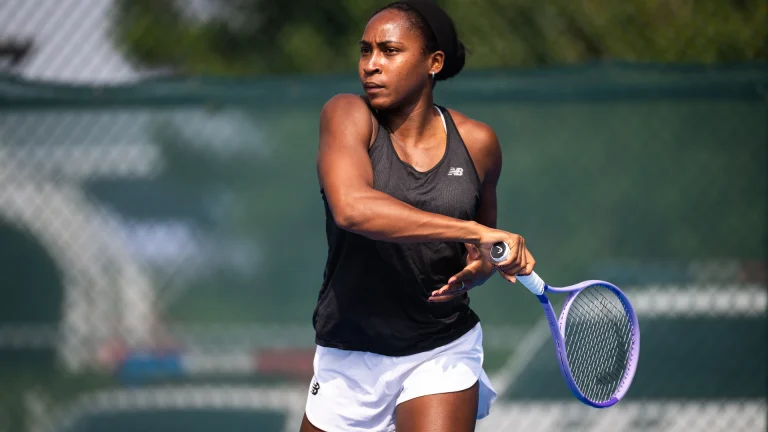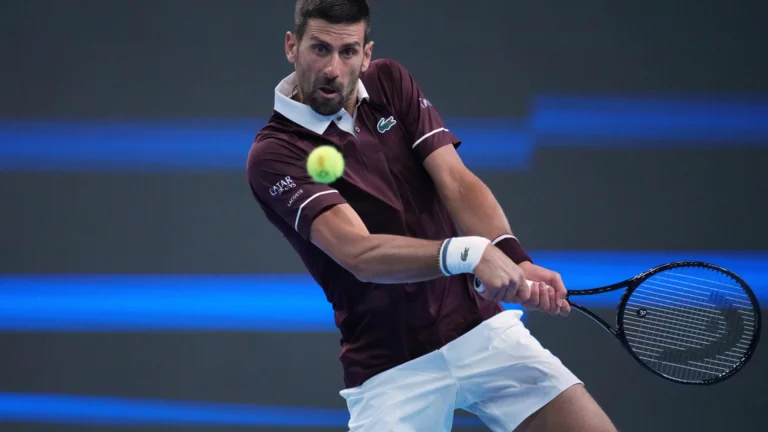
Zheng Qinwen defeated Elise Mertens 7-5, 6-2 in the China Open women’s singles semifinal in Beijing on Saturday, October 10, 2026. The completed match lasted 92 minutes and made Zheng the first Chinese singles finalist in the tournament’s history. She will face fourth seed Mirra Andreeva in Sunday’s final on October 11.
The wildcard, listed at No. 54 in the weekly WTA rankings cited by Saturday’s official report, has reached the championship match through a run that has changed shape considerably. Her first four matches all reached a third set; her quarterfinal against Elina Svitolina and semifinal against 13th seed Mertens were both straight-set victories.
Saturday’s result therefore matters beyond the historical milestone. Zheng has negotiated the last two rounds without another deciding set, a meaningful contrast with her earlier workload. The 7-5 opening set against Mertens still required a close finish, while the 6-2 second set delivered a wider margin. Together, they offer evidence of a more economical finish to her route through the draw, rather than proof that Sunday will follow the same pattern.
What Zheng’s winners and court time reveal
Zheng recorded 32 winners and 16 unforced errors against Mertens. Dividing 32 by 16 gives a two-to-one ratio: two winners for every unforced error recorded. That is a useful summary of her positive balance in those categories, but it is not a complete account of the match. Winners are not synonymous with unreturned serves or net points, and the ratio alone cannot explain where her advantage came from.

Nor does that balance translate directly into a forecast against Andreeva. It describes one completed contest against Mertens, not a fixed level Zheng is guaranteed to reproduce. The encouraging interpretation is that her semifinal combined a straight-set result with substantially more winners than unforced errors.
Her accumulated court time supplies a different perspective. Through the semifinal, Zheng had played six matches and spent 13 hours, 33 minutes on court. Converting that total gives 813 minutes; divided by six, it is an average of 135.5 minutes per appearance. Saturday’s 92 minutes were therefore 43.5 minutes below that tournament average. This measures elapsed match time, not physical condition or recovery.
The six appearances also need careful description. Zheng completed five matches, while Anna Kalinskaya retired from their second-round encounter with Zheng leading 3-0 in the third set. Thus, four early matches reached a deciding set, but they were not four completed three-set wins. The contrast with her latest two victories remains valid without overstating the earlier results.

Andreeva final brings a different draw comparison
Andreeva reaches the final after five played matches, having received a first-round bye. Zheng has played six. That one-match difference is a clear bracket-based distinction, although it does not establish the size of any physical advantage. Comparing appearances is more defensible than assuming equal match lengths or treating Zheng’s total as a direct measurement of how either finalist will feel on Sunday.
The set patterns also differ. Andreeva lost her opening set in Beijing and then won her next 10 sets. Zheng’s last two matches account for four consecutive sets won after the four deciding-set encounters. Both arrive with recent straight-set results, but Andreeva’s uninterrupted sequence is longer.
Zheng won their only previous meeting, a 5-7, 6-0, 6-4 comeback in the 2024 Beijing quarterfinals. The shared venue makes that result relevant background, but one match two years earlier is a narrow basis for predicting this final. Andreeva now arrives as the 2026 Roland Garros champion, while Zheng is seeking her first tour title since Tokyo in 2024.
Sunday will decide a new China Open champion. Zheng has already broken the barrier to a Chinese singles final appearance; winning the title is still an unfinished task. Her semifinal figures support optimism about her recent results, while the draw comparison explains why court time and past head-to-head success should inform expectations without settling them.