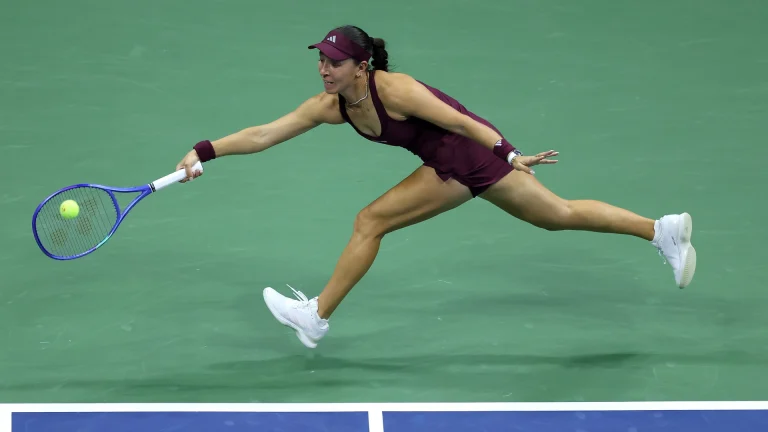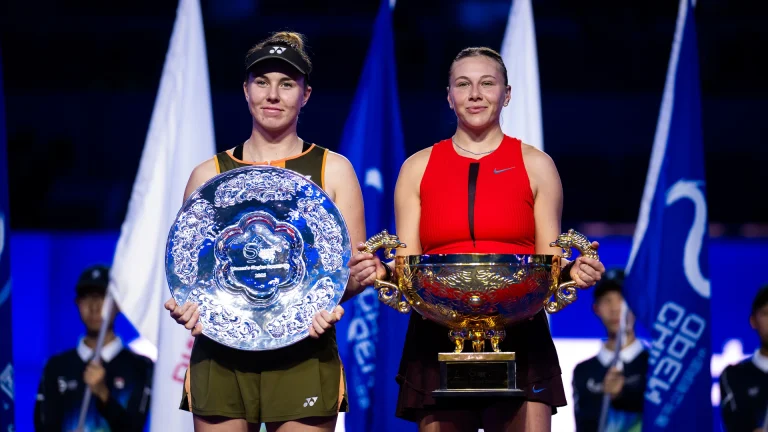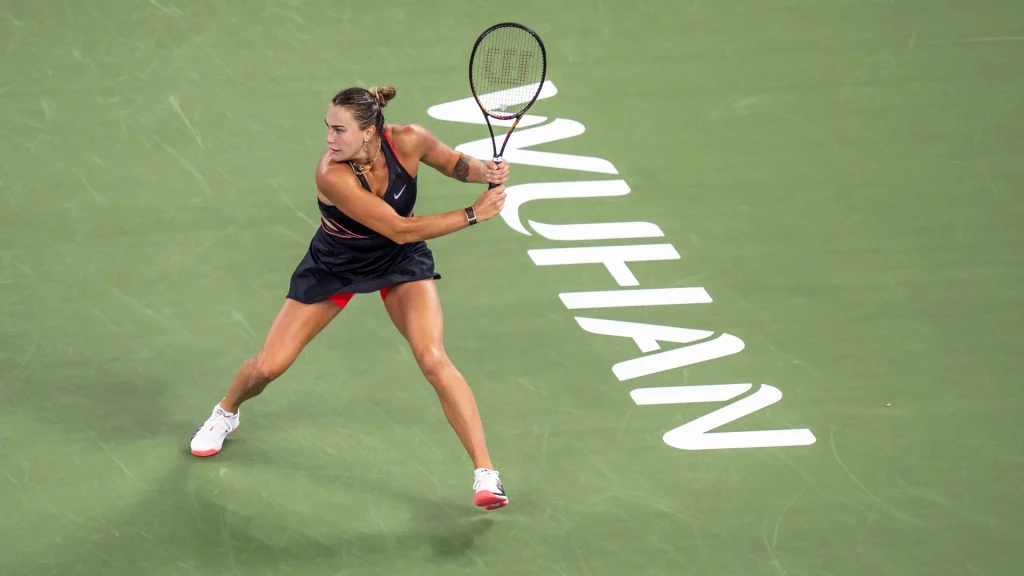
The Wuhan Open has confirmed the entire current WTA Top 10 for its October WTA 1000 event. New world No. 1 Elena Rybakina leads a field that also includes Aryna Sabalenka, Jessica Pegula, Coco Gauff, Mirra Andreeva, Linda Noskova, Elina Svitolina, Karolina Muchova, Iga Swiatek and Marta Kostyuk. The tournament has not begun, so the participant list is a confirmed participant list rather than a completed result. A 56-player bracket will place major ranking and recovery decisions into one demanding week.
Rybakina enters Wuhan as world No. 1
Elena Rybakina enters as the new world No. 1 and recent US Open champion. That position brings seeding benefits but also immediate attention to every early round.
Her serve and first-strike patterns can shorten matches when timing is clean. The Asian schedule will test whether she can preserve that efficiency after a demanding major run. Rybakina’s leading position gives her a high seed but does not reduce the adjustment required after the previous tournament. Her serve can shorten points when the first ball lands accurately. Wuhan will also test movement and patience if opponents return enough balls to extend rallies beyond her preferred pattern.
Sabalenka returns with three previous Wuhan titles
Aryna Sabalenka has won the tournament three times and has lost only once in her Wuhan appearances. Past success reflects comfort with conditions and confidence in important moments.
It does not remove the need to adjust to the current opponents and current form and a new season. Historical record is useful context, while the bracket and completed matches must determine any 2026 conclusion. Sabalenka’s record in Wuhan confirms that the conditions have suited her game in previous appearances. The current event still begins from zero, with a new bracket and opponents in different form. Her history is an advantage in confidence, not a substitute for winning the next point and managing the current workload.
Gauff returns as defending champion
Coco Gauff won the previous edition without dropping a set and defeated Pegula in the final. A defending champion knows the environment but also carries points that cannot be added twice.
Her movement and ability to extend rallies can make opponents take extra risk from difficult positions. The main question is whether her serve and return patterns remain stable through a tournament containing every top-ten player. Gauff returns with knowledge of the court and the pressure attached to defending a title. Strong movement can force an opponent to play an extra shot, but service rhythm remains important against a participant list containing every top-ten player. Early rounds may demand the same concentration as the final stages.
Strong opponents can appear from the opening rounds
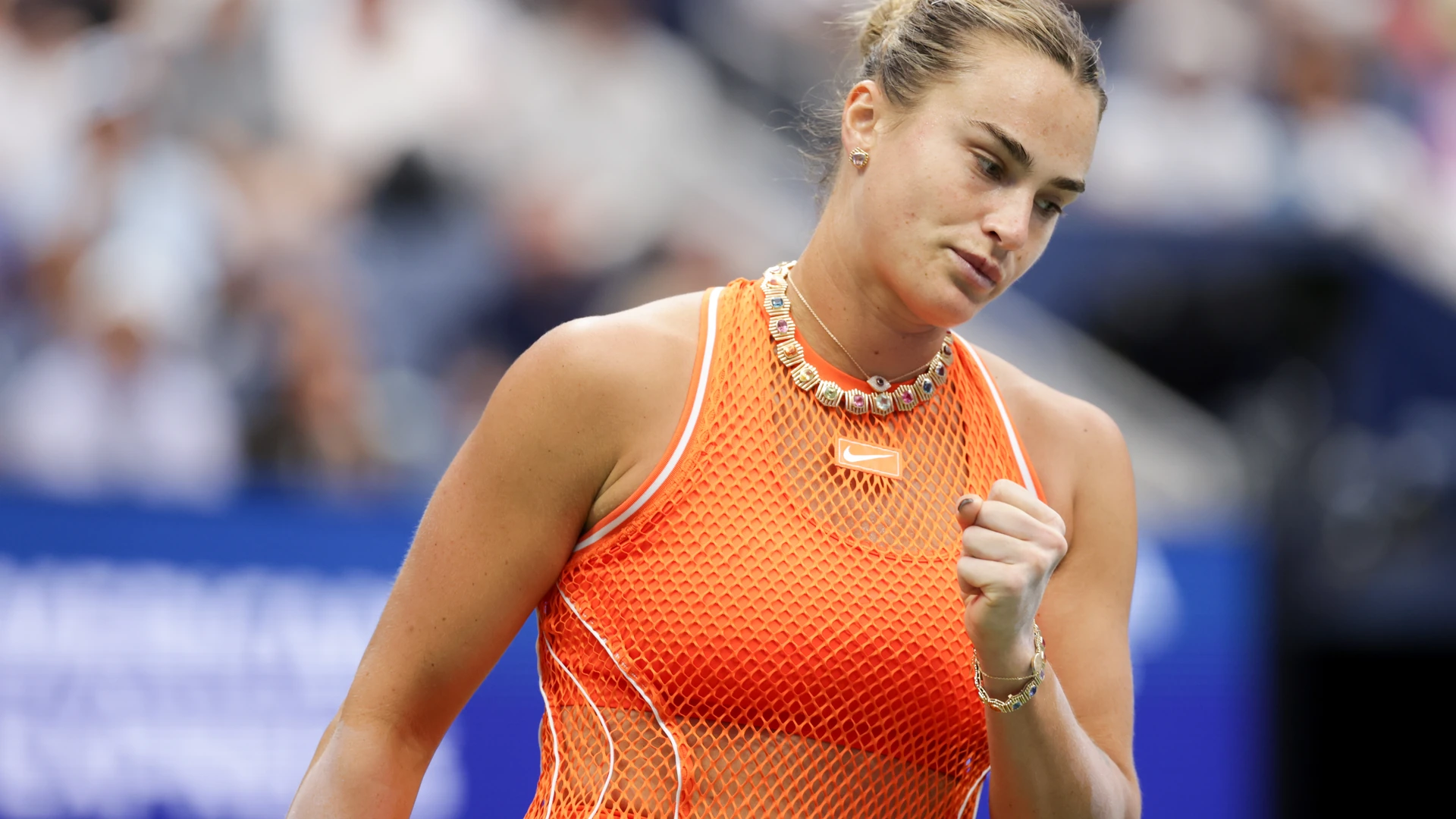
The 56-player singles bracket includes direct entrants, qualifiers, wild cards and a special exemption. Top seeds may receive structural advantages, but strong unseeded opponents can appear immediately after an opening bye.
Qualifiers arrive with match rhythm and should not be treated as automatic early exits. The published draw will provide the real route, while the participant list only establishes the depth. A 56-player bracket can place an in-form unseeded player close to a leading seed after the opening exemptions. Qualifiers may arrive with useful match rhythm and should not be treated as routine opponents. The official bracket will show the real route only after every entry and qualification place is settled.
Ranking points add importance beyond the tournament title
A WTA 1000 champion receives a major points reward during the closing part of the season. Players chasing Finals qualification or year-end position can change their situation through several wins.
Points pressure can influence scheduling, but it cannot replace recovery if the body is not ready. Teams must judge whether another event strengthens the campaign or reduces the player’s level across all remaining weeks. Ranking points matter to players chasing the WTA Finals and the year-end positions. That pressure may influence the choice to enter another week, but physical condition still sets the useful limit. A strong result in Wuhan helps most when it does not damage the ability to compete through the rest of the season.
The player list can still change before the first round
The announced participant list is current, and Victoria Mboko is absent while recovering from a knee injury. Withdrawals, alternates and wild cards can alter the final list before the bracket is made.
The correct status is to describe confirmed entries today and update later from official tournament information. No winner or matchup should be treated as settled before the bracket and matches actually occur. The announced participant list is current rather than permanent. Injury recovery, travel and results at earlier tournaments may produce withdrawals or alternate entries before play begins. Any later report should use the final official list and avoid presenting a planned appearance as a completed one.