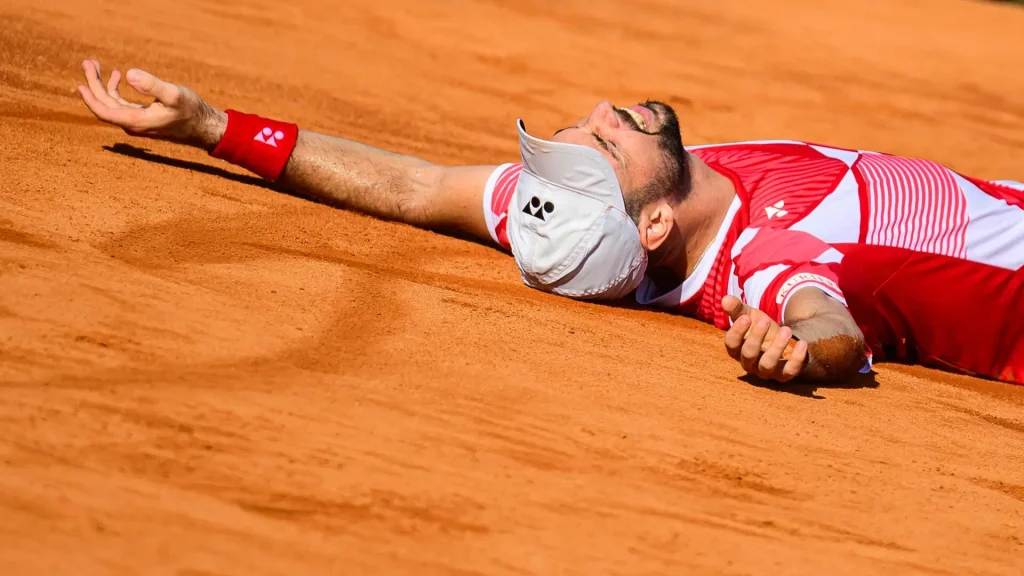
Austria secured a place in the Davis Cup Finals in Bologna after Jurij Rodionov delivered under the pressure of a decisive team contest. His contribution was not built on attempting a decisive shot from every neutral ball. Rodionov served with a clear opening pattern, accepted long exchanges and increased risk only after earning a shorter reply.
Serve placement created a clear next action
The opening shot created location as well as a chance for an ace. Serving wide pulled the return away from the centre and prepared the next forehand.
Serves aimed at the body limited the receiving player’s swing. That variety made the service pattern harder to anticipate during important games. Rodionov’s serve created a plan for the next ball instead of depending only on speed. A wide delivery opened the forehand side, while the body serve reduced the receiver’s swing and made the following exchange easier to organise. Changing serve location also protected Rodionov during games when first-serve percentage fell. The opponent could not settle into one receiving position and attack the same expected ball repeatedly.
Rodionov stayed patient in neutral exchanges
Rodionov remained willing to play through the middle when the angle was not available. Depth kept his opponent from stepping comfortably inside the baseline.
A change of direction arrived after balance had been established. The approach reduced unforced errors without turning the exchange into passive defence. Through neutral exchanges, Rodionov accepted the middle of the court until a genuine angle appeared. Depth prevented the opponent from stepping forward, and the later direction change carried less risk because it came from balance. Patience through the middle kept the court geometry simple until Rodionov gained control. He did not surrender ambition; he delayed the difficult angle until his footwork and contact with the ball supported it.
| Tactical pattern | Purpose |
|---|---|
| Wide serve | Creates space for the next forehand |
| Body serve | Limits the receiving player’s swing |
| Deep neutral ball | Keeps the opponent behind the baseline |
| Direction change | Allows an attack after balance is established |
The bench contributed between points
Davis Cup allows a visible exchange between player, captain and teammates. Advice is most useful when it confirms one simple adjustment rather than adding several new ideas.
Austria maintained emotional energy without making every point look like a crisis. That environment helped Rodionov reset after difficult moments. The Austrian bench helped by keeping instructions short between exchanges. One clear reminder about location or height was more useful than several new ideas, especially when the player needed to reset quickly after a demanding game. Bench energy was useful because it followed a clear purpose. Encouragement helped the reset, while the captain’s short tactical message gave the next exchange one practical focus.
Qualification depended on the complete lineup
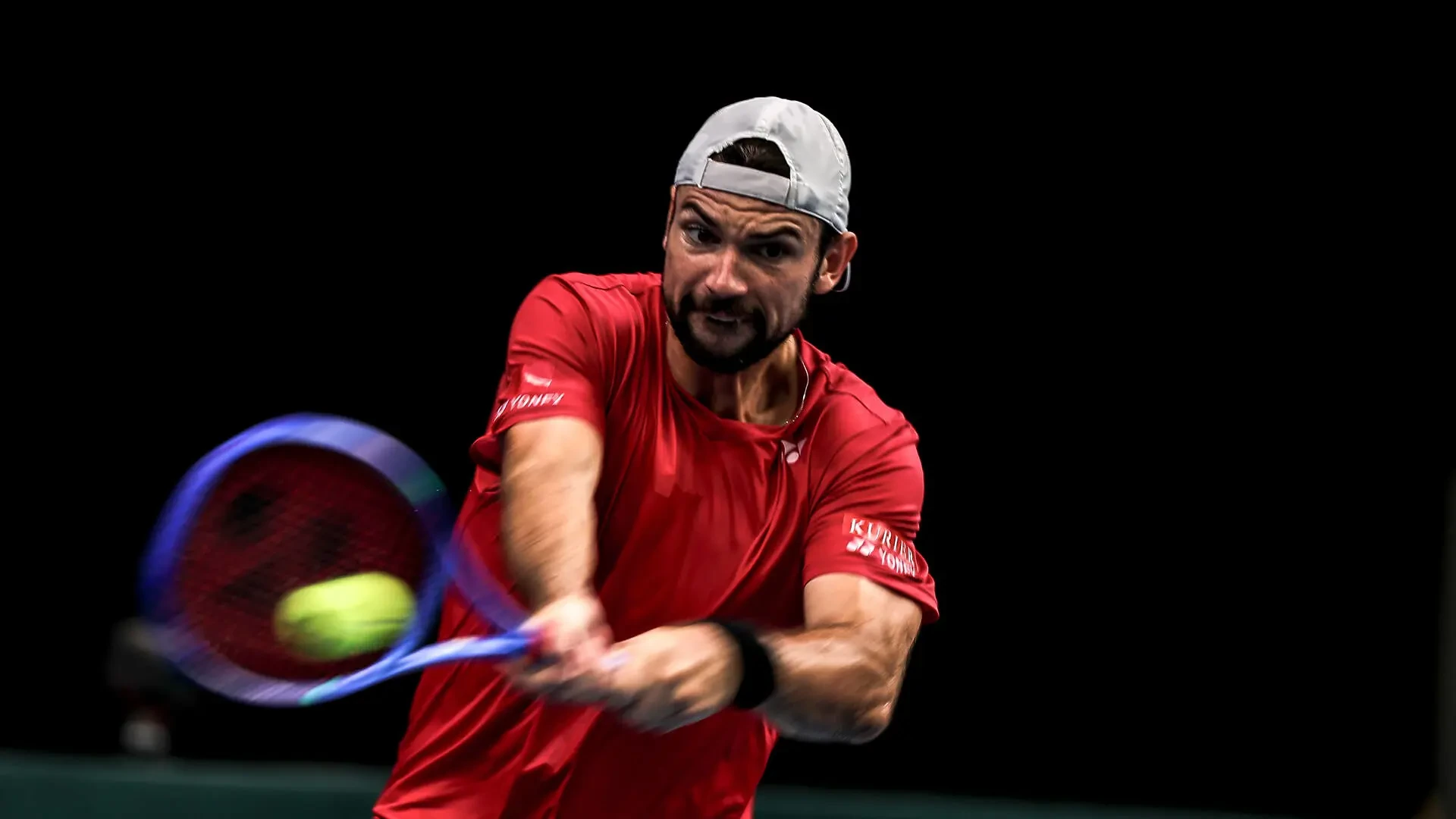
A decisive performance receives attention, but a team contest is built from several matches. Earlier results determined what Austria needed when Rodionov entered the court.
Preparation for doubles and alternate pairings remained important even when the final path changed. The Bologna place therefore belongs to the squad while preserving the significance of Rodionov’s performance. Rodionov’s performance mattered inside a complete team result. Earlier matches created the situation he entered, while doubles preparation and alternative pairings remained necessary until Austria had mathematically secured the place in Bologna. Team qualification also depends on preparation for a lineup that may change. Austria’s depth allowed the captain to plan for singles, doubles and the physical condition of each player across the contest.
Bologna presents a different challenge
The Finals bring opponents with deeper scouting and little time for a slow tactical adjustment. Austria must identify which patterns for serving and receiving can survive against stronger first strikes.
Rodionov’s calm tactical play gives the team a reliable starting point. Qualification is complete, while the next stage will test whether the same clarity holds against another style and a larger occasion. The Finals will bring deeper scouting and opponents able to punish a slow adjustment. Austria can begin with the serving discipline and clear exchanges shown in qualification, then adapt those patterns to a different surface, atmosphere and level of early attacking pressure. Bologna will demand faster recognition when the first plan meets resistance. Rodionov’s qualification performance offers a sound base because it combines purposeful serving, patience in exchanges and controlled increases in risk. Austria can build from that clarity and keep the first adjustment simple.