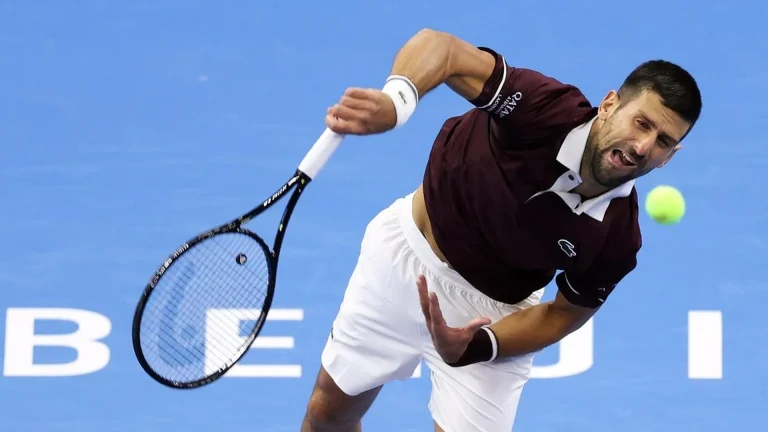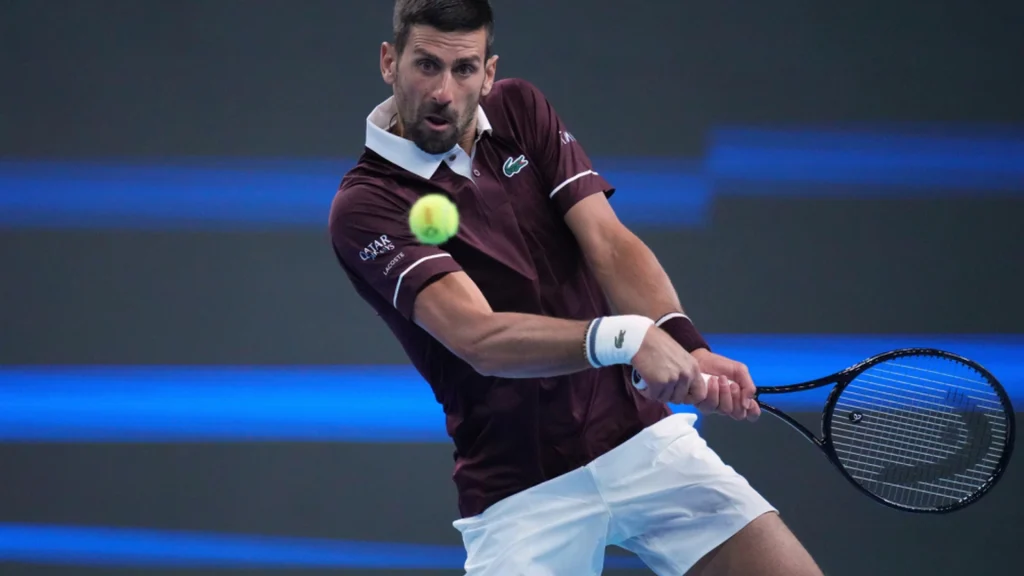
Novak Djokovic extended his perfect China Open record to 30 wins by defeating Nuno Borges 6-3, 7-6(2) in the first round. His return to Beijing came eleven years after his previous appearance, yet the match did not rely on nostalgia. Djokovic controlled the opening set, then handled a tighter second set and a tie-break without allowing the changing rhythm to pull him into unnecessary risk.
The first set rewarded early control of the return game
Borges owns enough first-strike power to shorten points, so Djokovic’s first task was to make the Portuguese player hit an extra ball from an uncomfortable height. A deep return through the middle removed the easiest angle and allowed Djokovic to establish a neutral rally before changing direction. The 6-3 set reflected pressure built across several games rather than one burst of spectacular defense.
Djokovic also protected his own first shot after serve. The serve did not need to produce an ace when it created a predictable reply. Moving forward from that reply kept Borges from taking the baseline and reduced the physical cost of each hold. On an outdoor hard court, that pattern is more repeatable than chasing the line with every first delivery.
Djokovic stayed patient during the closer second set
Borges stayed closer and forced the set into a tie-break. A player defending a perfect tournament record can be tempted to treat every lost point as evidence that control is disappearing. Djokovic did the opposite. He kept the score connected, accepted that the set had become competitive and waited for the shorter format to reward precise first shots.
That patience matters at 39, when energy has to be distributed across the whole event. Extending a rally is useful only when the position demands it. Djokovic mixed depth, direction and pace so that defense did not become passive repetition. The opponent still had to decide whether the next ball would arrive firmly through the middle or pull him outside the singles line.
Djokovic controlled the tie-break from the opening points
Tie-breaks compress the set, making one loose service point more expensive. Djokovic established margin by protecting the middle of the court and asking Borges to create the sharper angle. Once ahead, he did not need a low-percentage winner. A strong first serve, a deep return and one controlled change of direction were enough to keep the scoreboard moving.
The score should not be read as proof that every point was easy. It shows that Djokovic made the important decisions earlier. He recognized which second serve could be attacked and which rally needed another neutral ball. That distinction prevents aggression from becoming impatience, especially when the match is one missed line away from returning to level terms.
| Matchdetalj | Resultat |
|---|---|
| Vinnare | Novak Djokovic |
| Resultat | 6-3, 7-6(2) |
| Motståndare | Nuno Borges |
| Beijing career record | 30-0 |
| Nästa motståndare | Bu Yunchaokete |
The 30-0 record spans different stages of Djokovic’s career
Djokovic won six Beijing titles between 2009 and 2015 before returning in 2026. The player who produced the first part of the streak had different physical resources and opponents. Extending it now depends on adapting the same fundamental strengths: return depth, balance near the baseline and the ability to identify the score at which pressure should rise.
The record can create an attractive story, but it does not help with the next ball. Every current opponent prepares from recent video, not from the reputation of a decade-old final. Djokovic’s advantage is that he can use memory without trying to reproduce an earlier body or style. The venue remains familiar, while the solution to each match is allowed to change.
Bu Yunchaokete presents a different next-round problem
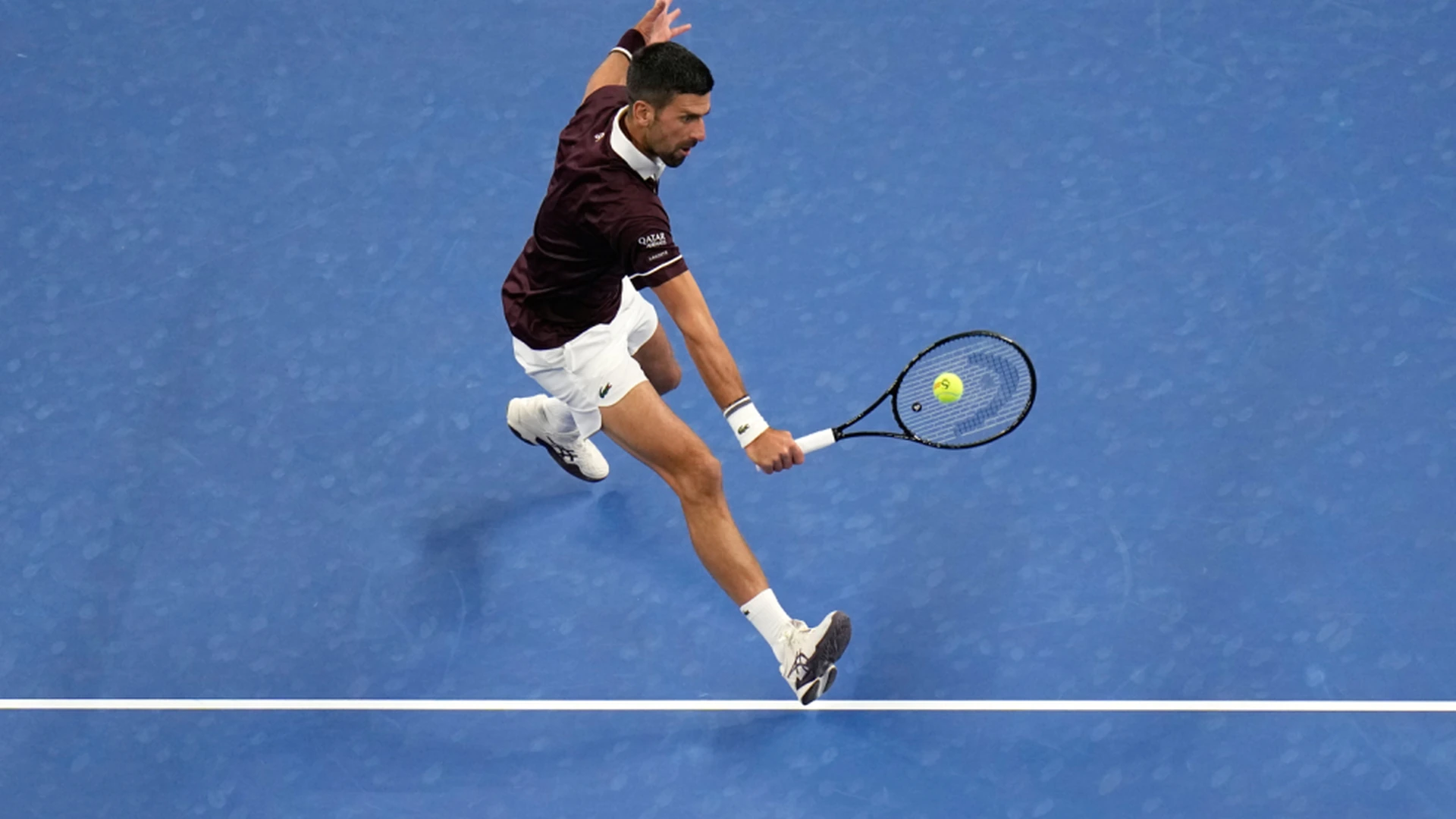
Djokovic is due to face Chinese wild card Bu Yunchaokete, who defeated Juan Manuel Cerundolo in three sets. Home support and a player willing to strike early can make the opening games faster than the Borges match. Djokovic will need to establish return position quickly and prevent the crowd from attaching itself to a run of short points.
The best preparation is not to defend the 30-match streak. It is to identify Bu’s preferred serve patterns and the forehand positions from which he attacks. If Djokovic can make the first exchange predictable, experience becomes useful again. The record will then remain a result of good match decisions rather than an extra opponent carried onto the court.
The opening win confirms that his current game fits Beijing
The score confirms that Djokovic can still move from patient construction to decisive first-strike tennis in these conditions. That evidence is more useful than reputation when the next match begins, because it is based on the present court speed, ball and physical response rather than memories from his previous Beijing titles.
Recovery now becomes part of preparation. A two-set victory limits the load, but the tight second set still required sustained concentration. The next session can remain specific: serve placement, first return depth and a few rehearsed patterns for a home opponent likely to attack early.