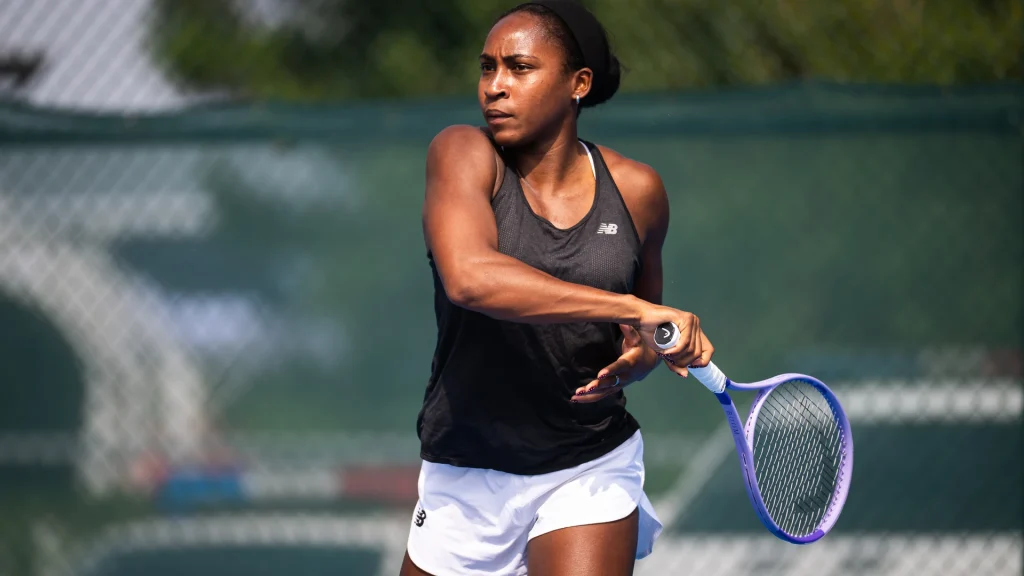
Coco Gauff begins the China Open with a specific development plan: raise her first-serve percentage, trust the points that serve creates and play more aggressively. She has won the Beijing title once and reached the semifinals in her other two appearances, but describes the post-major Asian swing as a practice month for 2027. The useful part of that approach is that improvement must still survive live scoring, return pressure and the possibility of elimination.
A higher first-serve percentage changes the whole point
Gauff has landed 62.5% of first serves across 59 matches this season and won 68.4% of those points. Increasing the first number gives her more chances to use the second. A first serve does not need maximum speed to create an advantage; body placement or a wide angle can produce a shorter reply and place the forehand in control of the next shot.
The goal should not become guiding the ball safely into the box. A cautious motion can reduce the very quality that makes the first serve valuable. The productive adjustment is a repeatable toss, clear target and full commitment to the chosen shape. Percentage improves when mechanics remain stable under pressure, not when the player makes a different compromise on every important point.
Aggressive tennis starts with court position
Playing more aggressively does not require finishing points from the first neutral ball. Gauff can take the baseline earlier, direct a deep shot toward the weaker corner and look for a shorter reply. That sequence moves the opponent without giving away the margin needed on a hard court. The eventual winner is the final step, not the complete definition of aggression.
Return position is part of the same plan. Moving forward against a vulnerable second serve can reduce the server’s time and establish control immediately. Against a stronger first serve, a deeper position may produce the neutral ball Gauff needs. Using one position for every opponent would turn an aggressive idea into a rigid habit.
| Gauff in Beijing | Current context |
|---|---|
| Previous appearances | Champion once, semifinalist twice |
| 2026 first serves in | 62.5% |
| First-serve points won | 68.4% |
| Service games held | 468 of 663 |
| Current focus | More first serves and earlier controlled aggression |
Beijing provides pressure without full Grand Slam attention
With the Grand Slam season complete, Gauff says she feels less external chaos. That does not make the China Open an exhibition. Ranking points, a deep field and the WTA Finals race remain real. The difference is that one technical experiment can be judged across several matches without every lost point being treated as a verdict on an entire major campaign.
This is an ideal environment for a process goal. Instead of measuring only wins, Gauff and her team can track first-serve location, the quality of the next forehand and decisions made at a neutral score. A defeat may still reveal that the new pattern works. A victory can hide a weak process if the opponent supplied enough errors, so the review has to look beyond the final line.
Her strong Beijing record provides real confidence
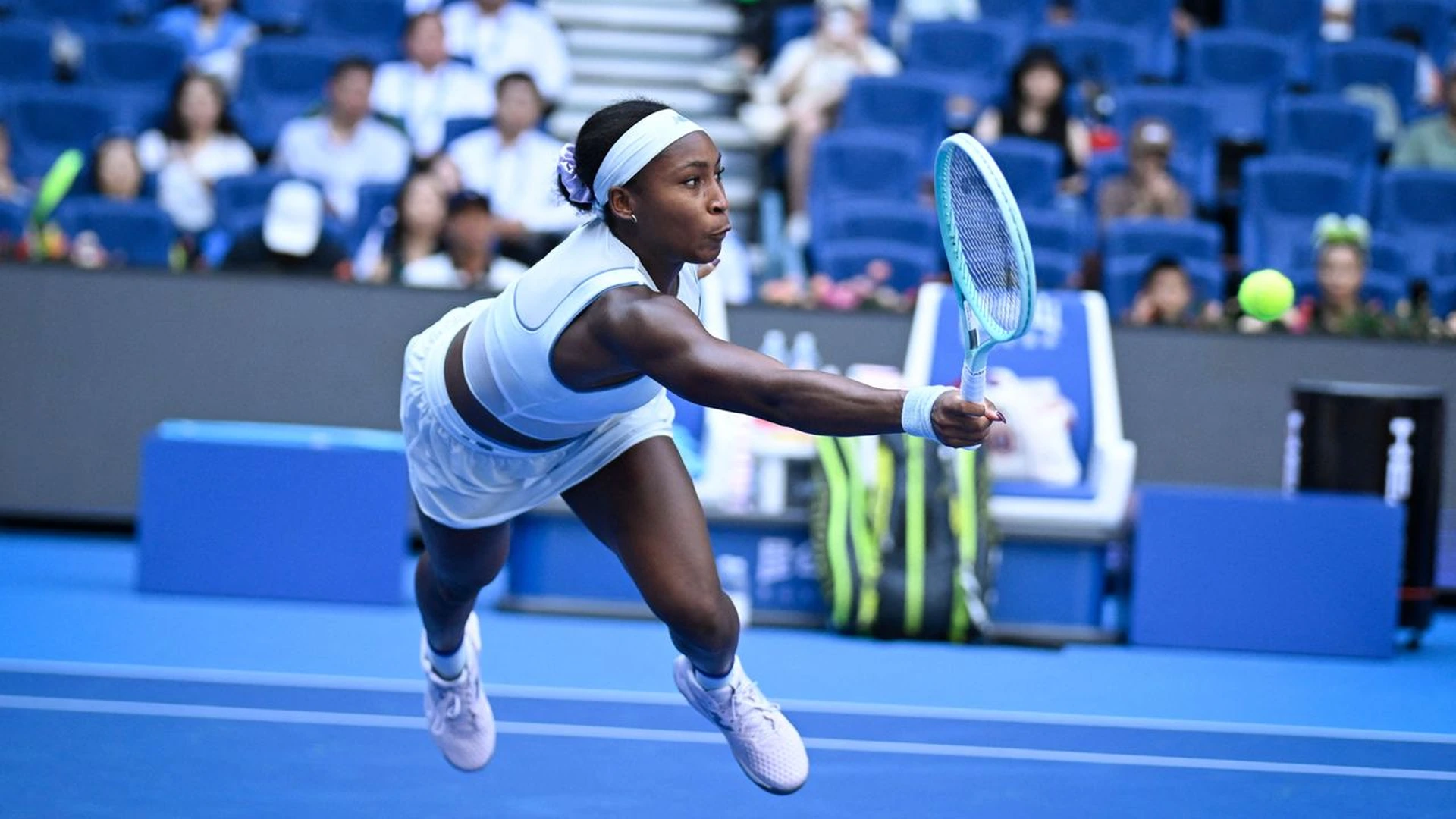
Gauff has never finished before the semifinals in three previous China Open appearances. She won the 2024 title and reached the last four in the other two visits. That history confirms that the court, conditions and tournament rhythm can suit her movement. It does not guarantee another run, but it gives her evidence when a new serving idea feels uncomfortable in the opening games.
Past success is most useful as a calm baseline. Trying to recreate one championship match would ignore how her game and the field have changed. The current objective is to attach a stronger first-strike pattern to the defense and speed that already work in Beijing. Improvement should add a route, not replace the skills that built the previous results.
Match days require simple technical goals
Technical work can become distracting if the player thinks about several mechanical cues during a point. Gauff’s team can narrow the match plan to one or two actions, such as a consistent toss and a positive first ball. Detailed analysis belongs between matches. On court, the cue must be simple enough to survive a break point and the noise of the stadium.
That distinction gives Beijing value for 2027. Practice establishes the movement, competition tests it, and review decides what remains. Gauff does not have to finish the process in one tournament. She needs enough clear evidence to know which aggressive choices are reliable. A deep run would be useful, but the larger success is a serve plan she can carry through Wuhan and into the next season without rebuilding it under pressure again.